A two-story red brick house with black shutters and a dark roof sits on a mown lawn behind a dry-stacked stone retaining wall, framed by large overhanging tree branches.

Heat Pump Repair in Brooklyn, NY

Tell us about the job

Takes about a minute. No obligation.

RepairHeat PumpKings County, NY
Step 1 of 2

What ZIP code is the job in?

Winters here don't push a heat pump that hard

Brooklyn's overnight lows average 29°F in December, January and February. That's real cold, but it's not the deep sustained cold that wears down a heat pump's compressor year after year. Zone 4A asks real work of both heating and cooling here, not punishing extremes in either direction.

So a breakdown is usually something specific, not the system giving out

If your heat pump is struggling, the cause is more often a failed capacitor, a low refrigerant charge, or a sensor gone bad than a unit that's simply worn through from the climate. That's worth knowing before you decide whether repair makes sense.

7 months
October through April, your system heats
4 months
June through September, it cools
29°F
the average winter night it heats against
83°F
the average summer afternoon it cools against
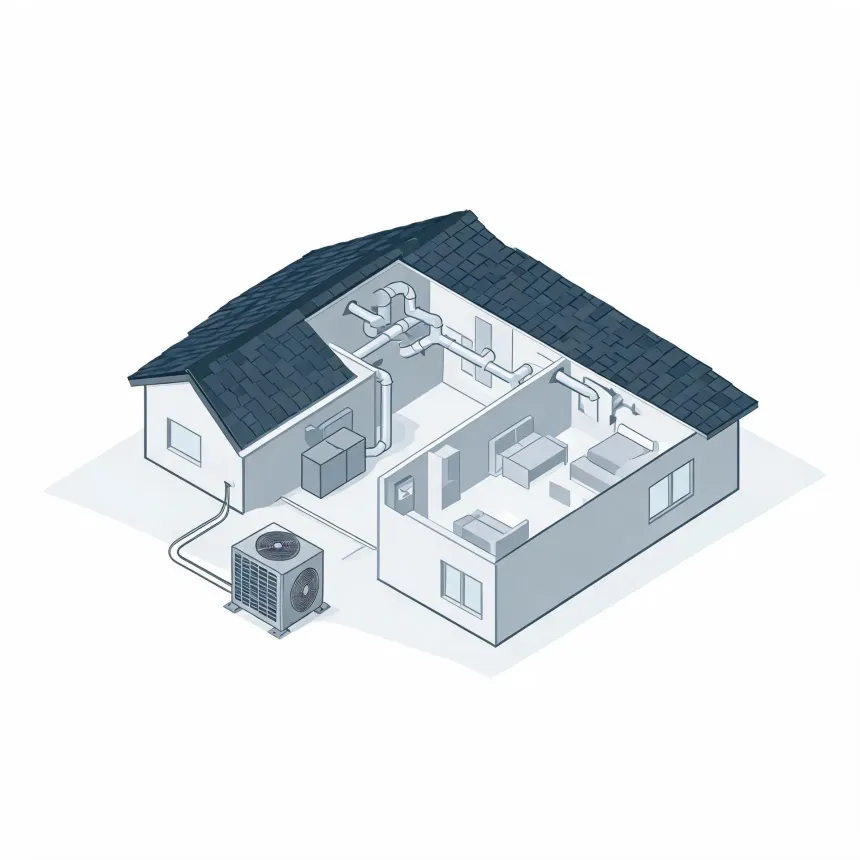
Isometric cutaway illustration of a single-story house showing interior rooms, ceiling ductwork, an indoor air handler, and an outdoor condenser unit connected by lines on the ground.
Your system heats October through April and cools June through September.

NOAA nClimDiv, 1991–2020 normals

Heat here starts in October, after a September that puts no load on a heat pump at all.

The first cold snap finds whatever was already weak, so October is when a bad capacitor or low charge shows itself.

A broken heat pump costs more in BrooklynNew York electricity ran 24.43 cents per kilowatthour in 2024, so a bad capacitor or low charge shows up fast on the bill.

A heat pump that's struggling but still running is often doing real damage with every hour it stays on. Take a low refrigerant charge. The system keeps trying to move heat it doesn't have enough refrigerant to move, so the compressor works harder and runs hotter than it was built to run. Left alone, a refrigerant leak that would have been a simple fix turns into a failed compressor. A failing capacitor causes a similar chain. The compressor and fan motors draw more current trying to start and run without the jolt the capacitor should give them, and that strain wears down windings that would otherwise have lasted years. Even a dirty coil or a bad sensor reading can push the system into longer run cycles than it should need, and it's those longer cycles under stress that take out parts that would have held up fine under normal load. A heat pump making an odd noise or not quite keeping up is telling you something, and the part it's protesting about now is almost always in better shape than the part it damages next.

Fix it before it runs up your bill all winter

At 24.43 cents per kilowatt-hour, a heat pump running on a bad capacitor or a low charge adds that cost to every bill it touches while the problem sits there. Getting the actual cause found and fixed stops that.

Find a contractor
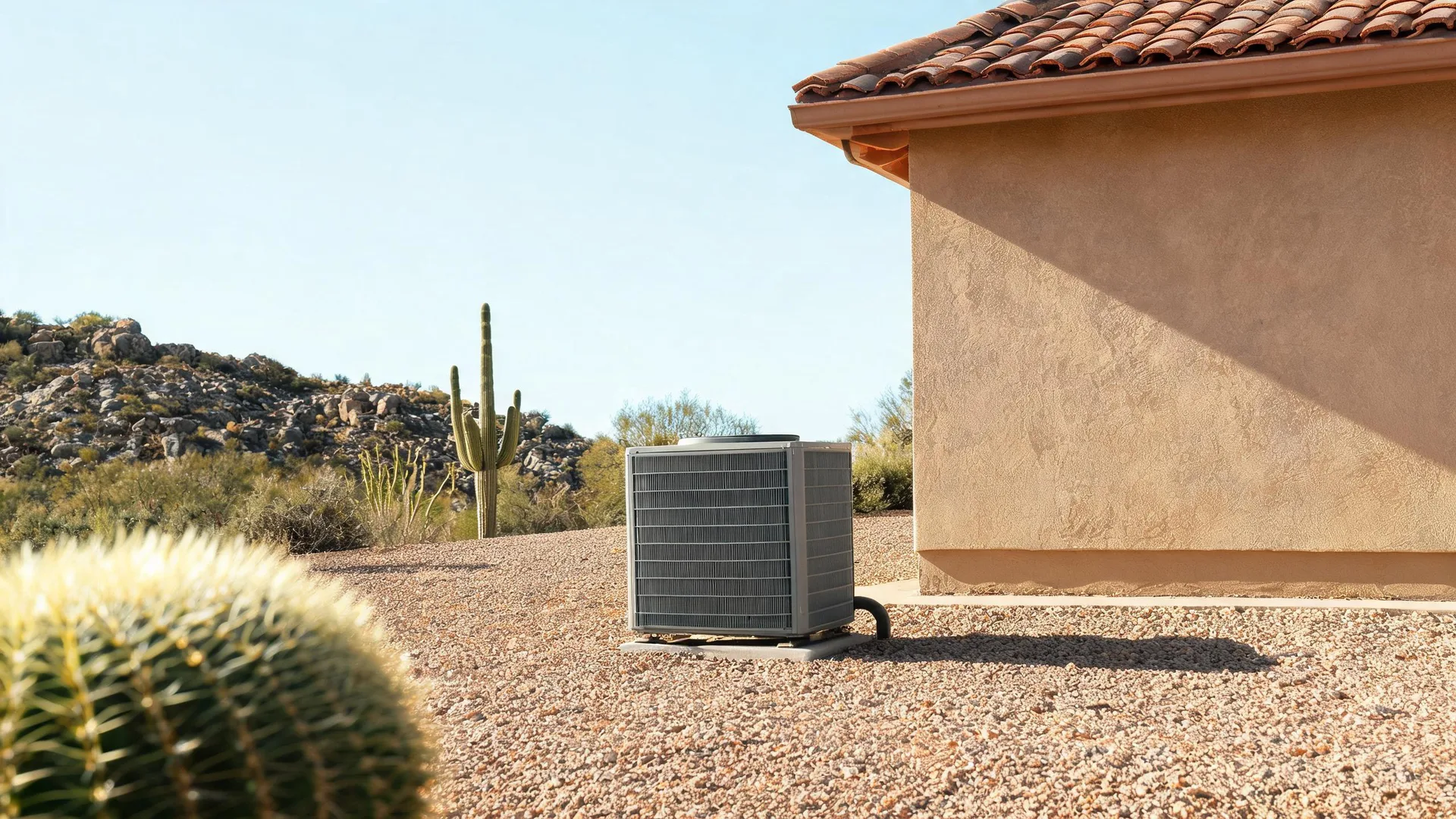
A residential heat pump outdoor unit mounted on a concrete pad next to a house with gray vinyl siding.

Years on the clock

Half the homes in Kings County were built in 1944 or earlier. A heat pump that came with a house that old has usually been swapped in at some point, but it's worth checking how old yours actually is rather than guessing from the house. An older system has had more years of normal cycling on the same compressor and the same motors, and parts that have run that long are closer to the point where a repair isn't worth it. Before paying for a big fix, it's worth asking a contractor how much life is likely left in the unit.

It's blowing air that isn't warm or cool enough

A heat pump in heating mode puts out air that feels warm, not hot, so that's not itself a problem. What's worth noticing is air that feels barely different from room temperature, or air that used to feel warm and now doesn't. That points to a refrigerant charge that's dropped, a reversing valve stuck between modes, or a compressor that's no longer pulling its weight.

It's short cycling or won't stop running

A heat pump should settle into steady runs and shut off once the house reaches temperature. One that clicks on and off every few minutes is usually fighting a bad sensor or a control board giving it wrong information. One that runs constantly without catching up is usually losing the fight against a dirty coil, a weak capacitor, or refrigerant it doesn't have enough of.

Before calling anyone, look at the outdoor unit. If it's caked in ice beyond the thin frost that's normal in defrost cycles, or if leaves and debris are packed against the coil, that's worth clearing or noting. Check the thermostat is actually set to heat and the temperature is set above room temperature, since a setting bumped by accident looks exactly like a broken system. Go to the air handler or indoor unit and check the filter. A filter clogged with dust chokes airflow and can be behind both weak heat and a system that won't stop running. Look at the circuit breaker for the unit and make sure it hasn't tripped. None of this tells you whether the compressor or the reversing valve is the problem, but it rules out the causes a homeowner can actually fix, and it gives a technician a clearer starting point than a system that just isn't working.

A contractor weighing repair against replacement is really asking how many more big repairs this unit has in it. A single failed part, a capacitor, a contactor, a blower motor, is usually worth fixing on its own, even on an older system, because the compressor and the refrigerant circuit around it are still sound. The compressor is the part that matters most, since it's the one part that isn't practically replaced on its own. A leak that's found early and sealed is a repair. The same leak ignored long enough to starve the compressor of oil and refrigerant can turn into a compressor failure, and that's a different conversation. A unit that's needed a string of unrelated repairs over a short stretch is usually telling you its parts are all reaching the end of their life around the same time, not that it had bad luck.