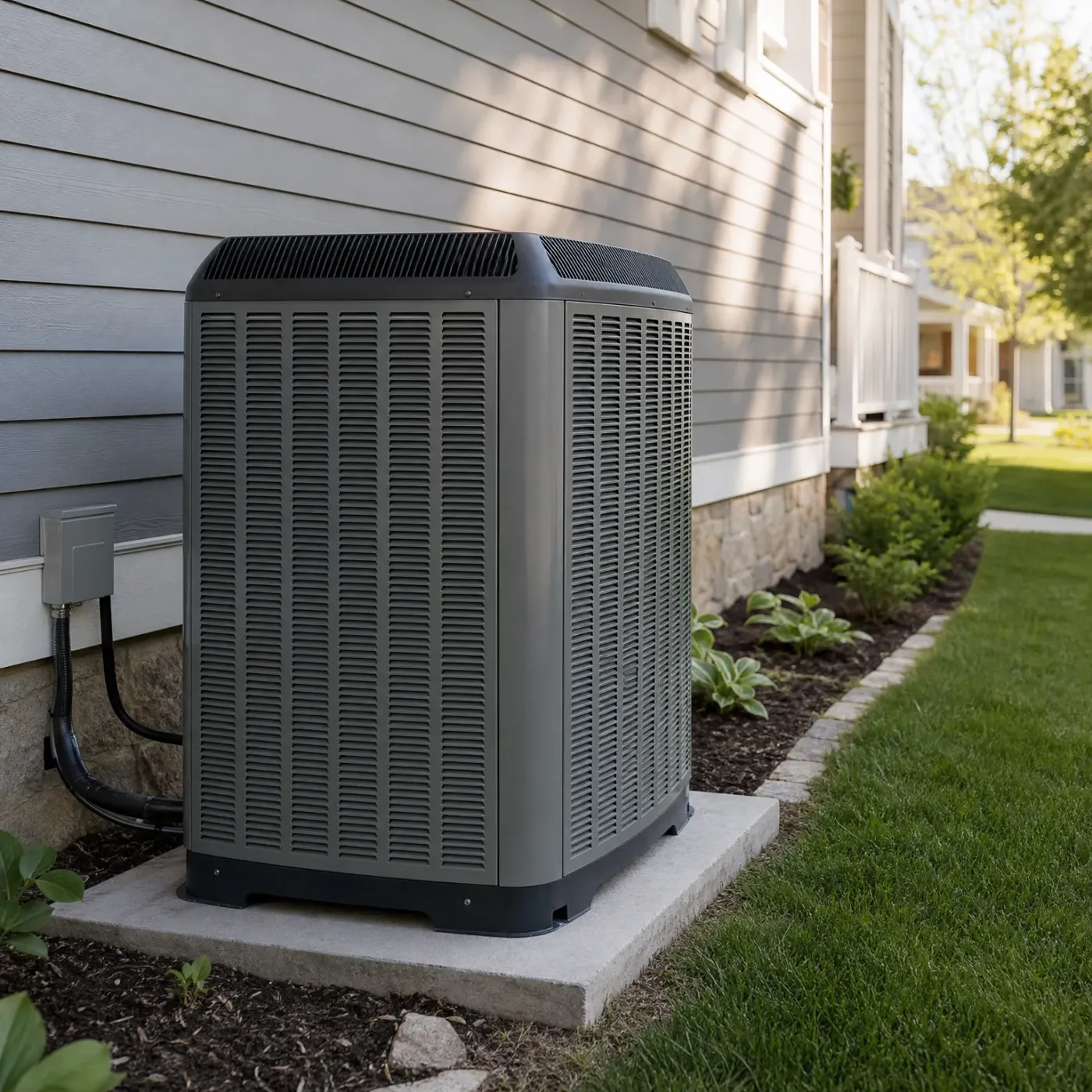
Heat pump frozen over in Brooklyn, NY
A frozen heat pump in winter is normal up to a point. The outdoor unit runs a defrost cycle every so often, melting off a thin layer of frost that builds up as it pulls heat from cold air. What's not normal is a unit coated thick in ice, or ice that doesn't clear after an hour or two. That points to something keeping the system from defrosting on its own: a dirty outdoor coil, a fan that's stopped turning, a low refrigerant charge, or a stuck defrost control. With Brooklyn winters running cold for months, a heat pump that's icing over can leave you short on heat right when you need it most, and running the system while it's frozen can strain the compressor. It's worth shutting it off and letting it thaw rather than letting it keep cycling iced up.

Outdoor coil loses heat and frost starts forming on it
A sensor reads the coil temperature dropping too low
The system reverses, sending hot refrigerant out to the coil
The outdoor fan shuts off while the coil heats up
Why does this keep happening with winters here?
Winter nights average 29°F
Overnight lows average 29°F here in December, January and February, cold enough that the coil runs defrost cycles often and ice can build up between them.
Heat runs October through April
Heat runs about seven months a year here, October through April, so a frozen coil is a problem your system can run into most of the year.
Cooling runs June through September
Cooling only runs June through September here, so a unit iced over outside those months points to the heat pump itself, not the summer heat.
NOAA nClimDiv 1991-2020
When a cycle finishes the job
A working defrost cycle clears the coil and the unit goes back to heating. You might see steam coming off the outdoor coil as the frost melts, and water pooling under the unit. That's the system doing what it's built to do. Give it an hour after you first notice frost before you decide it's stuck, since a normal cycle can take a while to kick in and finish. If you check back and the ice is gone or thinner than before, nothing needs fixing. Keep an eye on it over the next few cold snaps. A unit that defrosts fine most of the time but struggles on the coldest nights, the ones near or below freezing, may just need a technician to look at the defrost sensor or board before it gets worse.
When the ice means something's wrong
If the coil is still solid with ice after a few hours, or the fan isn't spinning at all, the defrost cycle isn't completing. That can mean a stuck reversing valve, a bad defrost sensor, or a fan motor that's failed. Low refrigerant also keeps the coil too cold to shed frost between cycles. None of these clear up on their own, and running the system while it's iced over can strain the compressor. If your heat pump is also blowing cold air inside while the outdoor unit is frozen, that points to the same kind of problem. This is when it's worth having someone look at it rather than waiting through another cold night to see if it resolves itself.




A pro who works on heat pumps

Answer a few questions instead of calling shop after shop.
No fee to send it, and nothing to sign.
What a frozen unit means for your house
- A heat pump stuck in ice stops moving warm air, and you'll notice the house cooling off room by room.
- Ice around the base can crack the fan blade or strain the compressor if the unit keeps trying to run through it.
- Water from melting ice that doesn't drain away can pool near the unit and freeze into a sheet on the pad or patio.
- A unit fighting ice draws power without heating the house, and with electric rates what they are here, that adds up fast.
- If the coil stays iced over through a stretch of nights near 29°F, the backup heat may end up carrying the house instead.
- Left alone, a frozen coil can force the compressor to work against pressure it wasn't built to handle.
Once ice takes hold of the coil, the effects show up inside the house before you ever walk outside to look. Rooms farther from the air handler cool first, then the rest follow as the system loses its ability to move heat at all. Meanwhile the unit outside doesn't just sit there quietly failing. It keeps drawing power, trying to run a cycle it can't finish, and on Kings County's electric rates that's money spent for a house that keeps getting colder. If the ice sits through several nights near 29°F without a clean defrost in between, the backup heat kicks in to cover the gap, and that backup is usually the more expensive way to heat a house. There's a mechanical side too. The fan blade can crack if it's forced to spin against a shell of ice, and the compressor can get pushed to handle pressure it wasn't built for when refrigerant can't flow the way it should. Even the meltwater causes its own problem. If it can't drain off properly, it pools by the unit and refreezes into a sheet on the pad or patio, which is its own hazard separate from what's happening inside the system. None of this fixes itself by waiting. A coil that stays iced over is a unit working against itself, and the longer that goes on, the more of the system it can end up taking down with it.
Power here costs 36.97 cents per kilowatt-hour
At that rate, a heat pump that's icing over and leaning on backup electric heat to keep up shows up fast on your bill. A unit clearing ice on its own and heating normally again costs you far less to run.
EIA-861 2025
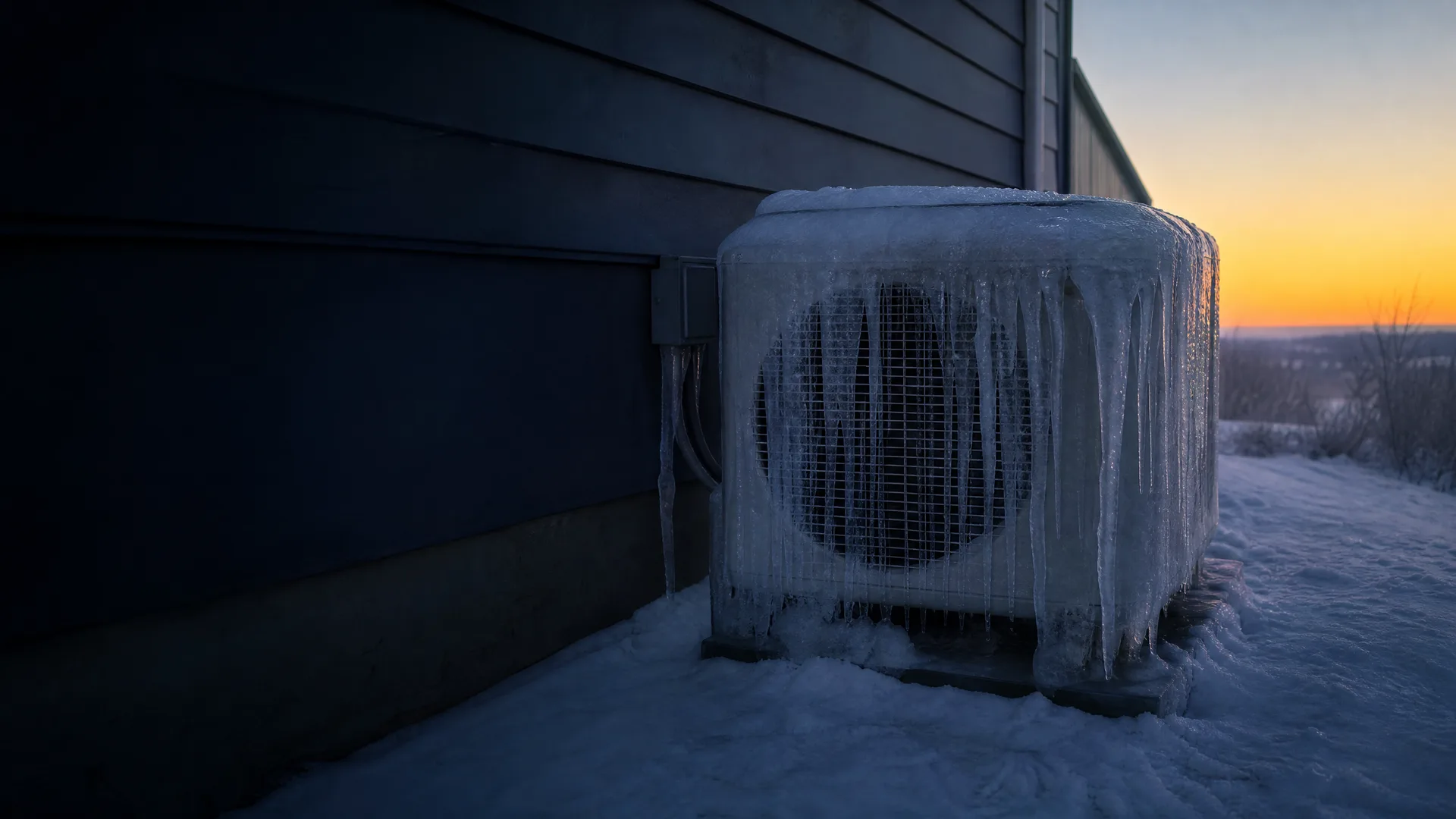
Six-thirty, still dark. You go out to the side yard to grab the trash cans before work and your boots crunch on frost that didn't used to reach this far from the house. The outdoor unit sits there coated in ice, thick over the coil and down around the base, a few icicles hanging off the bottom edge. No steam, no water running out from under it, nothing moving. Inside, the air coming out of the vents feels cool instead of warm, and the thermostat reads four degrees under what you set it to. You crouch down and touch the casing. Cold all the way through. The cans can wait.

A short defrost is fine. A unit stuck in ice is not.
You've got the full picture now. If your heat pump clears itself within an hour and goes back to blowing warm air, it's doing what it's built to do. If the ice keeps building, or the coil stays coated and the house keeps losing warmth room by room, something in that defrost cycle isn't completing the way it should.
You don't have to sort out whether it's the sensor, the reversing valve, or something else before you call someone. That part isn't on you. What usually eats the time is finding a contractor who knows heat pumps specifically, not just furnaces, and then going back and forth explaining what the unit's doing. Skip that part. Answer a few questions about your unit and what you're seeing, and a contractor who covers Brooklyn gets in touch directly.