





White colonial houses with lit windows photographed at dusk along a tree-lined residential street.

AC Maintenance in Saratoga Springs, NY

Tell us about the job

Takes about a minute. No obligation.

Tune-up, service, or cleaningCentral ACSaratoga County, NY
Step 1 of 2

What ZIP code is the job in?

Skip a season of maintenance and nothing happens right away, which is exactly why it gets skipped. The coil collects a fine layer of dust and the airflow across it drops a little. The system doesn't shut off. It just works harder to move the same air, and the compressor runs longer to hit the same temperature. A dirty coil also holds onto heat it should be releasing, so the refrigerant runs hotter than it should. Over a few seasons that heat takes a toll on the compressor, which is the one part in the system nobody wants to replace on its own. None of this shows up as a breakdown at first. It shows up as a system that runs longer, cools a little less, and ages faster than it would have otherwise.

2 months
July through August, your air conditioner is on duty
79°F
the average summer afternoon it cools against
52 hail events
in ten years, and hail bends the fins on outdoor coils
399 wind events
in ten years, and wind drives debris into outdoor units
Isometric cutaway illustration of a single-story house showing interior rooms with furniture, overhead ductwork, an indoor air handler unit, and an outdoor condenser unit connected by lines at the side of the building.
Your air conditioner works hardest from July through August.

NOAA nClimDiv, 1991–2020 normals

AC here only has to carry July and August.

One visit before summer covers the stretch that matters.

Two months of real work, one visit to get ready for them

Power costs 24.43 cents a kWh statewide
Cooling runs July through August
Summer afternoons average 79°F

Saratoga County sees its share of rough weather. 512 severe weather events in the last decade, 399 of them damaging wind. None of that argues for more visits. A downed line or a storm that cuts power for a day doesn't wear out a coil or weaken a capacitor, it just shuts the system off for a while. Central air comes back on by itself once power is restored. What actually ages the system is a full season of running, the coil collecting dust and the capacitor working under load day after day. That's what the yearly check is for, and one visit still covers it.

A newer system is worth keeping that way

Half the homes in Saratoga County were built in 1984 or later, which means a lot of the systems cooling them haven't put in that many years of work yet. A system that age holds up well under a yearly check. Skip the checks and the same system ages faster than it should have.

Find a contractor
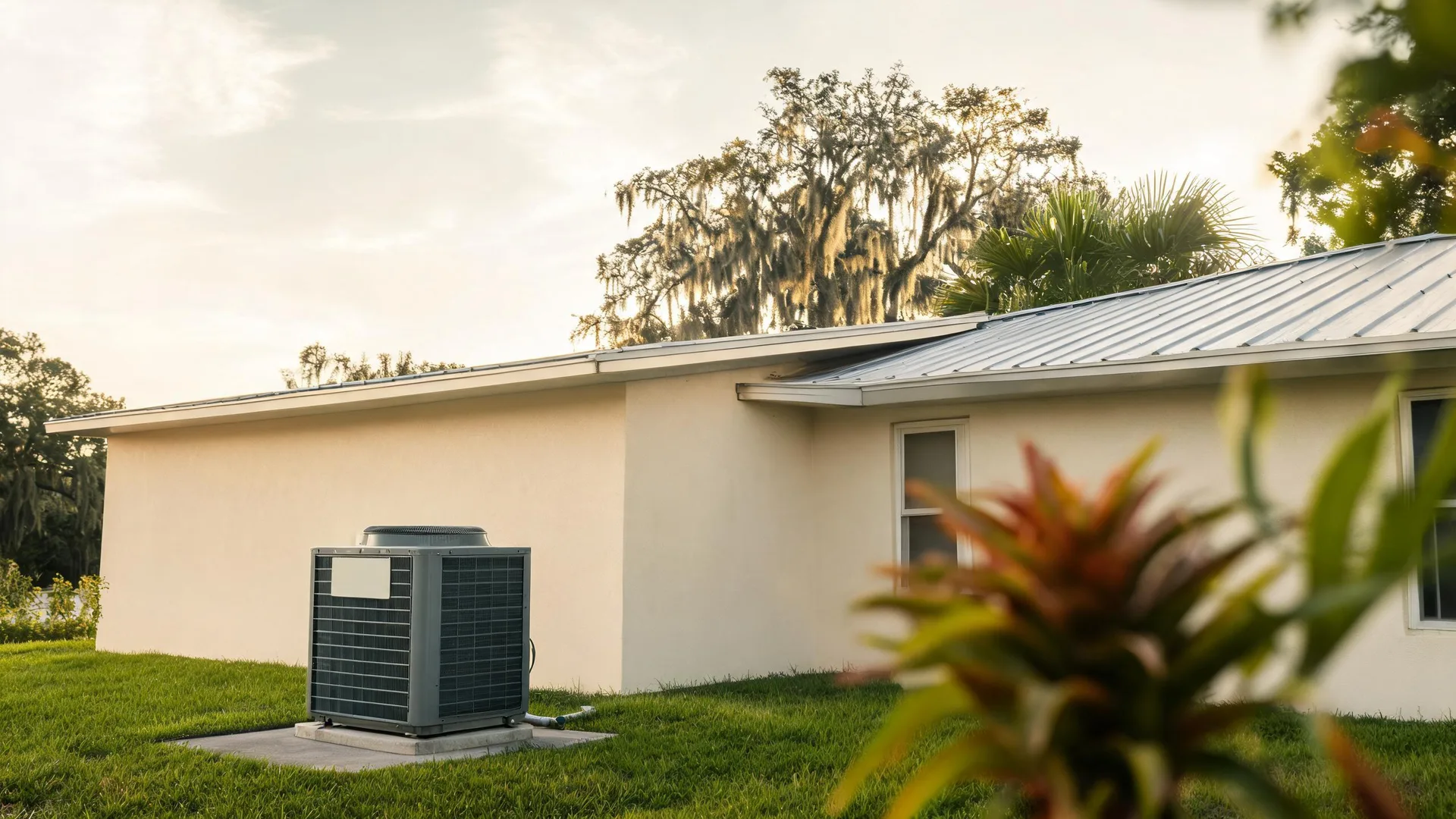
A gray residential air conditioning condenser unit mounted on a concrete pad outdoors, surrounded by green grass under a partly cloudy blue sky.

Start the yearly check while the system is still young

If your system came with the house or close to it, it still has most of its working life in front of it. The yearly check is what keeps it on that path. It catches the dust on the coil and the weak capacitor before either one makes the compressor work harder than it should. Parts for a newer system are also easier to find if something does need replacing at that visit, rather than waiting until the part is harder to get and the system has already logged a few summers running harder than it needed to.

A quick visit checks that it runs

A fast tune-up confirms the system turns on, blows cold air, and the thermostat responds. That tells you it's working today. It doesn't tell you the coil is clean, the refrigerant charge is right, or the capacitor is still strong enough to start the compressor without strain.

A thorough one checks how it runs

A full tune-up has the coil cleaned, the refrigerant charge checked against what the system calls for, and the capacitor tested under load rather than just looked at. It also means the condensate drain gets cleared and the electrical connections get tightened, so nothing is working harder than it has to or sitting one loose wire away from a service call.

An outdoor central air conditioning unit mounted on a concrete pad beside a blue-sided house at sunset.

Book your AC tune-up in June, before homes here start needing cooling in July.

  1. Jan
  2. Feb
  3. Mar
  4. Apr
  5. May
  6. Jun
  7. Jul
  8. Aug
  9. Sep
  10. Oct
  11. Nov
  12. Dec

A tune-up checks the refrigerant charge, cleans the coils, tests the capacitor and tightens the electrical connections.

A proper tune-up starts outside, at the condenser. The technician cuts power first, then pulls the fan guard and checks the fan motor for play and the blades for cracks. The coil gets cleaned if it's dirty, not just rinsed from the top, because dirt packed between the fins blocks airflow even after a quick hose-down. Refrigerant charge gets checked against what the system is rated for, since too little or too much both make the compressor work harder than it should. The capacitor gets tested under load, not just eyeballed, because a capacitor can look fine and still be too weak to start the compressor cleanly. Inside, the evaporator coil and blower wheel get checked for buildup, the condensate drain gets cleared so it isn't sitting ready to back up, and every electrical connection gets tightened.