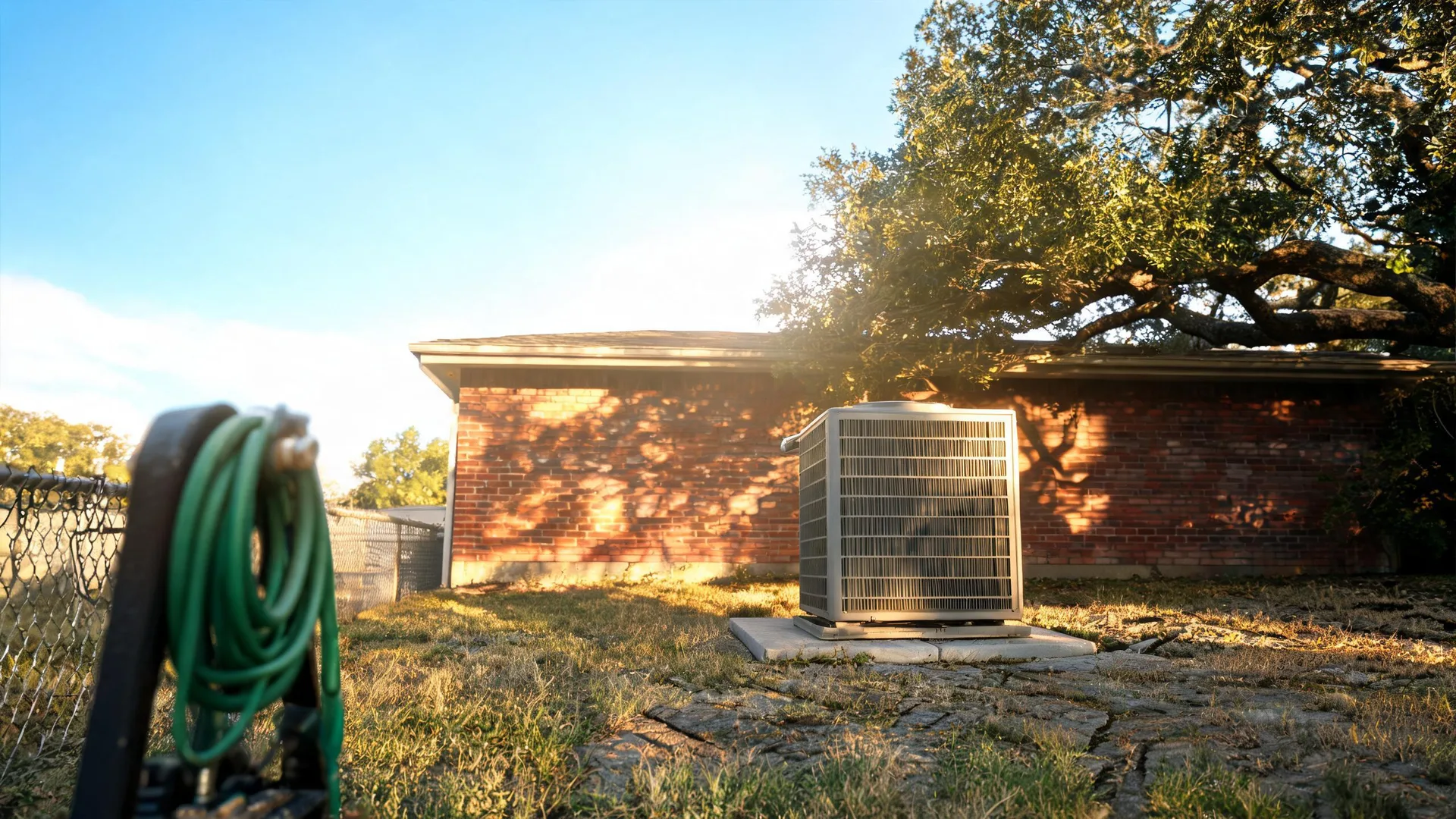
An overhead view of a residential air conditioning condenser unit mounted on a concrete pad next to a house with vinyl siding.

AC Maintenance in Rochester, NY

Tell us about the job

Takes about a minute. No obligation.

Tune-up, service, or cleaningCentral ACMonroe County, NY
Step 1 of 2

What ZIP code is the job in?

The system runs longer to cool the same space

A dirty coil or a low charge makes the compressor work harder to reach the temperature on the thermostat. The house still cools, so there's nothing obvious to notice yet. The strain shows up later, in a compressor that wears out before it should.


Short cycling means something is already wrong

If the system kicks on, runs a few minutes, then shuts off and starts again soon after, that's not normal behavior to live with. It usually points to a dirty filter, a frozen coil, or a thermostat sensor that needs attention. Every one of those restarts puts extra wear on the compressor.

2 months
July through August, your air conditioner is on duty
79°F
the average summer afternoon it cools against
15 hail events
in ten years, and hail bends the fins on outdoor coils
154 wind events
in ten years, and wind drives debris into outdoor units
Isometric grayscale illustration of a cutaway house interior showing a furnace with ductwork, interior rooms with furniture, and an outdoor condenser unit connected by lines at the exterior wall.
Your air conditioner works hardest from July through August.

NOAA nClimDiv, 1991–2020 normals

Half the homes in Monroe County were built in 1965 or earlier.

An AC system that old has had a lot of years to drift out of tune, even if it still cools the house fine.

July is when it starts working. June is when to have it looked at.

Cooling runs July through August
Summer afternoons average 79°F
154 damaging wind events from 2015 to 2024
Two months of cooling a yearCooling here runs July through August, afternoons averaging 79°F.

You can keep the filter clean yourself, and it matters more than people think. A filter clogged with dust makes the system pull harder to move air, and that strain lands on the blower motor over time. Check it once a month, hold it up to the light, and replace it if you can't see through it. Outside, keep the area around the condenser clear. Leaves, mulch, and grass clippings block airflow across the coil, and a few feet of open space on all sides lets it breathe. Don't stack anything against it or let a trellis or bush grow in close. Inside, keep an eye on the vents in each room and make sure furniture or rugs aren't blocking them. Beyond that, the coil, the refrigerant charge, and the electrical connections are jobs for someone who can open the cabinet and test them properly.

A neglected system costs more to run here

Electricity in New York runs 24.43 cents per kilowatt-hour, well above most of the country. A coil that's dirty or a charge that's low makes the compressor work harder for the same cooling, and that extra draw shows up on the bill all summer. A tune-up gets the system back to pulling its rated amount of power instead of more.

Find a contractor
A man in a cap, gray long-sleeve shirt and tan work pants carries a canvas tool bag up concrete steps toward a dark green paneled front door, with a potted shrub to the right.
A gray metal air conditioning condenser unit mounted on a concrete pad in a flat grassy field under a partly cloudy sky.

Put one visit a year on the calendar

If the system in your house dates back to when it was built, nobody's looked at it unless you've called someone. A yearly check catches a weak capacitor or a coil losing its charge before either one takes out the compressor. That's the visit worth putting on the calendar every year, not just when something stops working.

Refrigerant pressure the gauges catch

A system can be low on charge and still blow cold air at the vent. The drop shows up as longer run times and a compressor working harder than it should, not as warm air, so there's no way to notice it from inside the house. Gauges on the lines during a tune-up show the actual pressure against what that system is supposed to run.

A capacitor that's already failing

The capacitor gives the compressor and fan motor the jolt they need to start. It can test weak and still start the system every time you ask it to, right up until the day it doesn't. A meter reads its actual capacitance against what it's rated for, which is the only way to catch one before it strands you with no cooling at all.

Overhead view of an air conditioning condenser unit on a concrete pad next to a house with asphalt shingle roofing and vinyl siding.

Book your AC tune-up in June, before homes here start needing cooling in July.

  1. Jan
  2. Feb
  3. Mar
  4. Apr
  5. May
  6. Jun
  7. Jul
  8. Aug
  9. Sep
  10. Oct
  11. Nov
  12. Dec

A tune-up checks the refrigerant charge, cleans the coils, tests the capacitor and tightens the electrical connections.

A tune-up starts outside at the condenser. The tech pulls the panel, checks the capacitor's output against its rating, and looks over the contactor for pitting, since that's what feeds power to the compressor and fan motor. The coil gets checked and cleaned if it's caked with dirt, because airflow across it is how the system rejects heat. Gauges go on the lines to read refrigerant pressure against what that system calls for, not just whether it's blowing cold. Inside, the blower wheel gets checked for dust buildup and the motor's amp draw gets tested against its rating. Electrical connections at the disconnect and inside the unit get tightened, since a loose connection generates heat and that heat damages whatever it touches.