White colonial houses with lit windows photographed at dusk along a tree-lined residential street.

AC Maintenance in Queens, NY

Tell us about the job

Takes about a minute. No obligation.

Tune-up, service, or cleaningCentral ACQueens County, NY
Step 1 of 2

What ZIP code is the job in?

Power here costs more to waste

Electricity in Queens County averaged 35.15 cents per kilowatt-hour in 2025, higher than most US counties. A dirty coil or a low charge makes the compressor run longer to cool the same house, and every extra minute shows up at that rate.


The air here works your AC harder

The summer dew point in Queens averages 65 degrees, so the air carries real weight on top of the heat. Pulling that moisture out is part of the compressor's job all summer, and a system that isn't maintained has to work harder to do it.

4 months
June through September, your air conditioner is on duty
83°F
the average summer afternoon it cools against
3 hail events
in ten years, and hail bends the fins on outdoor coils
116 wind events
in ten years, and wind drives debris into outdoor units
Isometric cutaway illustration of a single-story house showing interior rooms with furniture, overhead ductwork, an indoor air handler unit, and an outdoor condenser unit connected by lines at the side of the building.
Your air conditioner works hardest from June through August.

NOAA nClimDiv, 1991–2020 normals

A clean filter is the one thing between tune-ups that actually protects the system.

Swap it when it looks gray, and the blower stops working as hard to push air through it.

Half the homes here were built by 1953, and the AC inside them needs the same yearly look

Half the homes here were built by 1953
Cooling runs June through September
Summer afternoons average 83°F
June starts it offCooling here runs June through September. Book the tune-up in May.

If your AC has been there since the house changed hands, or longer, a yearly check gives it a way to catch what's wearing out before it quits in the middle of summer. A tech checks the charge, tests the capacitor, and looks at the contactor and wiring for signs of heat or corrosion. On an older system these parts have had more years of summer heat to wear down, and a weak capacitor often shows up as the compressor struggling to start rather than a full breakdown. Catching that on a spring visit means fixing one part on a quiet afternoon instead of waiting for a call on the hottest day of the year, when the same part has taken down the whole system.

A system running clean costs less to run

A tune-up gets the coil clean and the charge right before the compressor spends all summer working off that rate. The cost of the visit sits a lot lower than months of a system working harder than it should.

Find a contractor
A man in a cap, dark jacket and tan work pants carries a worn canvas tool bag up concrete steps toward a dark green paneled front door of a house with horizontal siding and a potted shrub.
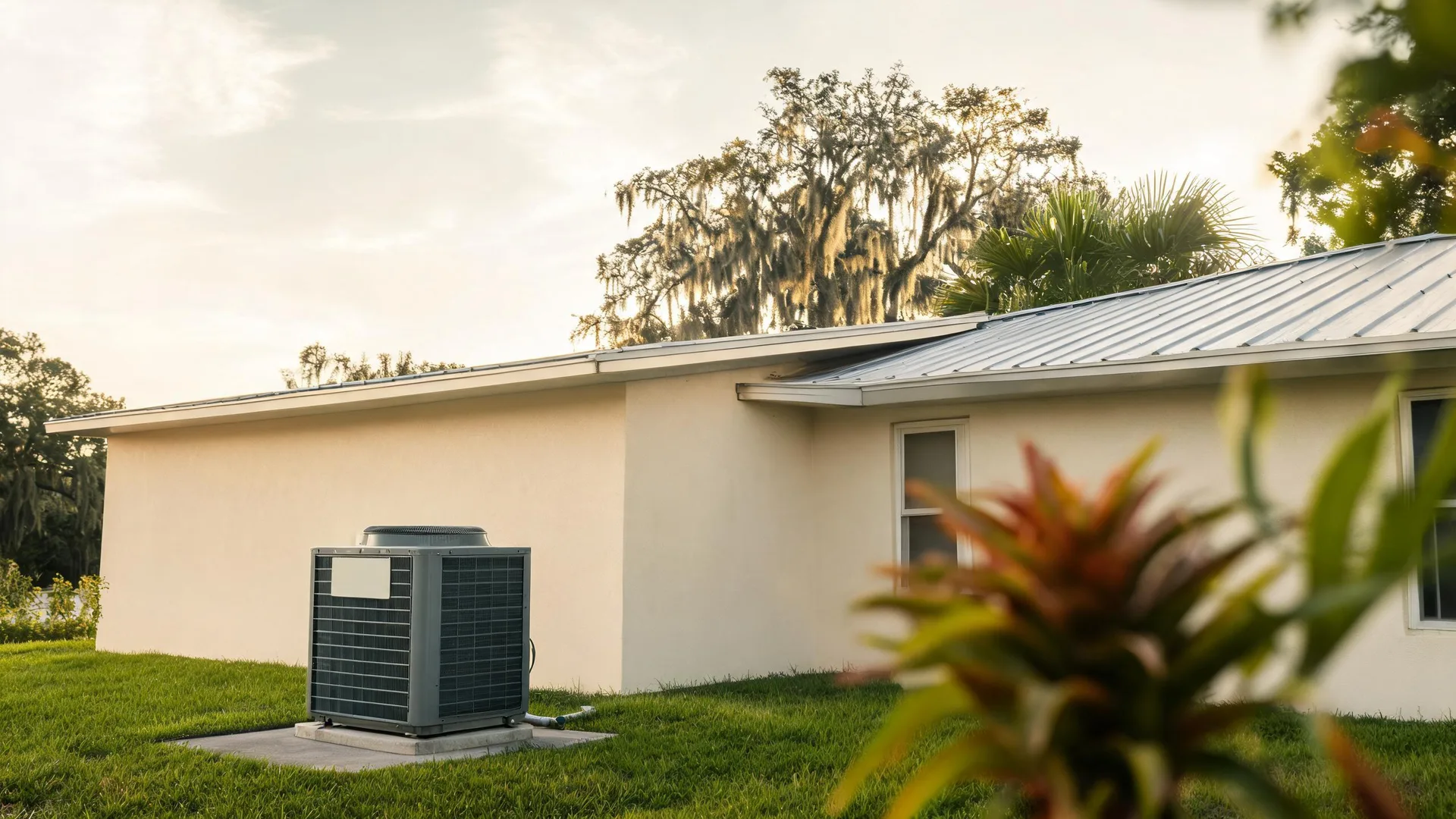
A gray residential air conditioning condenser unit mounted on a concrete pad outdoors, surrounded by green grass under a partly cloudy blue sky.

What a tune-up should actually cover

A quick visit checks that the system turns on and blows cold air. A thorough one takes it apart. The tech pulls the panel, checks refrigerant pressure against what the system calls for, and measures the temperature drop across the evaporator coil. They tighten electrical connections, check the capacitor's output against its rating, and clean the condenser coil with water or a coil cleaner rather than just hosing off the leaves on top. They check that the blower wheel is clean, since a dirty one moves less air no matter how clean the coil is. A fast visit leaves the outdoor coil dirty and never touches the electrical connections, because those take time and nobody can see the difference from the yard. If the tech is in and out in a few minutes, ask what they checked.

The filter protects the coil

A clogged filter starves the evaporator coil of airflow. Without enough air moving across it, the coil can drop below freezing and ice over, and once that happens the system stops cooling until the ice melts off. Ice on the coil also means moisture isn't draining the way it should, since the coil is doing less work pulling heat out of the air and more just sitting cold.

A blocked drain backs up fast

The condensate drain carries off everything the coil pulls out of the air, and that line can clog with algae and dust the same way any drain does. Once it backs up, the water has nowhere to go but out of the pan, and most systems have no way to tell you that's happening until there's a stain on the ceiling below. A tune-up includes flushing that line before it becomes a leak instead of a maintenance item.

An outdoor central air conditioning unit mounted on a concrete pad beside a blue-sided house at sunset.

Book your AC tune-up in May, before homes here start needing cooling in June.

  1. Jan
  2. Feb
  3. Mar
  4. Apr
  5. May
  6. Jun
  7. Jul
  8. Aug
  9. Sep
  10. Oct
  11. Nov
  12. Dec

A tune-up checks the refrigerant charge, cleans the coils, tests the capacitor and tightens the electrical connections.

A tune-up is really two jobs, and they get confused with each other a lot. One is cleaning: the coil, the blower wheel, sometimes the drain line. The other is testing: pressures, temperatures, electrical readings, numbers compared against what the manufacturer specifies for that exact unit. A good tech does both. Cleaning without testing means the system runs on parts that are fine to look at but weak underneath, and testing without cleaning catches problems while leaving the coil choked with dust that makes it work harder regardless. The readings matter because a system can look normal and still be low on charge or pulling too many amps on startup, and nothing about that shows from outside the cabinet. Ask what got measured, not just what got wiped down.