






Overhead view of a gray outdoor AC condenser unit on a concrete pad beside a mulched garden bed and a house with vinyl siding.

AC Maintenance in Poughkeepsie, NY

Tell us about the job

Takes about a minute. No obligation.

Tune-up, service, or cleaningCentral ACDutchess County, NY
Step 1 of 2

What ZIP code is the job in?

Electricity in Dutchess County averaged 27.74 cents per kilowatt-hour in 2025, among the highest rates in the country. A unit that has to work harder for the same cooling burns through more of that expensive power every hour it runs. Summer air here adds to the load. The dew point averages 61°F across June, July and August, heavy enough that the system spends real effort wringing moisture out of the air before it even starts cooling it. A dirty coil or a low charge makes that work harder than it needs to. At these rates, that extra work shows up on the bill fast.

3 months
June through August, your air conditioner is on duty
81°F
the average summer afternoon it cools against
19 hail events
in ten years, and hail bends the fins on outdoor coils
341 wind events
in ten years, and wind drives debris into outdoor units
Isometric line illustration of a cutaway single-story building showing interior rooms, ceiling ductwork, an indoor air handler, and an outdoor condenser unit connected by a line set.
Your air conditioner works hardest from July through August.

NOAA nClimDiv, 1991–2020 normals

Cooling here runs June through August.

Have the AC checked in May, before it has to work at all.

Half the homes here were built by 1971, and age catches up with an air conditioner

Half the homes here were built by 1971
Cooling runs June through August
Summer afternoons average 81°F

Dutchess County saw 341 damaging wind events and 19 hail events between 2015 and 2024, along with 5 tornadoes. An outdoor AC unit sits outside through all of it, and wind-blown branches or hail can bend the fins or dent the cabinet without it being obvious from a glance. Bent fins restrict airflow across the coil, and a unit working against that uses more power to do the same job. Winter adds its own wear: 28 winter storms hit the county over that same stretch, and anything that piled snow or ice against the unit for months can leave debris packed around the base once it melts. A spring check catches that before the unit runs a single hot day on it.

A tune-up keeps that expensive power from going to waste

A tune-up gets the coil clean and the charge right before the unit has to work all summer. That is what keeps it from drawing more of that expensive power than the job actually takes. A unit running the way it was built to run is the cheapest way to cool this house.

Find a contractor
A man in a dark long-sleeved shirt and tan pants, seen from behind, carries a worn canvas tote bag as he climbs wooden steps toward a dark green front door flanked by a potted shrub.
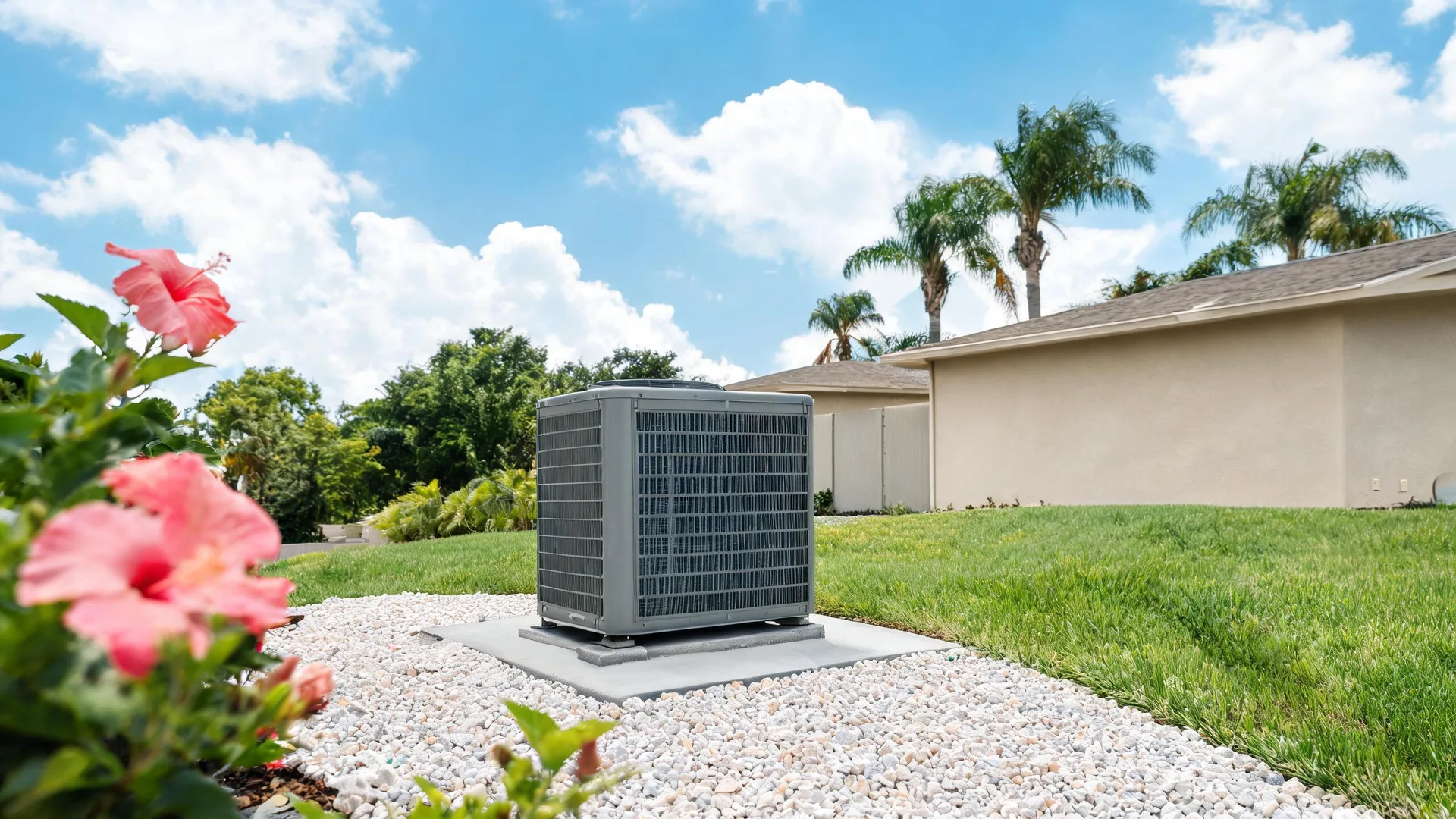
A gray residential air conditioner condenser unit mounted on a concrete pad in an open grass field.

Older systems don't announce their problems

A system that has been running since before anyone in the house moved in does not fail all at once. A capacitor weakens over a few years. A coil loses airflow a little at a time as it collects dust. None of that trips a breaker or stops cold air from coming out of the vents, not right away. A yearly check is what catches a weak part while it is still just weak, not dead on the hottest day of the summer. If your AC came with the house, there is no record of when it was put in, so a tune-up now is also how you find out what you are working with.

What's checked that isn't visible from the thermostat

A technician checks refrigerant charge against the system's specs, something no amount of watching the vents tells you. They measure the temperature split between the air going into the system and the air coming out, which shows whether the unit is actually removing heat the way it should. They test the capacitor's output rather than just whether it starts the unit, because a capacitor can be weak and still get the compressor running. None of this shows up by looking at the unit or feeling the air.

Why a working system can still be working badly

An air conditioner can run, keep the house cool enough, and still be costing more than it should to do it. A coil with a layer of dust on it still transfers heat, just not as well, so the compressor runs longer to make up the difference. A blower wheel caked with grime still moves air, just less of it. The system compensates for all of this by running harder and longer, and a homeowner reading the thermostat has no way to see any of that happening.

An outdoor air conditioning condenser unit mounted on a concrete pad next to a blue-sided residential house at sunset.

Book your AC tune-up in May, before homes here start needing cooling in June.

  1. Jan
  2. Feb
  3. Mar
  4. Apr
  5. May
  6. Jun
  7. Jul
  8. Aug
  9. Sep
  10. Oct
  11. Nov
  12. Dec

A tune-up checks the refrigerant charge, cleans the coils, tests the capacitor and tightens the electrical connections.

A tune-up starts outside, at the condenser. The technician cuts power to the unit first, then pulls the top panel or grille to get at the parts inside. The coil gets cleaned, fins and all, since dirt on that coil is what makes the compressor work harder for the same result. The fan motor and blade get checked for wobble or noise, because a bearing going bad there will eventually seize the motor. Refrigerant lines get inspected for rubbing or wear where they run against the cabinet or each other. Inside, the evaporator coil and drain line get checked too. A clogged drain line backs up and can shut the system down or let water sit where it shouldn't. Electrical connections get tightened, since a loose connection generates heat and that heat damages the parts around it over time. None of this is guesswork. Each reading gets compared against what the manufacturer specifies for that unit, and anything outside the range gets flagged before it turns into a breakdown.