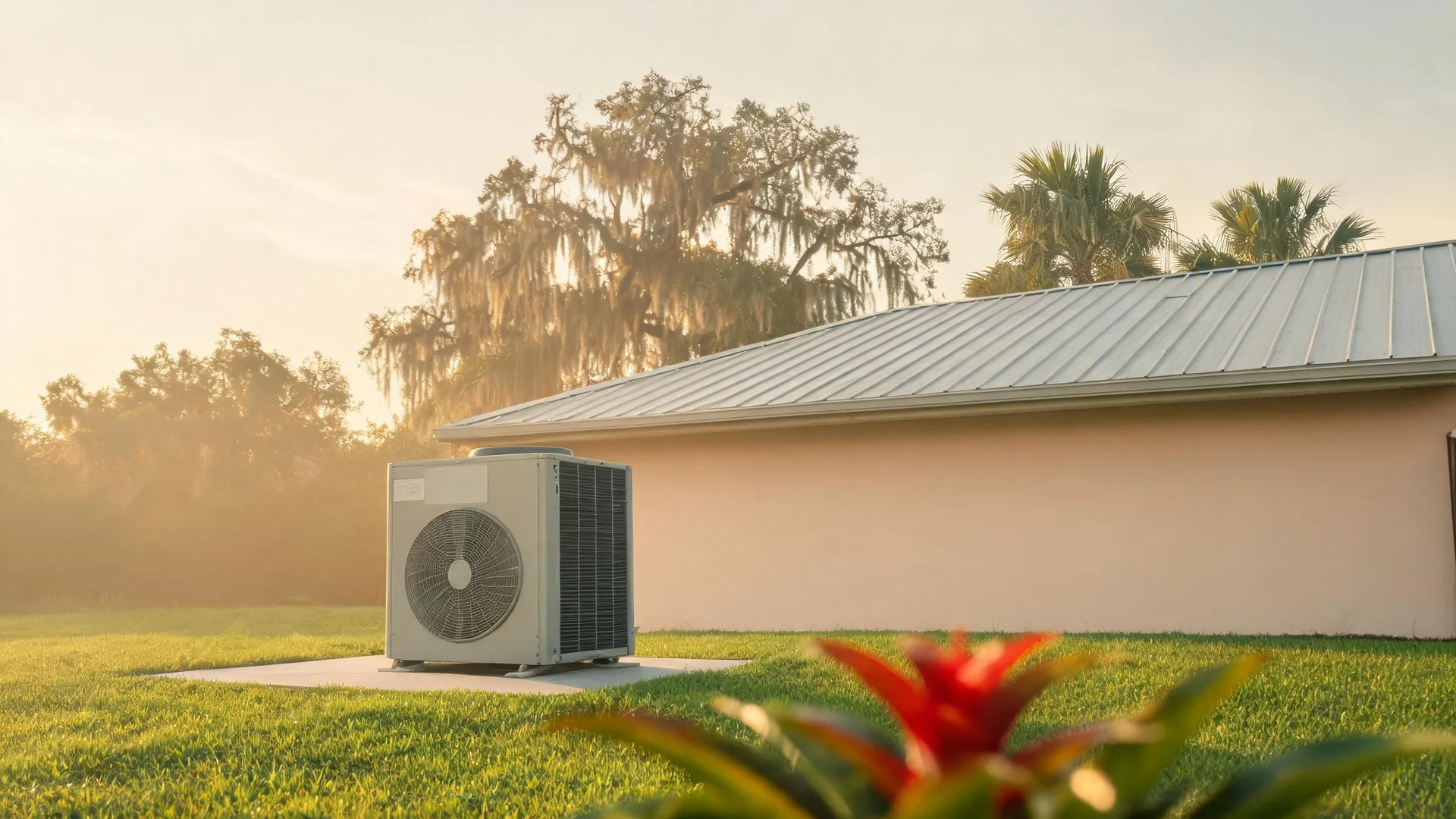
Aerial view of a square outdoor air conditioning condenser unit on a concrete pad beside a house wall with a sliding glass door.

AC Maintenance in Oswego, NY

Tell us about the job

Takes about a minute. No obligation.

Tune-up, service, or cleaningCentral ACOswego County, NY
Step 1 of 2

What ZIP code is the job in?

The system runs longer to do the same job

A dirty condenser coil or a low charge makes the compressor work harder to get the house to temperature. You might not hear anything wrong. You just notice the unit cycling on more often, or running long stretches it never used to.


That strain shows up as a repair later

A compressor working against a blocked coil or a low charge wears out faster than one that isn't. A check catches a dirty filter or a weak capacitor while it's still a small job, before either one takes the compressor down with it.

2 months
July through August, your air conditioner is on duty
78°F
the average summer afternoon it cools against
28 hail events
in ten years, and hail bends the fins on outdoor coils
177 wind events
in ten years, and wind drives debris into outdoor units
Isometric line illustration of a cutaway single-story building showing interior rooms, ceiling ductwork, an indoor air handler, and an outdoor condenser unit connected by a line set.
Your air conditioner works hardest from July through August.

NOAA nClimDiv, 1991–2020 normals

Cooling in Oswego County runs July through August.

June is when to get the system checked, before it has to work.

Oswego's weather tests the power grid, not the air conditioner

240 severe weather events from 2015 to 2024
11% of homes statewide lost power a day or more in 2024
177 damaging wind events from 2015 to 2024

A tune-up gets at what the filter and the thermostat never show you. A technician checks the refrigerant charge against what the system is supposed to hold, not just whether it's cooling. Low charge doesn't always mean a hiss or a puddle. It can just mean a slow leak that's been going on for a while. They'll also check the capacitor's actual strength, not just whether it starts the unit, because a capacitor can be on its way out and still get the compressor running that day. The condenser coil gets looked at and cleaned if it needs it, since dirt packed into the fins holds heat in a place the system needs to shed it. None of this shows up by looking at the thermostat or listening to the unit run.

Keep up the yearly check

Easy duty still wears parts. A yearly check keeps it going a long time.

Find a contractor
An outdoor residential air conditioning condenser unit mounted on a concrete pad, surrounded by gravel with a blue sky in the background.

What's yours to check, what isn't

The filter is the one job that's actually yours. Pull it out, hold it up to a light. If you can't see light through it, it's done. A clogged filter starves the system of airflow, and that shows up as ice on the coil before it shows up as anything you'd notice indoors. Check it every month the system runs, longer if there's a pet shedding into it. Outside, keep the area around the condenser clear. Leaves, grass clippings, a shrub growing in too close, all of it blocks the airflow the coil needs to dump heat. Beyond that, leave the unit alone. The refrigerant charge, the capacitor, the coil itself, those aren't things to check yourself, and opening the cabinet without the right gauges does more harm than the dirt would have.

A small leak never fixes itself

A refrigerant leak too small to hear will still be there next year, except the system has run low on charge for another full season by then. Every month on a low charge is wear on a compressor that was never built to run that way.

The motor bearings go quiet, then they don't

Fan motors and blower motors run on bearings that need to stay lubricated. Skip enough checks and they start to run dry, which shows up as a grinding or squealing sound right before the motor seizes. A seized motor is a replacement. A dry bearing caught early is a drop of oil.

Overhead view of a gray residential air conditioning condenser unit mounted on a concrete pad beside a house with asphalt shingle roofing.

Book your AC tune-up in June, before homes here start needing cooling in July.

  1. Jan
  2. Feb
  3. Mar
  4. Apr
  5. May
  6. Jun
  7. Jul
  8. Aug
  9. Sep
  10. Oct
  11. Nov
  12. Dec

A tune-up checks the refrigerant charge, cleans the coils, tests the capacitor and tightens the electrical connections.

A tune-up also covers the drain line and the electrical connections, and neither one fails the way a warm house fails. Condensate drains clog with algae over time, and when one backs up, the water has nowhere to go but back into the house. A technician flushes the line before that happens, not after. On the electrical side, the connections in the disconnect box and at the unit itself get checked for looseness or corrosion. A loose connection runs hot, and a connection that runs hot long enough burns the wire or the terminal it sits on. You don't hear either of these coming. You find out when the drain pan overflows, or when a technician points out a scorched wire that was close to failing outright.