







Two white multi-story colonial houses with lit windows and black shutters photographed at night, fronted by a stone wall.

AC Maintenance in Oneida, NY

Tell us about the job

Takes about a minute. No obligation.

Tune-up, service, or cleaningCentral ACMadison County, NY
Step 1 of 2

What ZIP code is the job in?

Your air conditioner in Oneida only has to work two months a year, July and August, with afternoon highs averaging around 77 degrees. That's a short season and a mild one. A system here isn't fighting the heat the way one in a hotter state would, so it doesn't wear out from strain. When something goes wrong, it's usually age catching up with it, or a year or two of skipped maintenance, not the machine being overworked. That makes a yearly check worth more than it might seem. There's less to find, and what's found is easier to catch before the next stretch of hot afternoons.

2 months
July through August, your air conditioner is on duty
77°F
the average summer afternoon it cools against
13 hail events
in ten years, and hail bends the fins on outdoor coils
87 wind events
in ten years, and wind drives debris into outdoor units
Isometric cutaway illustration of a small house showing interior rooms, ductwork, an indoor air handler, and an outdoor condenser unit connected by lines, on a plain white background.
Your air conditioner works hardest from July through August.

NOAA nClimDiv, 1991–2020 normals

Some tune-ups end with a hose rinsed over the coil and a filter swapped.

A thorough one checks the capacitor's output under load and measures the refrigerant charge against what the system is rated to hold.

Half the homes in Madison County date to 1964 or earlier, old enough for a yearly check to matter

Half the homes here were built by 1964
Cooling runs July through August
Summer afternoons average 77°F
One check a year covers itElectricity here ran 24.43 cents a kilowatt-hour in 2024, and a straining system burns more of it.

A dirty filter is the start of most of it. Air has to pull through that filter to get across the coil, and when it's clogged the coil can't pull heat out of the air the way it should. Leave it long enough and the coil itself ices over, and once that happens the system is blowing warm air no matter how hard it runs. The coil needs to stay clean too, since dust and grime on the fins work the same way a clogged filter does, just slower. Then there's the drain, which carries off all the water that coil pulls out of the air. If that line clogs, the water backs up and finds somewhere else to go, usually a pan or a ceiling underneath it. None of this takes a hard freeze or a heat wave to happen. It just takes a system nobody looked at in a while.

If the system came with the house, get it looked at every year

If your system has been in the house since before you owned it, nobody's kept track of what it's been through. A yearly check is how you find the worn capacitor or the weak contactor before it leaves you without cooling.

Find a contractor
A man in a cap, dark long-sleeved shirt and brown work pants climbs porch steps toward a dark green front door, carrying a canvas tool bag filled with hand tools.
A gray cylindrical air conditioning condenser unit mounted on a concrete pad next to a light-colored vinyl-sided house exterior.

What a skipped year does to the system

A compressor doesn't fail on the first skipped season. It fails because a capacitor weakened a little more each year nobody tested it, or a contactor kept arcing a little longer each time it closed, until one day it doesn't close at all. Refrigerant works the same way. A slow leak stays slow right up until the system is low enough that the compressor runs hot and wears against itself. None of that shows up by looking at the unit from across the yard. It shows up when someone checks the charge and tests the parts that carry the load every time the system cycles on.

Keep the filter clean yourself

Check the filter every month the system runs, and swap or rinse it when it looks gray. This is the one job that's really yours. Everything past the filter, the coil, the refrigerant charge, the electrical parts, needs a tech's gauges and meters to check properly.

Keep the outdoor unit clear

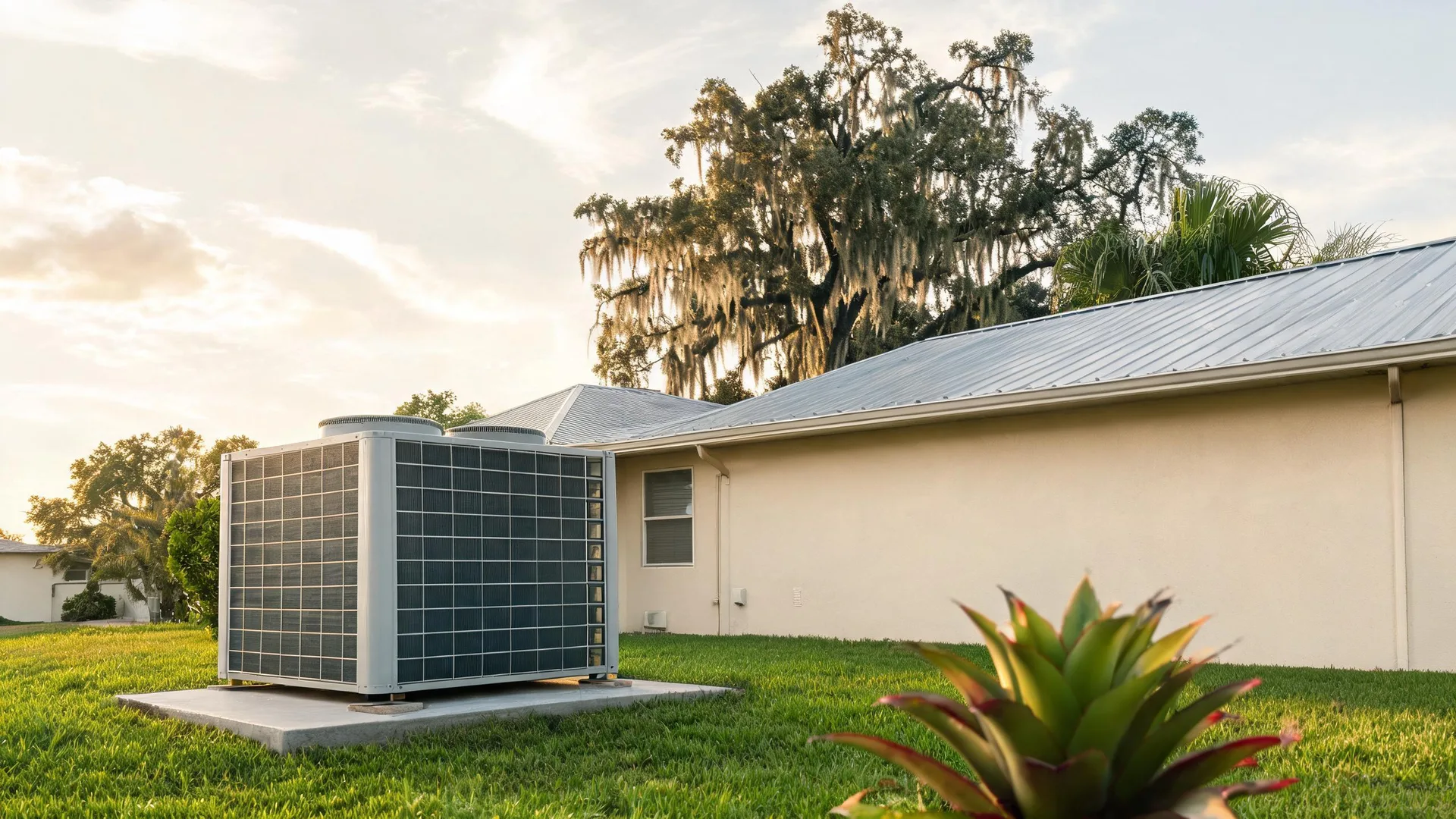
Walk out and look at the condenser now and then. Pull weeds, grass clippings, and leaves away from the cabinet, and keep anything from growing up against the sides. Air has to move through those fins freely, or the system struggles to get rid of the heat it just pulled out of the house.

An outdoor air conditioning condenser unit installed beside the exterior wall of a blue vinyl-sided house at sunset.

Book your AC tune-up in June, before homes here start needing cooling in July.

  1. Jan
  2. Feb
  3. Mar
  4. Apr
  5. May
  6. Jun
  7. Jul
  8. Aug
  9. Sep
  10. Oct
  11. Nov
  12. Dec

A tune-up checks the refrigerant charge, cleans the coils, tests the capacitor and tightens the electrical connections.

A tune-up starts with the electrical side, since that's what fails without warning. A tech checks the capacitor's actual output against its rating, not just whether the system starts, because a weak one will still start right up until the day it doesn't. The contactor gets checked too, the switch that closes every time the system cycles on, since the points on it burn and pit a little more each season. Refrigerant charge gets measured against what the system is supposed to hold, not topped off by guess. The condenser fan motor gets tested under load, and the coil gets checked for the kind of dirt that doesn't show from a quick look. None of these are things you can see from across the yard, and none of them wait politely until they're convenient to fail.