An outdoor air conditioning condenser unit positioned beside a blue-sided house at sunset.

AC Maintenance in Olean, NY

Tell us about the job

Takes about a minute. No obligation.

Tune-up, service, or cleaningCentral ACCattaraugus County, NY
Step 1 of 2

What ZIP code is the job in?

A dirty filter works the whole system harder

When the filter clogs, the blower has to pull harder to move air across the coil. The coil can get cold enough to ice over, and once it does, the system stops cooling the house at all until that ice melts off.


The drain line is what keeps water out of the ceiling

The indoor coil pulls moisture out of the air all season, and that water has to leave through the condensate drain. If that line clogs with algae or sludge, the pan backs up and overflows, often right where it can reach a ceiling or a wall below.

1 months
July through July, your air conditioner is on duty
77°F
the average summer afternoon it cools against
6 hail events
in ten years, and hail bends the fins on outdoor coils
219 wind events
in ten years, and wind drives debris into outdoor units
Isometric cutaway illustration of a single-story house showing interior rooms with furniture, attic ductwork connected to an indoor air handler, and an outdoor condenser unit on a pad linked by refrigerant lines.
Your air conditioner works hardest from July through July.

NOAA nClimDiv, 1991–2020 normals

Cooling in Cattaraugus County runs in July and nowhere else.

Get the check done in June, before the system has to work.

Half the homes here were built by 1960, old enough that a yearly check matters

Half the homes here were built by 1960
Climate zone 5A
Power costs 24.43 cents a kWh statewide

If your system came with a house built that long ago, you may not know what's been replaced and what hasn't. A yearly check gives a technician a chance to look at the whole thing. The refrigerant charge, the electrical connections, the condition of the coil. A frayed wire or a slow refrigerant leak found early is a small fix. Found later, on a hot day with the system already struggling, it's a bigger one.

Book it before the season

It starts running hard in the first month of the season here. Book the check the month before.

Find a contractor
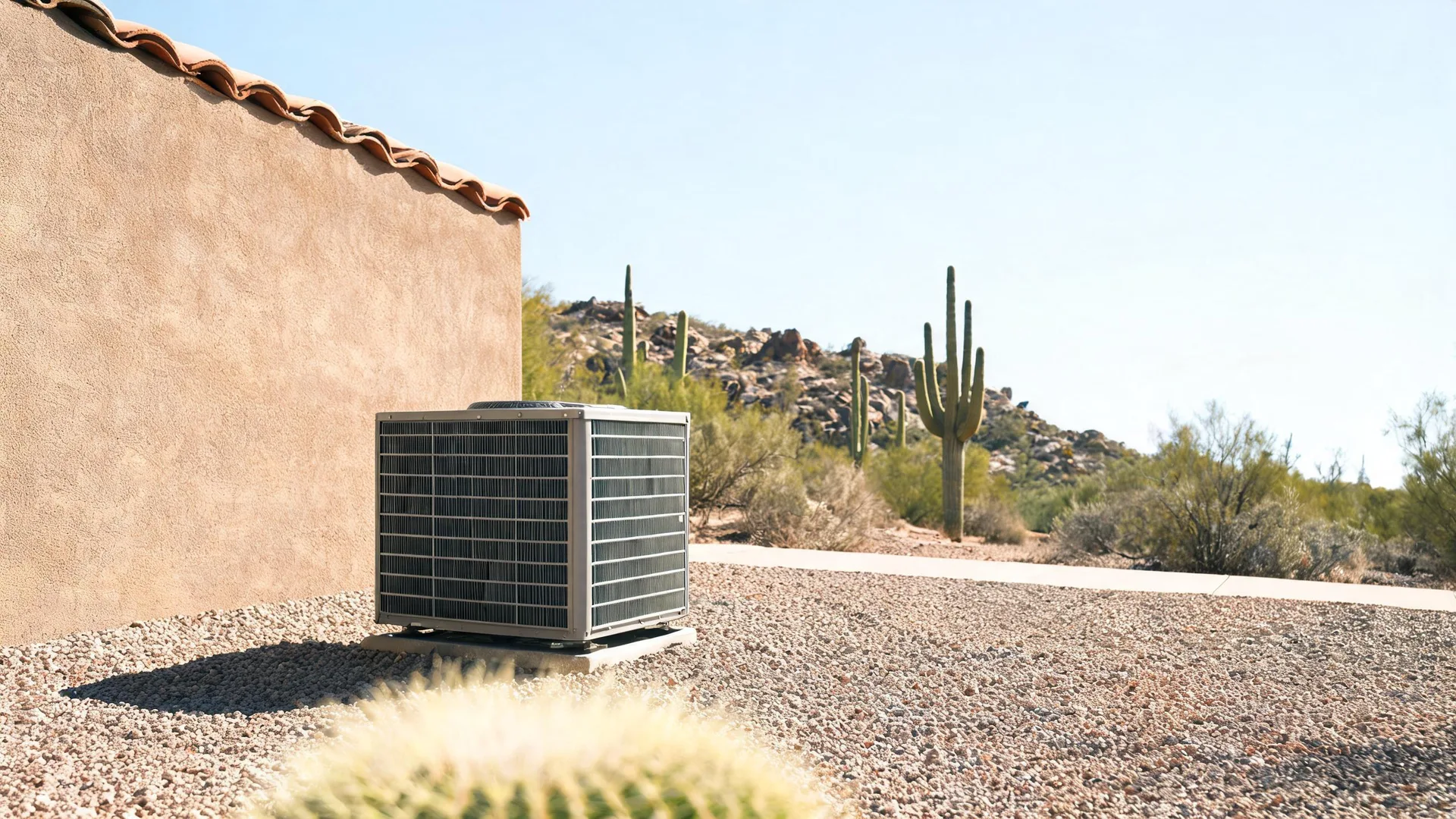
A gray residential air conditioner condenser unit mounted on a concrete pad in an open grass field.

One month of work a year

One month a year, this system runs. Afternoon highs here average 77 degrees across June, July and August, mild enough that the compressor rarely has to work hard even in that month. With a duty cycle that short, the problems that show up tend to be a part that sat too long without running, or dust that settled in while the unit was off, not heat wearing it down. A yearly check before July catches that kind of thing while it is still a small job.

A real tune-up means taking things apart

A thorough check has the panels off and a meter in hand. The technician checks refrigerant pressure against the system's target. The capacitor gets tested under load, not just looked at. The condenser coil gets washed, not glanced at. A quick visit skips most of that. Someone checks the thermostat, listens to the unit run for a minute, and leaves without ever pulling the access panel.

Ask what the technician actually measured

A real check leaves you with numbers. The refrigerant pressure. The temperature split between the air going into the system and the air coming out. The amp draw on the compressor. If the visit ends with someone saying everything looks fine and nothing else, there's no way to know if that's true or if they just didn't check.

An outdoor air conditioning condenser unit positioned on a concrete pad next to a blue-sided house, surrounded by green shrubs and flowering hydrangeas at sunset.

Book your AC tune-up in June, before homes here start needing cooling in July.

  1. Jan
  2. Feb
  3. Mar
  4. Apr
  5. May
  6. Jun
  7. Jul
  8. Aug
  9. Sep
  10. Oct
  11. Nov
  12. Dec

A tune-up checks the refrigerant charge, cleans the coils, tests the capacitor and tightens the electrical connections.

A tune-up starts outside at the condenser. The technician checks that the fan spins freely and the coil fins aren't bent flat, blocking airflow. Refrigerant pressure gets checked against what the system is supposed to run at, not guessed at by feel. Electrical connections get tightened, since a loose one heats up and fails under load. The contactor gets looked at too, since the points on it pit and burn with use and that's a common reason a condenser won't start. Inside, the blower wheel gets checked for dust buildup, because a dirty wheel moves less air even when the motor is running fine.