An outdoor central air conditioning unit mounted on a concrete pad beside a blue-sided house at sunset.

AC Maintenance in Niagara Falls, NY

Tell us about the job

Takes about a minute. No obligation.

Tune-up, service, or cleaningCentral ACNiagara County, NY
Step 1 of 2

What ZIP code is the job in?

The refrigerant charge gets checked, not just looked at

A quick visit gets you a glance at the outdoor unit and a filter reminder. A thorough one has the tech hook up gauges and check the refrigerant charge against what the system is supposed to have. Low charge from a slow leak won't show up just by looking, and it's the thing most likely to burn out your compressor early.


The condensate drain gets cleared, not just checked

Algae and sludge build up in that drain line over time, and when it clogs, water backs up into the pan and can shut the whole system down or overflow into your house. A tune-up that matters has the tech actually flush the line, not just glance at it and move on.

2 months
July through August, your air conditioner is on duty
79°F
the average summer afternoon it cools against
17 hail events
in ten years, and hail bends the fins on outdoor coils
87 wind events
in ten years, and wind drives debris into outdoor units
Isometric grayscale illustration of a cutaway house with the roof lifted, showing interior rooms, ductwork, an indoor air handler, and an outdoor condenser unit beside the building.
Your air conditioner works hardest from July through August.

NOAA nClimDiv, 1991–2020 normals

Cooling here starts in July and runs about two months, through August.

June is when to get the system checked, right before it has to work.

Same system, same tech, year after year

Half the homes here were built by 1958
Climate zone 5A
Power costs 24.43 cents a kWh statewide

The capacitor is another part that fails without warning. It stores the charge that kicks the compressor and fan motor on, and it weakens slowly, so the system keeps starting fine until the day it doesn't. A tech can test it under load and tell you if it's reading weak, long before it strands you with a unit that just hums and won't start. The contactor gets checked too. Its contacts pit and burn a little every time it cycles, and a pitted contactor can stick or fail to pull in at all. Neither part gives you a warning sign you'd notice from inside the house.

Book it before the season

It starts running hard in the first month of the season here. Book the check the month before.

Find a contractor
A man in a dark shirt and tan work pants, seen from behind, carries a canvas duffel bag up wooden porch steps toward a dark green front door.
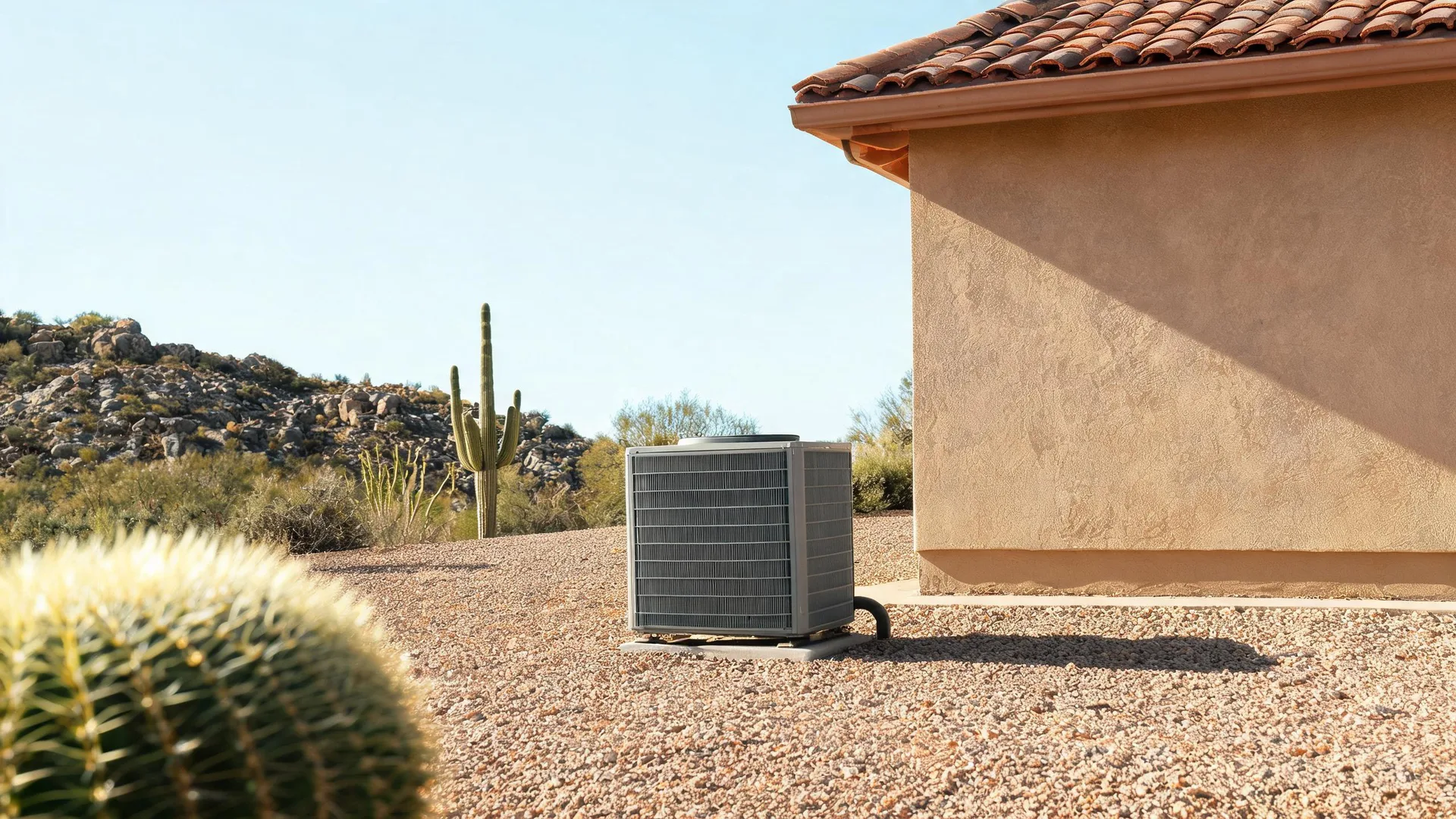
An outdoor residential air conditioning condenser unit mounted on a concrete pad, surrounded by gravel with a blue sky in the background.

An older system needs eyes on it every year

Half the homes in Niagara County were built in 1958 or earlier. A system in a house that old has usually had more than one owner, and whoever checks it now doesn't know its full history of installs and repairs. A yearly check gets a tech looking at the same unit year after year, so a slow refrigerant leak or a weakening capacitor gets caught while it's still small, not after it's left you without cooling.

The filter is the cheapest insurance you have

A dirty filter chokes airflow across the evaporator coil, and that coil can get cold enough to ice over. Once ice forms, airflow drops further and the system cools worse the longer it runs. A filter is also the one part of this system meant for the homeowner to check, no tech required.

The coils and the drain depend on each other

The evaporator coil pulls moisture out of the air as it cools it, and that water has to go somewhere. It drips into a pan and down the condensate line. A coil running dirty or iced puts more water than usual into that pan, right when the drain is least able to handle it.

Aerial view of a square outdoor air conditioning condenser unit on a concrete pad beside a house wall with a sliding glass door.

Book your AC tune-up in June, before homes here start needing cooling in July.

  1. Jan
  2. Feb
  3. Mar
  4. Apr
  5. May
  6. Jun
  7. Jul
  8. Aug
  9. Sep
  10. Oct
  11. Nov
  12. Dec

A tune-up checks the refrigerant charge, cleans the coils, tests the capacitor and tightens the electrical connections.

A proper tune-up covers more than the refrigerant and the drain. The tech pulls the panel and checks the blower motor and its bearings, since a motor straining to turn makes the whole system work harder than it should. The outdoor fan motor gets the same look, along with the blades, since a bent blade throws the airflow off balance. Electrical connections get tightened, because a loose wire at the contactor or disconnect runs hot and burns the connection further over time. The evaporator coil gets inspected too, not just the condenser outside, since a dirty evaporator coil restricts airflow the same way a clogged filter does. Thermostat settings and the temperature split between the return and supply air get checked last, since that split tells the tech whether the system is actually cooling the way it should.