A long white picket fence curves along a mown grass strip in front of a row of gray-sided houses shaded by large deciduous trees.

AC Maintenance in Kiryas Joel, NY

Tell us about the job

Takes about a minute. No obligation.

Tune-up, service, or cleaningCentral ACOrange County, NY
Step 1 of 2

What ZIP code is the job in?

The coil loses its grip first

A dirty condenser coil can't shed heat the way it should, so the compressor runs longer to get the same cooling. Dust and pollen build up on the fins over time whether anyone notices or not. A tech cleans the coil, checks the refrigerant charge, and tests the capacitor and contactor before any of that strain turns into a breakdown.


Skip it and the compressor pays

The compressor is the most expensive part in the system, and it's the part that suffers most when the rest of the unit is neglected. A clogged filter or a weak capacitor makes it work harder on every single cycle. That kind of strain doesn't announce itself. It just shortens the life of a part nobody wants to replace early.

3 months
June through August, your air conditioner is on duty
81°F
the average summer afternoon it cools against
9 hail events
in ten years, and hail bends the fins on outdoor coils
155 wind events
in ten years, and wind drives debris into outdoor units
Isometric cutaway illustration of a single-story house showing interior rooms with ductwork and an air handler, connected by refrigerant lines to an outdoor condenser unit on the left.
Your air conditioner works hardest from July through August.

NOAA nClimDiv, 1991–2020 normals

A real tune-up checks the refrigerant charge, not just the filter.

Too little refrigerant makes the compressor run long cycles and still fall short of cooling the house.

A unit that's slipping costs more here than almost anywhere else

Power here costs 26.96 cents per kilowatt-hour
Cooling runs June through August
Summer afternoons average 81°F
June is when it starts workingCooling in Orange County runs June through August. Book the tune-up in May.

The filter is the only part of this system the homeowner can see, and it's doing more than keeping dust off the coil. Airflow runs the whole machine. A filter packed with lint and pet hair chokes that airflow down, and the evaporator coil behind it can get cold enough to frost over. Once ice forms on the coil, it blocks even more air, and the cycle feeds itself until the system is barely cooling at all. The condensate drain matters just as much and gets thought about even less. That line carries away the water the coil pulls out of the air, and when it clogs with algae or dirt, the water backs up into the pan and out onto the floor or ceiling below. None of this takes a failed part. It just takes nobody looking.

Get it running efficiently before summer bills do the math for you

A unit that's lost its edge still runs, it just pulls more power doing less cooling, and power here isn't cheap to waste. A tune-up gets the coil, the charge, and the airflow back to where they should be before that waste shows up on a bill.

Find a contractor
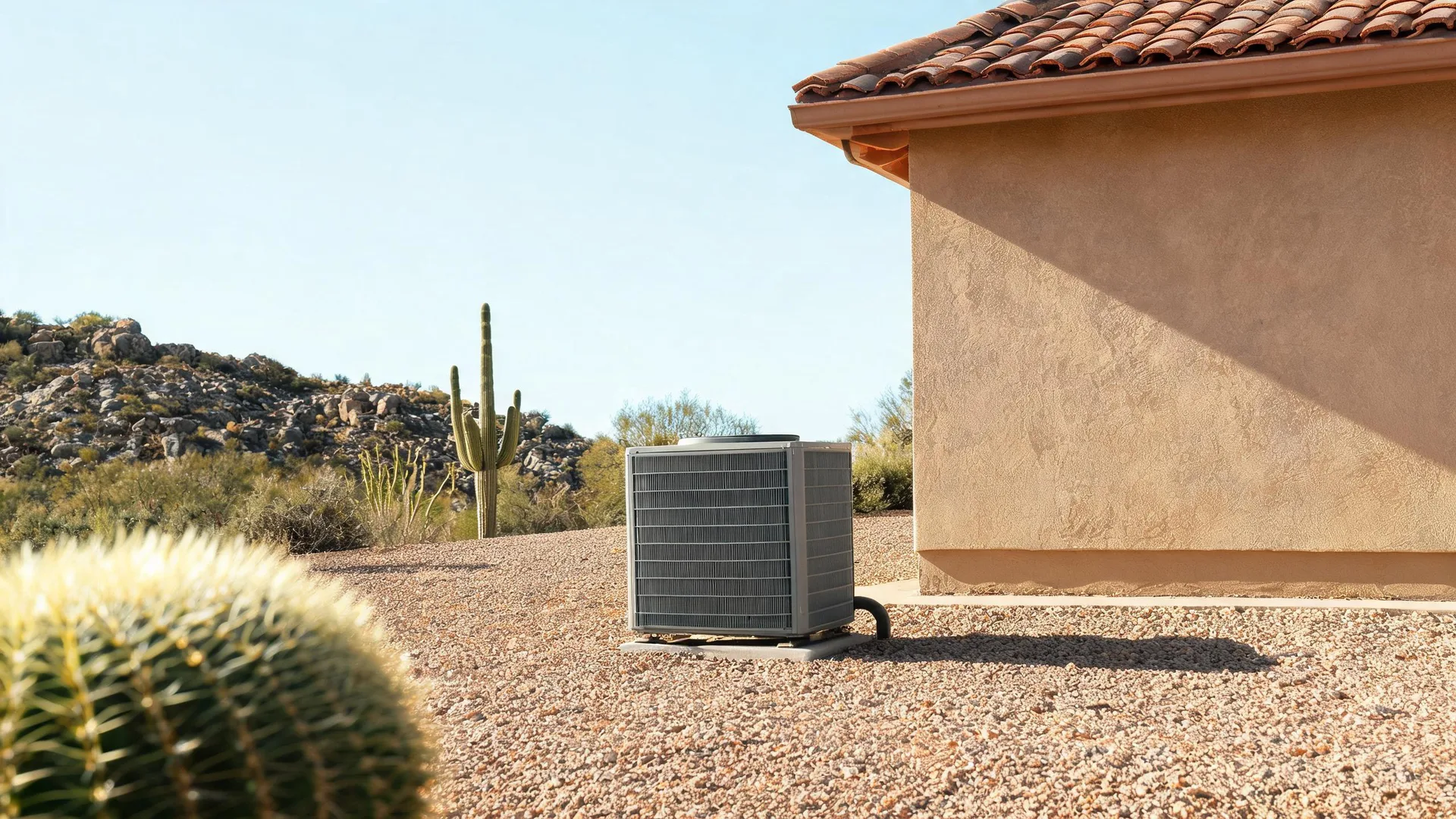
An outdoor residential air conditioning condenser unit mounted on a concrete pad, surrounded by gravel with a blue sky in the background.

The parts that fail quietly

A tech checks things the homeowner has no way to see from the thermostat. Static pressure in the ductwork tells you if the system is struggling to push air at all, even when the air coming out feels fine at the vent. The contactor's switch can pit and burn a little more with every cycle until one day it doesn't close. A capacitor can read weak on a meter for a long time before it ever strands the compressor on a hot afternoon. The fan motor's bearings wear slowly enough that the sound doesn't change much week to week, so nobody notices until the motor seizes. None of this shows up by looking at the unit or feeling the air. It shows up on a gauge, a meter, or a pressure reading, which is the whole reason the check happens before the system is asked to run flat out.

Keep the filter clean and the path clear

Check the filter every month during the summer and swap it when it looks gray or matted. Keep furniture and curtains away from the return vent so the system can pull air in, and make sure nothing is stacked against the supply vents around the house. Outside, keep the area around the condenser clear of leaves, grass clippings and anything growing up against the cabinet so it has room to shed heat.

Know what to leave alone

Don't pull the panels off the condenser or touch the wiring inside it. The capacitor holds a charge even with the power off, and the refrigerant lines aren't something to open or adjust. If the system is icing up or short cycling, turn it off and let it sit rather than running it through the problem. Running a unit with a frozen coil or a failing part only pushes more strain onto the compressor, and that one isn't a homeowner repair.

Aerial view of a square outdoor air conditioning condenser unit on a concrete pad beside a house wall with a sliding glass door.

Book your AC tune-up in May, before homes here start needing cooling in June.

  1. Jan
  2. Feb
  3. Mar
  4. Apr
  5. May
  6. Jun
  7. Jul
  8. Aug
  9. Sep
  10. Oct
  11. Nov
  12. Dec

A tune-up checks the refrigerant charge, cleans the coils, tests the capacitor and tightens the electrical connections.

A system can run and still be telling you something is wrong. Warm air from a vent that used to feel cold means the charge is off or the airflow across the coil has dropped. Short cycling, where the unit shuts off a few minutes after it starts, usually means a thermostat problem or a compressor protecting itself from a fault somewhere else. A hissing or clicking sound at startup that wasn't there before is often the contactor or a refrigerant leak announcing itself early. Water pooling near the indoor unit points to a condensate line that's clogged or already backed up. None of these need a full breakdown to matter. A check catches them while they're still a sound or a weak reading, not yet a service call.