






Aerial view of a gray outdoor air conditioning condenser unit mounted on a concrete pad next to a house with vinyl siding.

AC Maintenance in Ithaca, NY

Tell us about the job

Takes about a minute. No obligation.

Tune-up, service, or cleaningCentral ACTompkins County, NY
Step 1 of 2

What ZIP code is the job in?

Your air conditioner only has to earn its keep here from July through August. That's about two months of real work, with afternoons averaging around 78°F, which is mild as cooling loads go. That mild stretch means less strain on the compressor and coil than units see in hotter parts of the country. It doesn't mean the AC can be ignored. A capacitor weakens or a coil gets dirty on its own schedule, whether the unit runs two months a year or most of them. A check before summer catches those small problems while they're still small, and in a place where the system isn't fighting extreme heat, most of what goes wrong traces back to age or a skipped service rather than the machine being overworked.

2 months
July through August, your air conditioner is on duty
78°F
the average summer afternoon it cools against
7 hail events
in ten years, and hail bends the fins on outdoor coils
86 wind events
in ten years, and wind drives debris into outdoor units
Isometric line illustration of a cutaway house showing interior rooms with ductwork, an air handler and furnace, connected by lines to an outdoor condenser unit on the ground outside.
Your air conditioner works hardest from July through August.

NOAA nClimDiv, 1991–2020 normals

July is when cooling here goes from zero to full load in a matter of days.

Have the AC checked in June, before that jump, not after it.

Two months of real heat, one visit to get ready for it

Power costs 24.43 cents a kWh statewide
Cooling runs July through August
Summer afternoons average 78°F
Old or new, the AC still gets one check a yearHalf the homes here were built in 1974 or earlier, half in 1974 or later

Get the check done in June, before the first hot stretch, not during it. A tech can test the capacitor, clear the coil and condensate line, and confirm the refrigerant charge while the system is idle, rather than chasing a complaint on a hot afternoon. Tompkins County also sees its share of damaging wind, enough to knock an outdoor unit out of level or loosen a connection over the winter. A spring visit catches that too, before the unit is asked to run.

Keep up the yearly check

Easy duty still wears parts. A yearly check keeps it going a long time.

Find a contractor
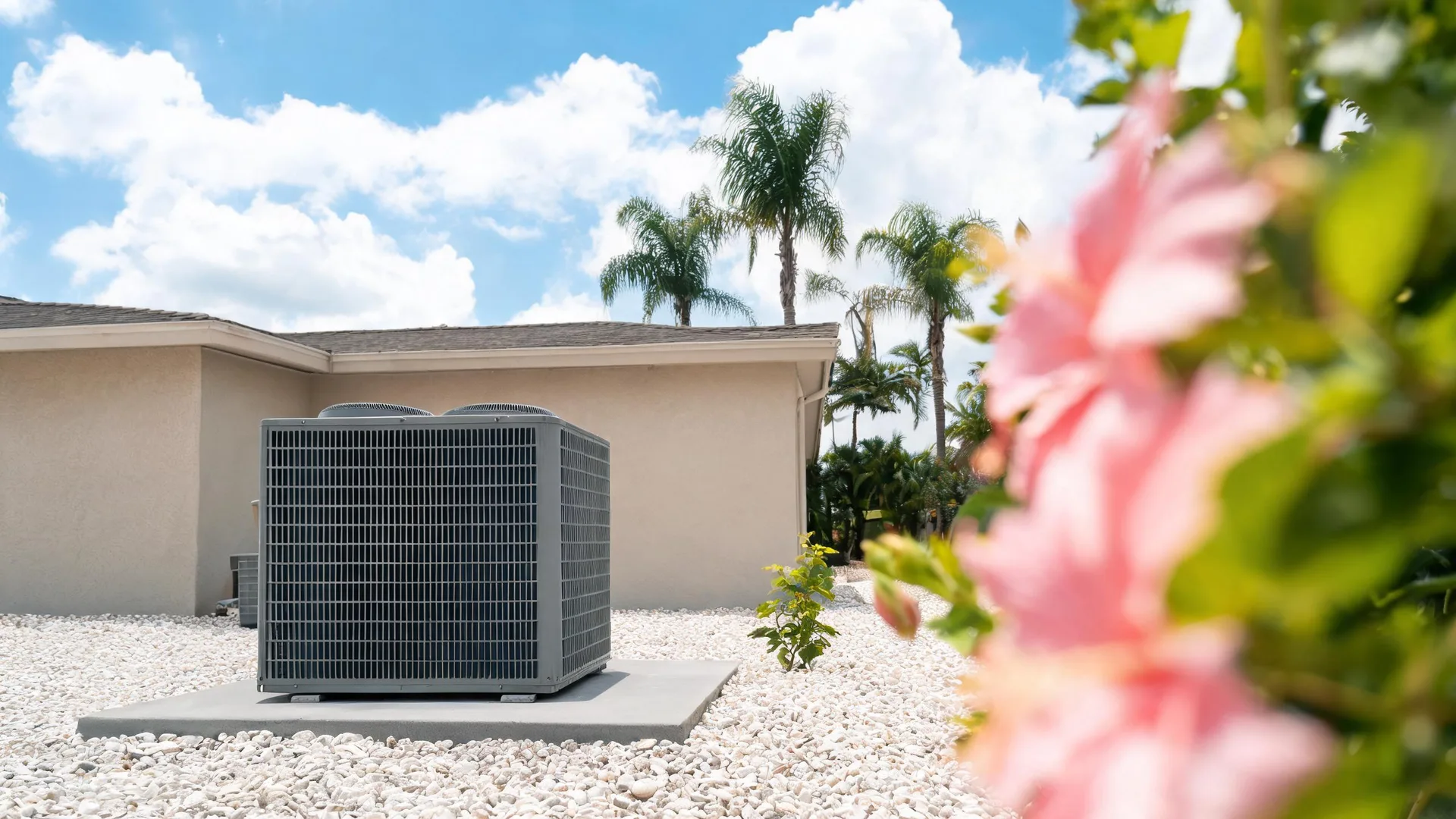
An outdoor air conditioning condenser unit mounted on a concrete pad surrounded by gravel, photographed against a partly cloudy blue sky.

The difference is what got opened, not how long it took

A quick visit gets you a glance at the filter and a gauge reading, then a sticker on the unit. A thorough one gets the cabinet open. The tech pulls the capacitor and tests it under load instead of eyeing it for bulges, because a capacitor can look fine and still be weak. They wash the coil rather than just checking that air moves through it, since a coil caked with dust and pollen cuts the system's ability to shed heat long before airflow drops enough for anyone to notice. They flush the condensate line instead of just checking that it drips that day, because a line that's slow now can be blocked once the system runs hard. They check refrigerant charge against the manufacturer's numbers, not a pressure reading that looks roughly right. They also check the contactor for pitting, since a pitted contactor is how a compressor ends up starting against resistance it shouldn't have to fight. None of this takes long to skip. What it skips shows up later, as a capacitor that fails on the first real hot day or a coil that's lost its edge for no reason anyone can point to.

The system tells you before it quits

An AC rarely fails without warning. It runs longer than it used to before it reaches the set temperature. It cycles on and off more than it should. The air coming out feels less cold than you remember. Any one of those is the compressor or the coil working harder to do the same job, and that's the point to get it looked at, not the point to wait and see.

Some signs only show up with the cabinet open

A weak capacitor doesn't announce itself. The fan still spins, the compressor still starts, right up until a hot afternoon when it doesn't. Same with a coil losing its grip on heat, or a contactor pitting away inside the unit. None of that shows up from the thermostat or a glance at the outdoor unit. It shows up when someone opens the panel and tests the parts under load, which is the difference between a check and a guess.

An outdoor air conditioning condenser unit on a concrete pad next to the gray vinyl siding of a residential home.

Book your AC tune-up in June, before homes here start needing cooling in July.

  1. Jan
  2. Feb
  3. Mar
  4. Apr
  5. May
  6. Jun
  7. Jul
  8. Aug
  9. Sep
  10. Oct
  11. Nov
  12. Dec

A tune-up checks the refrigerant charge, cleans the coils, tests the capacitor and tightens the electrical connections.

A tune-up covers the same ground whether the system is new or old. The tech checks the capacitor under load, since that's the part most likely to fail without warning, even when it looks fine sitting still. The coil gets washed, not just glanced at, because dust and pollen build up on the fins and cut how well the system sheds heat. The condensate line gets flushed so it can't back up once the system is running hard every day. Refrigerant charge gets checked against the manufacturer's numbers, not a gauge reading that looks about right. The contactor gets checked for pitting too, since a pitted contactor is what makes a compressor start against resistance it shouldn't have to fight. Skip any one of these and the system still runs, until the day it doesn't.