A row of white Colonial-style houses with glowing windows photographed at dusk along a road bordered by a stone wall.

AC Maintenance in Hudson, NY

Tell us about the job

Takes about a minute. No obligation.

Tune-up, service, or cleaningCentral ACColumbia County, NY
Step 1 of 2

What ZIP code is the job in?

Electricity here runs 24.43 cents per kilowatt-hour

New York homes paid that rate in 2024, on the high end for the country. A dirty coil or a low refrigerant charge makes the compressor run longer to cool the same house, and every extra hour shows up on the bill at that rate.


A tune-up keeps the compressor from working harder than it should

Cleaning the coil, checking the refrigerant charge, and making sure the blower moves enough air are what keep an air conditioner running the way it was built to. Skip it a few years running and the system drifts further from that, and costs more to run every one of those years.

2 months
July through August, your air conditioner is on duty
81°F
the average summer afternoon it cools against
16 hail events
in ten years, and hail bends the fins on outdoor coils
392 wind events
in ten years, and wind drives debris into outdoor units
Isometric illustration of a cutaway single-story house showing interior rooms, ductwork running from an indoor air handler, and an outdoor condenser unit on a pad beside the building.
Your air conditioner works hardest from July through August.

NOAA nClimDiv, 1991–2020 normals

Half the homes in Columbia County were built in 1966 or earlier.

An AC installed in a house that old has had decades to drift out of tune, and a yearly check is how you find that before the system is struggling to keep up.

July is day one. Have it looked at in June.

Cooling runs July through August
Summer afternoons average 81°F
392 damaging wind events from 2015 to 2024

A yearly check is how you catch a coil that needs cleaning or a charge that has drifted low before the compressor spends the summer working harder than it should. That one visit costs a lot less than a season of running inefficiently at 24.43 cents a kilowatt-hour. Put it off and the system does not fix itself. It keeps running the way it is, and you pay for that every time it cycles on.

Light duty is easy to maintain and easy to neglect

Two months of cooling a year is light duty for an air conditioner. That light load is exactly why a yearly check is worth doing. The parts aren't being pushed hard here, so a tune-up now is more likely to be a quick fix than a discovery of real damage. Let it go unchecked for a few years and the small drift turns into a repair instead.

Find a contractor
A man in a cap, dark shirt and olive pants climbs porch steps toward a dark green paneled door, carrying a worn canvas duffel bag, with a potted shrub beside the entry.
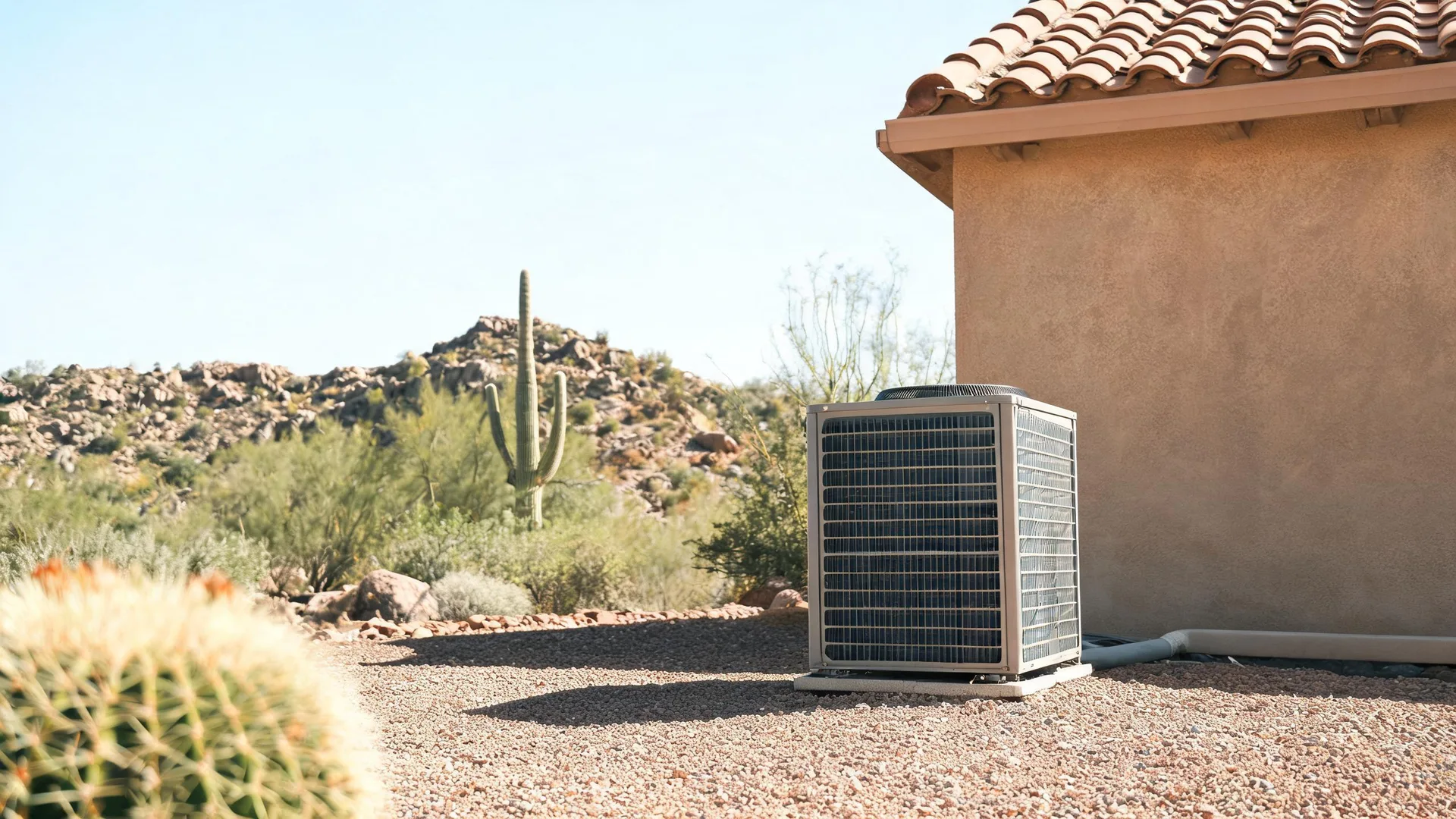
An outdoor residential air conditioning condenser unit mounted on a concrete pad, surrounded by gravel with a blue sky in the background.

A real tune-up checks what you can't see from the curb

A thorough technician opens the cabinet and checks refrigerant pressure against what the system is supposed to run, not just whether it's blowing cold. They pull the blower compartment apart enough to see the coil, not just the filter in front of it. They check capacitor readings against the rating stamped on the part, clean the condensate drain so it doesn't back up later, and tighten electrical connections that work loose from vibration over time. A quick visit skips most of that. Someone glances at the outdoor unit, hoses off what's visible, checks that air is moving, and calls it done. The system can look fine either way walking out the door. The difference shows up months later, when a connection that was never tightened finally fails, or a slow refrigerant leak that was never checked keeps draining the charge until the compressor is working harder than it needs to.

Dirt is the part you can't see fix itself

A dirty coil does not get cleaner on its own and a worn capacitor does not recover. Dust keeps building on the coil, the capacitor keeps weakening, and both move the system further from how it was built to run. Nothing about skipping a check gives the system a chance to reset.

One skipped year can turn into one hard breakdown

A system that loses a little refrigerant or picks up a little dirt each year is still running, so there is nothing to notice day to day. It is still a slow decline, and the end of that decline is usually the compressor failing on the hottest day of the year, not a gradual stop.

Aerial view of a gray outdoor air conditioning condenser unit mounted on a concrete pad next to a house with vinyl siding.

Book your AC tune-up in June, before homes here start needing cooling in July.

  1. Jan
  2. Feb
  3. Mar
  4. Apr
  5. May
  6. Jun
  7. Jul
  8. Aug
  9. Sep
  10. Oct
  11. Nov
  12. Dec

A tune-up checks the refrigerant charge, cleans the coils, tests the capacitor and tightens the electrical connections.

A real tune-up starts outside at the condenser, where the coil gets cleaned of the dirt and grass clippings that choke airflow over the refrigerant lines. Inside, the evaporator coil gets checked too, since that's the one doing the actual cooling of the air in the house. The refrigerant charge gets measured against what the system was built to run, not just topped off by guess. A technician tests the capacitor and contactor, the parts that get the compressor and fan motors started and keep them running, because a weak capacitor strains everything downstream of it. The condensate drain gets cleared so it doesn't back up and shut the system down later. Thermostat settings and airflow at the vents get checked last, since a system can have every part in good shape and still cool poorly if air isn't moving the way it should.