





A row of illuminated white colonial houses with black shutters and a stone wall along a road at dusk.

AC Maintenance in Geneva, NY

Tell us about the job

Takes about a minute. No obligation.

Tune-up, service, or cleaningCentral ACOntario County, NY
Step 1 of 2

What ZIP code is the job in?

Skip maintenance long enough and the signs show up slowly, not all at once. The coil collects a film of dust that makes the whole system work harder to pull heat out of the air. A dirty filter chokes airflow, so the evaporator coil runs colder than it should and starts icing over. Refrigerant levels drift low from a slow leak nobody caught, and the compressor strains to keep up trying to make the difference. None of this trips a breaker or stops the air from blowing. The system just keeps working harder until something finally gives out, usually on the hottest day it has to work.

2 months
July through August, your air conditioner is on duty
79°F
the average summer afternoon it cools against
13 hail events
in ten years, and hail bends the fins on outdoor coils
195 wind events
in ten years, and wind drives debris into outdoor units
Isometric line illustration of a cutaway single-story house showing interior rooms, attic ductwork and an air handler, connected by a line to an outdoor condenser unit on a pad.
Your air conditioner works hardest from July through August.

NOAA nClimDiv, 1991–2020 normals

Geneva summers only push an AC for about two months, July and August, with afternoon highs around 79.

A system here is more likely to fail from a worn part than from being run ragged.

Power here is what fails, not the AC itself

225 severe weather events from 2015 to 2024
11% of homes statewide lost power a day or more in 2024
195 damaging wind events from 2015 to 2024

One visit a year covers it here. Nothing about summers in Geneva pushes an AC hard enough to need more than that, so the point is timing the visit before the season gets going rather than catching up once it has. A technician checking the system in spring will catch a weak capacitor or a refrigerant leak before it turns into a breakdown later. That matters more in New York than in a lot of places, since electricity here ran 24.43 cents per kilowatt-hour in 2024. A system that has drifted out of tune costs more to run every day it keeps running that way, not just on the day it quits.

One checkup a year, timed before summer, is what this system needs

One visit in spring covers it. Half the homes in Ontario County were built in 1976 or earlier, half since, and the age of the house doesn't change what the checkup covers. An older system and a newer one wear the same way over a Geneva summer.

Find a contractor
A gray metal air conditioning condenser unit mounted on a concrete pad in a flat grassy field under a partly cloudy sky.

Slow wear is easy to catch early

Two months of real work a year doesn't wear a system out fast. Most of what a spring check finds built up slowly, over several summers, not one season. A capacitor weakens a little each time it runs. A coil picks up a bit more dust each year. Catching that early means a quick fix. Catching it in August, after the compressor has been straining for weeks, means a bigger repair.

The system will tell you before it quits

A warm house with the air still blowing usually means the system is running but losing the fight. Longer cycles, where the AC runs most of the afternoon instead of kicking on and off, mean it's taking longer to satisfy the thermostat than it used to. A hissing or bubbling sound near the indoor unit can mean refrigerant escaping through a leak. Warm air at the vents with the fan running strong often points to a failing compressor or a charge that's dropped too low to move heat.

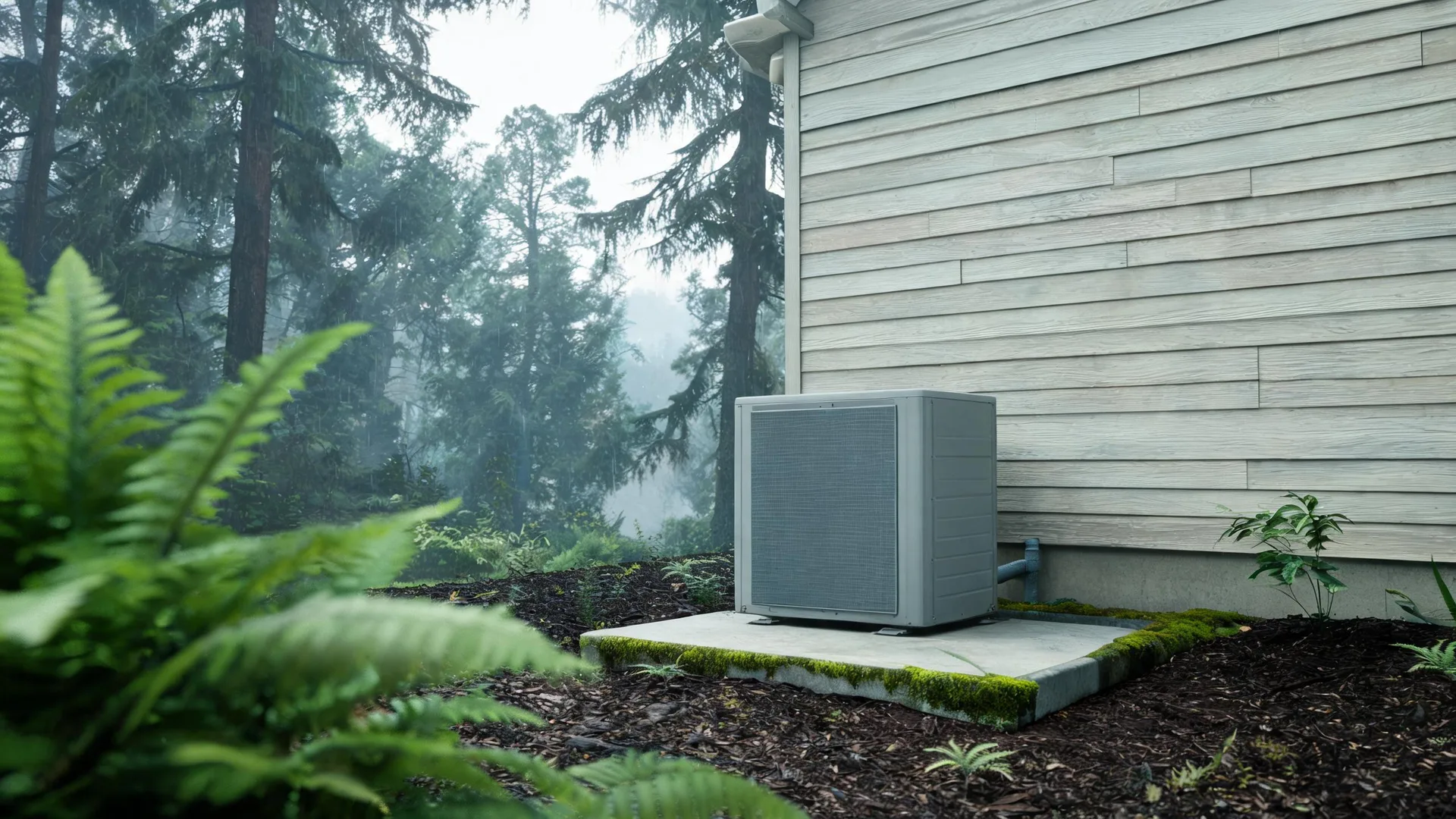
A maintenance visit catches the same signs early

A technician checking refrigerant pressure during a spring visit finds a slow leak while it's still slow, long before it shows up as warm air at the vents. A capacitor tested with a meter shows weakness before it fails outright and leaves the compressor unable to start. Fixing a weak part on a schedule is a quick job. Replacing it after it fails in the middle of a hot stretch often means replacing whatever it took down with it too.

Overhead view of a gray outdoor AC condenser unit on a concrete pad beside a mulched garden bed and a house with vinyl siding.

Book your AC tune-up in June, before homes here start needing cooling in July.

  1. Jan
  2. Feb
  3. Mar
  4. Apr
  5. May
  6. Jun
  7. Jul
  8. Aug
  9. Sep
  10. Oct
  11. Nov
  12. Dec

A tune-up checks the refrigerant charge, cleans the coils, tests the capacitor and tightens the electrical connections.

A proper tune-up starts outside, at the condenser. The technician pulls the fan grille and washes out the fins, since a coil caked with dust and cottonwood can't shed heat the way a clean one does. The fan motor gets checked for play in the bearings and the blades get checked for wobble. Refrigerant pressure gets measured against what the system is supposed to run, since too little means a leak working against you and too much points to a bad charge from the start. Inside, the evaporator coil gets inspected for the same buildup, and the drain line gets cleared so condensation has somewhere to go instead of backing up into the pan. The capacitor and contactor get tested under load, not just looked at, because a capacitor can read fine sitting still and still fail the moment the compressor asks it to start. Electrical connections get snugged down, since a loose one runs hot and burns a wire over time. Every part of this is checking what's already there against what it should be, not replacing anything that still works.