


A row of gray-sided two-story houses with porches behind a new light wooden picket fence, with leafy tree branches overhead and grass in the foreground.

AC Maintenance in Brooklyn, NY

Tell us about the job

Takes about a minute. No obligation.

Tune-up, service, or cleaningCentral ACKings County, NY
Step 1 of 2

What ZIP code is the job in?

A dirty coil or a weak capacitor makes the compressor work harder to move the same amount of heat out of the house. That shows up on the meter. Electricity in Kings County ran 36.97 cents per kilowatt-hour in 2025, among the highest rates anywhere in the country, so a unit losing efficiency here costs more to run than the same unit losing efficiency somewhere with cheaper power. The air it is working against is heavy, too. Summer dew points average 65°F here, the kind of mugginess that keeps a system cycling for hours at a stretch. A tune-up gets the system back to pulling its full share of heat and moisture out per kilowatt, instead of running longer to do less.

4 months
June through September, your air conditioner is on duty
83°F
the average summer afternoon it cools against
2 hail events
in ten years, and hail bends the fins on outdoor coils
56 wind events
in ten years, and wind drives debris into outdoor units
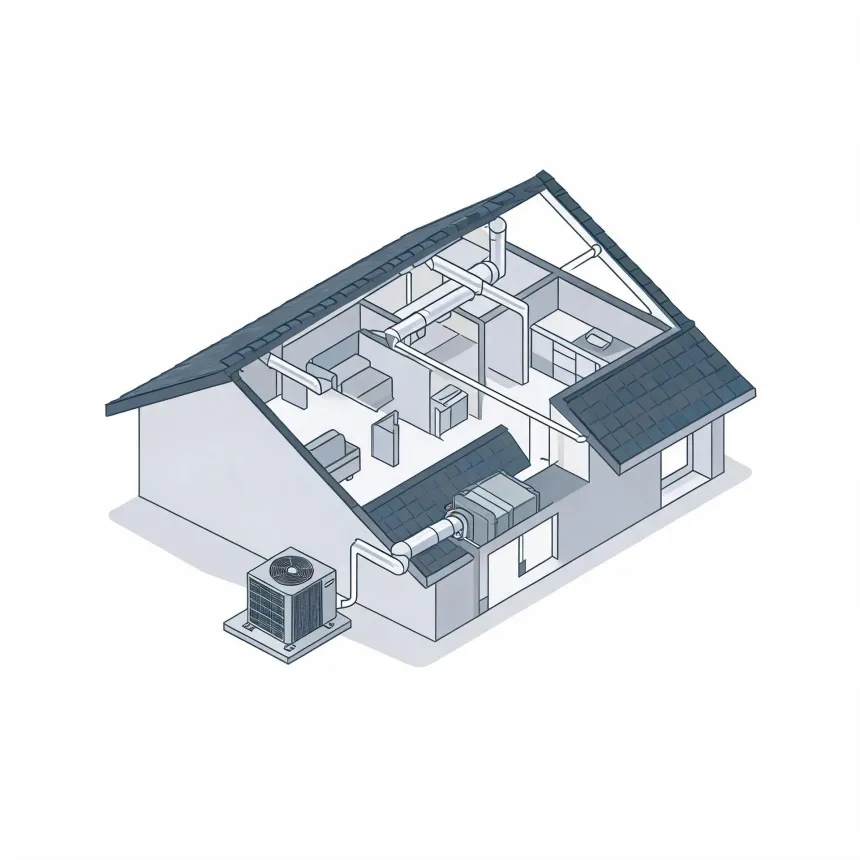
Isometric line illustration of a cutaway single-story house showing interior rooms, ceiling ductwork and an air handler, connected to an outdoor condenser unit on a pad beside the building.
Your air conditioner works hardest from June through August.

NOAA nClimDiv, 1991–2020 normals

A refrigerant charge that's a little low won't trip any alarm, but the compressor runs longer to move the same heat.

A gauge set on the service ports shows the charge before the higher bill does.

June Doesn't WaitCooling starts in June here. May is when the check gets done.

Half the homes in Kings County were built in 1944 or earlier. An air conditioner doesn't last that long, but the ductwork and the electrical setup it depends on often date back close to it, or at least to whatever update came after. A system tied into older ductwork or an older disconnect box is more likely to be working around something: a duct run that was never sized for the unit now attached to it, wiring that wasn't planned around central air at all. None of that shows up by looking at the thermostat. A yearly check gets a technician's eyes on the parts of the system that don't announce themselves, before a small mismatch turns into a compressor working harder than it should every single day it runs.

A Tune-Up Pays For Itself On The Meter

A system running inefficiently all summer costs more here than almost anywhere else, because power here is priced among the highest in the country. A tune-up catches the dirty coil or weak capacitor before it spends a whole summer driving up the bill.

Find a contractor
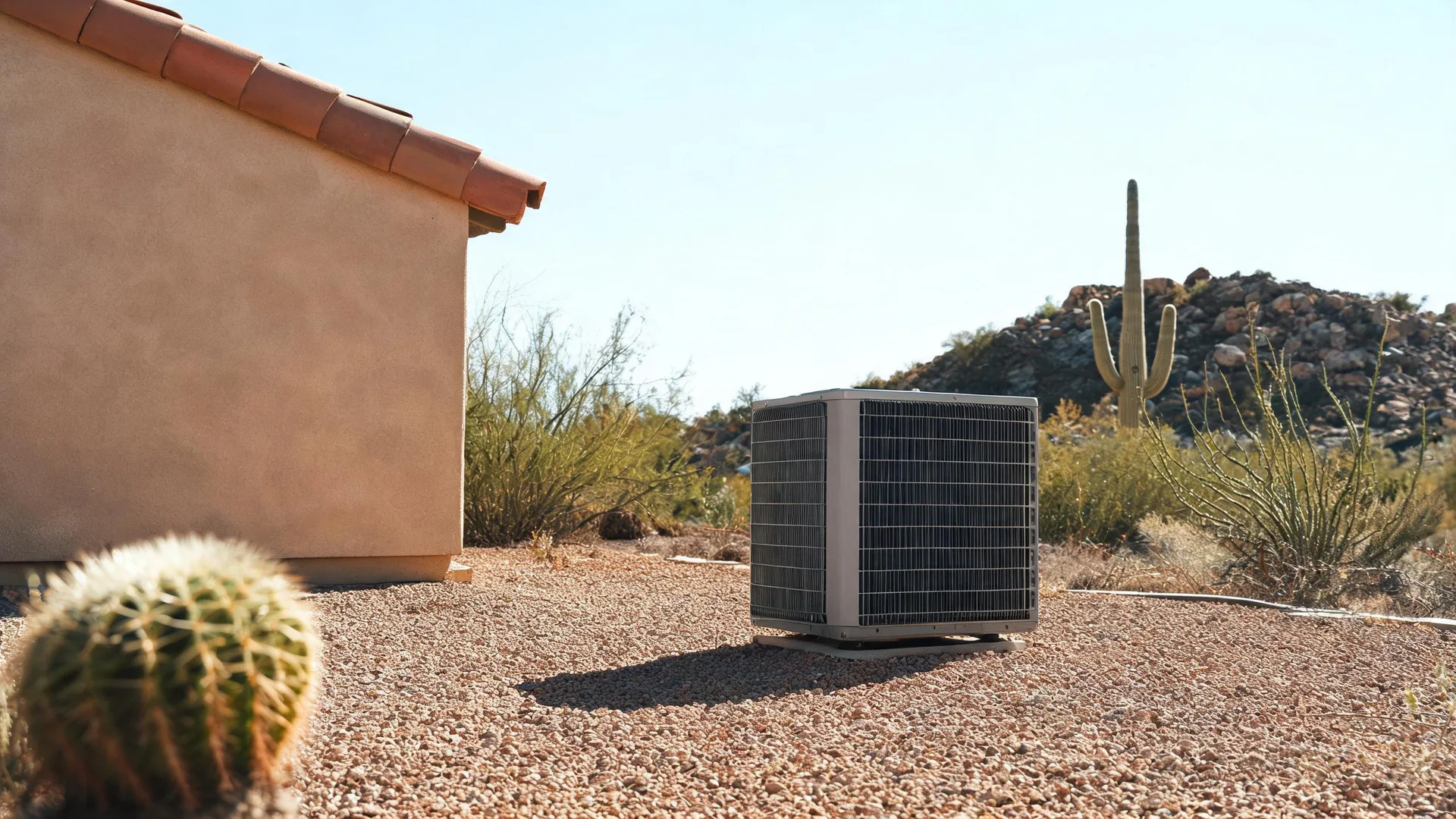
An outdoor residential air conditioning condenser unit mounted on a concrete pad, surrounded by gravel with a blue sky in the background.

A System Doesn't Forget A Skipped Season

An air conditioner doesn't fail the first time it's neglected. It fails on the tenth time, or the fiftieth, after dust has built up on the coil a little more each season and the capacitor has weakened a little more each time it kicked the compressor on. None of that resets itself over the winter. The system sits idle for months, then gets asked to start right back up carrying whatever wear it had when it shut off. A motor bearing that was starting to dry out is still dry. A contactor with pitted points is still pitted. Skip enough seasons and the parts that wear gradually end up failing all at once, usually on the first real hot stretch, because that's the first time the system has been asked to work hard since the problem started.

What Shows Up Before A Breakdown Does

Warm air out of the vents when the thermostat is calling for cold means the system is running but not moving heat the way it should. Short cycling, where the unit shuts off a minute or two after starting, usually points to a sensor or a control board problem. Ice on the refrigerant line means airflow across the coil is restricted or the charge is off, and running it that way stresses the compressor. A smell when the blower kicks on usually means dust has been sitting on the coil or in the ducts long enough to cook when the system heats up at the start of a run. Any one of these is worth a look before the unit is asked to run flat out.

Why Waiting For A Sign Costs More Than Checking First

A lot of what wears out an air conditioner doesn't make noise or change the temperature at first. A capacitor loses strength gradually, and the system still starts, just with more strain on the compressor each time. A coil collects dust in a way nobody notices from across the room. By the time the signs are obvious enough to catch without looking, the parts under strain have usually been working that way for a while. A check finds the weak capacitor or the dirty coil while it's still just a part wearing down, not yet a reason the system stops.

An outdoor air conditioning condenser unit installed beside the exterior wall of a blue vinyl-sided house at sunset.

Book your AC tune-up in May, before homes here start needing cooling in June.

  1. Jan
  2. Feb
  3. Mar
  4. Apr
  5. May
  6. Jun
  7. Jul
  8. Aug
  9. Sep
  10. Oct
  11. Nov
  12. Dec

A tune-up checks the refrigerant charge, cleans the coils, tests the capacitor and tightens the electrical connections.

A tune-up starts with the filter and the coil, because a system working to pull air through a clogged filter or across a dirty coil is working harder no matter what else is right. From there a technician checks the refrigerant charge against what the system calls for, since too little or too much both make the compressor work past what it needs to. The capacitor and contactor get tested, not just looked at, because both can be failing while still doing their job most of the time. The condensate drain gets cleared so the system isn't fighting a backup. Electrical connections get checked for anything loose or corroded, since a bad connection is where heat builds and parts eventually fail. None of this is guesswork. Each piece either passes a real test or it doesn't, and a technician who skips a step is leaving part of the system unchecked.