






An outdoor air conditioning condenser unit positioned beside a blue-sided house at sunset.

AC Maintenance in Albany, NY

Tell us about the job

Takes about a minute. No obligation.

Tune-up, service, or cleaningCentral ACAlbany County, NY
Step 1 of 2

What ZIP code is the job in?

Your air conditioner here only has to carry July and August, with afternoon highs averaging around 80 degrees. That is a short, mild season compared to what the same system would face further south. Less heat to fight means less strain on the compressor and the coils over a year. But a system that barely gets used can still develop a weak capacitor or a dirty coil over the winter, and you won't know until the first hot week asks it to work. A yearly check before summer catches that early, while the fix is still small.

2 months
July through August, your air conditioner is on duty
80°F
the average summer afternoon it cools against
35 hail events
in ten years, and hail bends the fins on outdoor coils
350 wind events
in ten years, and wind drives debris into outdoor units
Isometric cutaway illustration of a single-story house with a dark shingled roof, showing interior rooms with ductwork and an indoor air handler connected to an outdoor condenser unit beside the building.
Your air conditioner works hardest from July through August.

NOAA nClimDiv, 1991–2020 normals

Cooling here starts in July and only runs through August.

Have the AC checked in June, so it's ready the day it has to work.

Weather here is reason to check the system, not reason to check it more often.

435 severe weather events from 2015 to 2024
11% of homes statewide lost power a day or more in 2024
350 damaging wind events from 2015 to 2024
Half these homes were built before most AC systems existedHalf the homes in Albany County were built in 1964 or earlier, old enough that a system can hide a problem for years without a yearly check.

One visit a year is enough for a system with a season this short. There's no reason to check it every few months when it only runs for two. What matters more is the electric rate. New York homes paid 24.43 cents per kilowatthour in 2024, well above what most of the country pays. A weak capacitor or a dirty coil makes the compressor work harder to do the same job, and at that rate the difference shows up on the bill fast. One check before summer, done well, covers the whole season.

Book the June check

Get the check done in June, before the system has to carry the summer on its own.

Find a contractor
A gray metal air conditioning condenser unit mounted on a concrete pad in a flat grassy field under a partly cloudy sky.

A real tune-up opens the unit up. A quick one just looks at it.

A quick visit gets you a glance at the filter and a pressure reading, then a sticker on the unit. A thorough one starts outside, checking that the capacitor holds its charge under load instead of just reading steady at rest. The coil gets looked at close, not just glanced at, because dirt packs down between the fins where you can't see it from a step back. The tech should pull the refrigerant charge against what the system is supposed to hold, not just confirm it's running. Electrical connections get tightened, since a loose one heats up over the season and wears out early. The condensate drain gets checked for a clog, because a blocked drain backs up and shuts the system down on its own. If the visit ends fast with nothing opened up and nothing measured against a spec, that's the quick version, and it will miss the thing that fails on the first real hot day.

The system runs but struggles anyway

An air conditioner can still blow cold air while something underneath is already failing. A capacitor losing its charge or a coil packed with dirt won't shut the unit down right away. It just makes the compressor work harder to hit the same temperature, and that strain is what a yearly check is meant to catch before it becomes a breakdown.

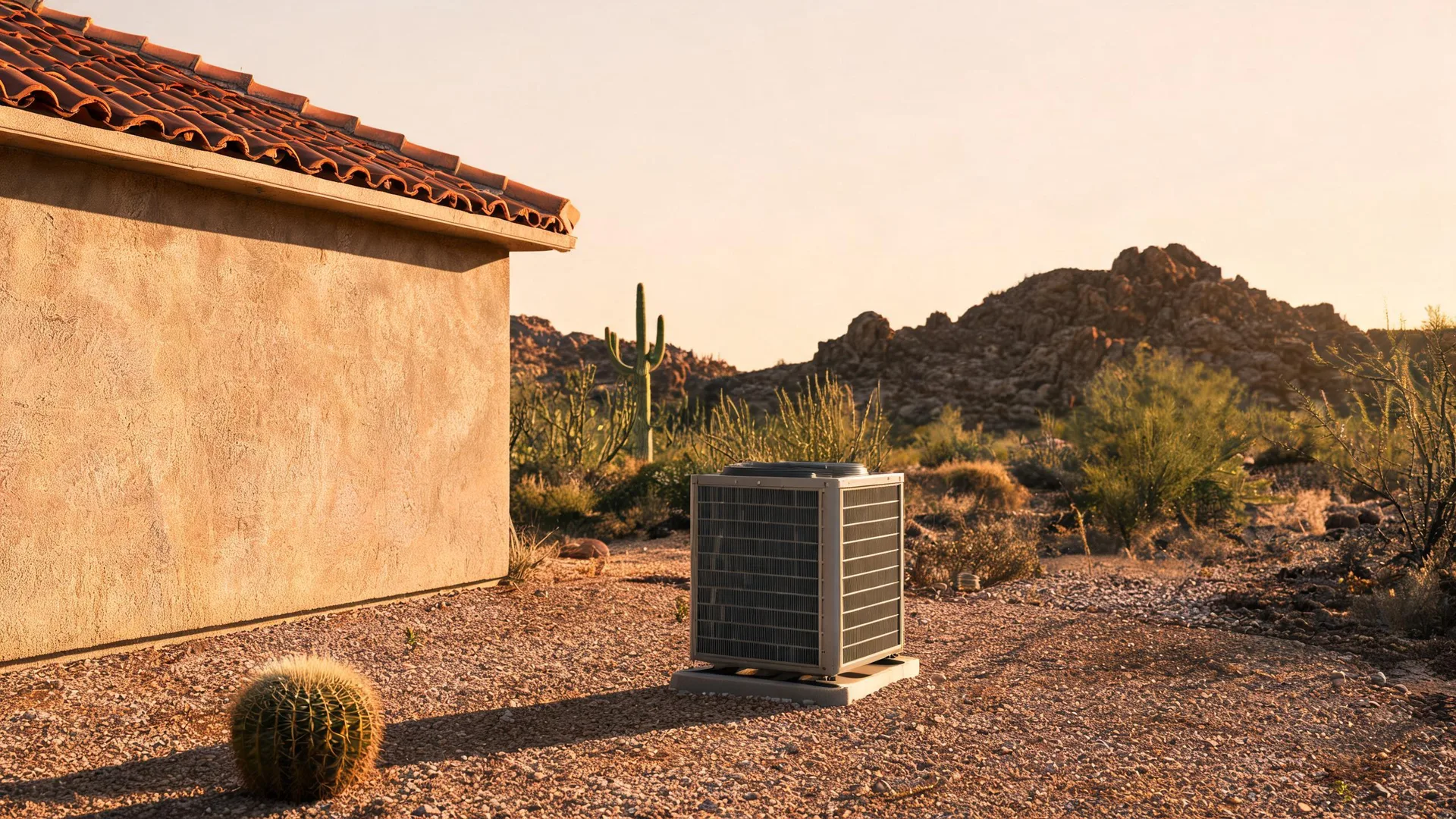
The signs show up in how it runs, not whether it runs

Warm air at the vents when the thermostat is set right, a hard start or a clicking sound before the compressor kicks in, ice forming on the coil or the line outside, water pooling near the indoor unit, or the system cycling on and off faster than it used to. Any one of these is worth a look even if the air still gets cold, because each points to a part already under stress.

An outdoor air conditioning condenser unit positioned on a concrete pad next to a blue-sided house, surrounded by green shrubs and flowering hydrangeas at sunset.

Book your AC tune-up in June, before homes here start needing cooling in July.

  1. Jan
  2. Feb
  3. Mar
  4. Apr
  5. May
  6. Jun
  7. Jul
  8. Aug
  9. Sep
  10. Oct
  11. Nov
  12. Dec

A tune-up checks the refrigerant charge, cleans the coils, tests the capacitor and tightens the electrical connections.

A tune-up worth paying for ends with the coil cleaned, not just inspected. Dirt between the fins acts like insulation, so the refrigerant inside can't shed heat the way it's supposed to, and the compressor runs longer to make up for it. The tech should also check airflow across that coil, since a return that's too restricted starves the system no matter how clean the coil is. Refrigerant gets checked against the number stamped on the unit, not just topped off by feel. The fan motor and blower wheel get looked at too, because a wheel caked with dust moves less air even when the motor itself is fine. None of this takes long when the system is healthy. It only takes longer when something's already wrong, which is the point of doing it every year instead of waiting to find out.