





White colonial houses with lit windows and dark shutters line a tree-lined street at dusk, bordered by dry-stacked stone walls.

AC Installation in Lindenhurst, NY

Tell us about the job

Takes about a minute. No obligation.

New system or replacementCentral ACSuffolk County, NY
Step 1 of 2

What ZIP code is the job in?

Electricity in Suffolk County averaged 26.13 cents per kilowatt-hour in 2025, among the highest rates anywhere in the country. An air conditioner here runs on that rate all summer. It's also working against heavy air. Dew points average 63°F across June, July and August, so the unit is pulling moisture out of the air on top of cooling it, and that adds run time. A system sized and installed right handles both jobs without working harder than it has to. One that's oversized, undersized, or set up wrong will run longer or cycle more just to keep up, and at this rate, that shows up on the bill fast.

3 months
June through August, your air conditioner is on duty
80°F
the average summer afternoon it cools against
17 hail events
in ten years, and hail bends the fins on outdoor coils
13.4 SEER2
the federal minimum any new unit must meet
Isometric line illustration of a cutaway house showing interior rooms, ceiling ductwork, an indoor air handler unit, and an outdoor condenser connected by lines along the exterior wall.
Your air conditioner works hardest from July through August.

NOAA nClimDiv, 1991–2020 normals

Cooling season here runs June through August.

Get a new system in before May so it's ready on day one, not installed during a heat wave.

Half these homes were built before central air was ever part of the plan

Half the homes here were built by 1970
Cooling runs June through August
Summer afternoons average 80°F

Suffolk County falls under climate zone 4A, a mixed zone that asks real work of both sides of the system, heating and cooling alike. Any split-system central air conditioner installed here now, under 45,000 Btu an hour, has to hit a federal minimum of 13.4 SEER2. That number sets the floor, not the ceiling. A contractor can size and install a unit well above that minimum, and in a zone that demands this much from a system, the difference between a unit that barely clears 13.4 and one built well past it is what you'll notice on the electric bill every summer after.

Get the sizing and install right, and the rating on the unit pays off all summer

At this rate, the SEER2 number on the new unit matters more here than most places. Get a contractor to size it for this house and install it right, so it runs the way that rating promises instead of fighting to keep up.

Find a contractor
A gray cylindrical air conditioning condenser unit mounted on a concrete pad next to a light-colored vinyl-sided house exterior.

This house wasn't built for it. The new system still has to fit it.

If your system was already here when you bought the house, it was probably added after the fact. That means ductwork run through rooms that weren't designed for it, or a layout that works around walls and framing already in place instead of planned alongside them. When you replace that system, a contractor needs to see what it's actually hooked up to, not just swap in a new unit sized off the old nameplate. A system sized and installed for the ducts and layout you actually have will run the way it's supposed to. One sized off assumptions will fight that layout all summer.

Load calculation sets the price before anything else does

A contractor has to work out how much heat the house actually gains in a day, room by room, before pricing out equipment. That calculation accounts for window area, ceiling height, how many floors are being conditioned, and where the sun hits the house. Skip it and guess off square footage instead, and you either pay for more capacity than the house needs or land a unit that can't keep up. The calculation itself is labor. So is correcting for whatever shortcuts were taken last time the system went in.

The ductwork decides how much of the install is carpentry

If the existing duct runs are the right size and in reasonable shape, a contractor can connect new equipment to what's already there. If they're undersized, leaky, or routed in a way that starves certain rooms, extending or rebuilding them is its own job, separate from the equipment itself. Sheet metal work, sealing, and running new trunk lines through finished space take time a straight equipment swap never does. The unit on the pad might be the easy part.

Overhead view of a gray outdoor AC condenser unit on a concrete pad beside a mulched garden bed and a house with vinyl siding.

A higher-efficiency unit would save about $30 a year to run in Suffolk County compared with a new unit at the federal minimum.

  • A higher-efficiency unit$240 a year
  • A new unit at the federal minimum, 13.4 SEER2$270 a year

Estimates for a typical Suffolk County home, from EIA household energy data, New York fuel prices and NOAA climate normals. Your home will differ.

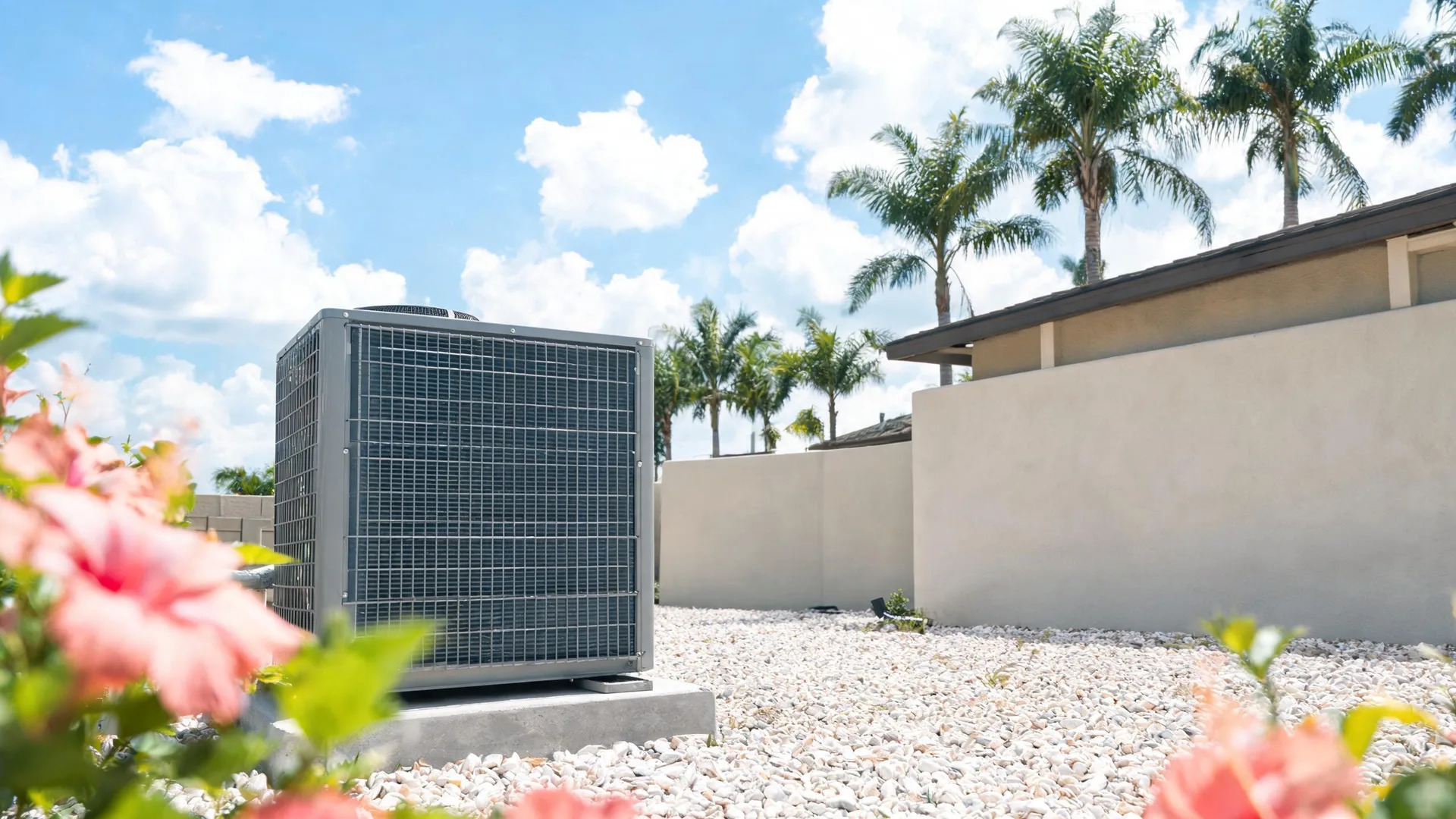
Installation starts with the equipment that isn't the unit itself. The outdoor condenser needs a pad and clearance on all sides so it can pull air through the coil without choking on its own exhaust. Indoors, the evacuation matters as much as anything that happens outside: the line set gets pulled down to a vacuum to clear out air and moisture before refrigerant ever goes in, because either one left behind will damage the compressor over time. A contractor also checks the line set size and length against the new equipment, since a set sized for the old unit doesn't always suit the new one. Once the system is charged, it gets weighed in or checked against a target subcooling or superheat number, not just switched on and left. The last part of the day is airflow: static pressure gets measured, and dampers get set so the air actually reaches every room instead of favoring the ones closest to the unit.