
AC keeps tripping the breaker in Lindenhurst, NY

RepairCentral ACSuffolk County, NY
Step 1 of 2

What ZIP code is the job in?

A breaker that trips every time your AC kicks on usually means the unit is pulling more current than the circuit allows. Most often it's the compressor, working harder than it should because of a dirty condenser coil, a failing capacitor, or a refrigerant charge that's too low. Heat and humidity push the system hard here through the summer, and a unit already struggling to keep up draws more amps trying to get there. Sometimes the problem isn't the AC at all but the breaker itself, worn out from years of that same strain and tripping before anything is actually wrong. Either way, this isn't something to keep resetting and hoping it holds. Repeated trips put real stress on the compressor, and ignoring it can turn a capacitor replacement into a full compressor failure. A contractor can test the amp draw, check the capacitor and coil, and tell you in short order whether the fix is in the unit or in the panel.

An outdoor air conditioner condenser unit on a concrete pad beside a house with beige horizontal siding and a stone-veneer base, with refrigerant lines running to a gray wall-mounted electrical box, surrounded by dark mulch, a flowering shrub and an evergreen on the left.

Running the way it should

This is a system drawing the current it was built for. The compressor starts, settles into a steady hum, and the breaker never notices. If yours has run like this all summer and only now trips, something changed, it didn't start out faulty.


An outdoor air conditioning condenser unit on a concrete pad beside a house with light vinyl siding, an electrical disconnect box and conduit on the wall, bare shrubs and mulch to the right, and a concrete walkway in the foreground.

Pulling too much current

This is what strain looks like from outside, even though the problem is inside the unit. A dirty coil or a weak capacitor makes the compressor fight to start, and the breaker trips to stop it from drawing more than the wiring can handle.

A smiling bearded man in a dark blue henley shirt sits leaning back on a light grey sofa in a living room, with a bowl of popcorn on a wooden coffee table and a large window behind him.
A bearded man in a dark quarter-zip sweater sits smiling on a brown sofa in a dimly lit living room, with a bowl of popcorn and a mug on a table in the foreground and a potted plant near a window behind him.
A smiling man with graying dark hair and a beard, wearing an olive sweater, sits on a sofa in a living room beside a bowl of popcorn on a wooden table.
A smiling man in a dark green henley shirt sits on a gray sofa in a living room with a lit table lamp, wooden shelving unit, and a bowl of popcorn in the foreground.

A breaker that trips once a week

A single trip now and then can be heat or a loose connection. A pattern, once a day or every time the compressor starts, points to the unit itself.

Fill out one form

A breaker that won't reset at all

If it trips the moment you flip it back, before the AC even starts pulling load, the short is likely in the wiring or the breaker, not the unit.

Fill out one form

Why does the breaker trip every time the AC starts

You flip the breaker back and the AC runs fine for a minute, maybe an hour, then it trips again right when the compressor kicks on. You might hear a hum or a click from the outdoor unit just before it cuts out. The panel itself may feel warm, or you'll notice a faint burning smell near it if the wiring is taking the strain too. Left alone through a Suffolk County summer, that repeated strain wears on the breaker and the wiring behind it, not just the AC, and a breaker that no longer trips when it should is a bigger risk than one that trips too often.

An outdoor air conditioning condenser unit on a concrete pad beside a house with horizontal lap siding, with an electrical disconnect box and conduit on the wall and a green shrub in the lower left foreground.

A breaker tripping from heat alone

On a stretch of 90 degree days, a breaker can trip from heat in the panel itself, especially if it sits in a garage or a closed-up spot that gets direct sun. The AC isn't the problem. Give it a few minutes, reset it once, and if it holds, that was likely it. This kind of trip doesn't repeat every time the compressor starts.

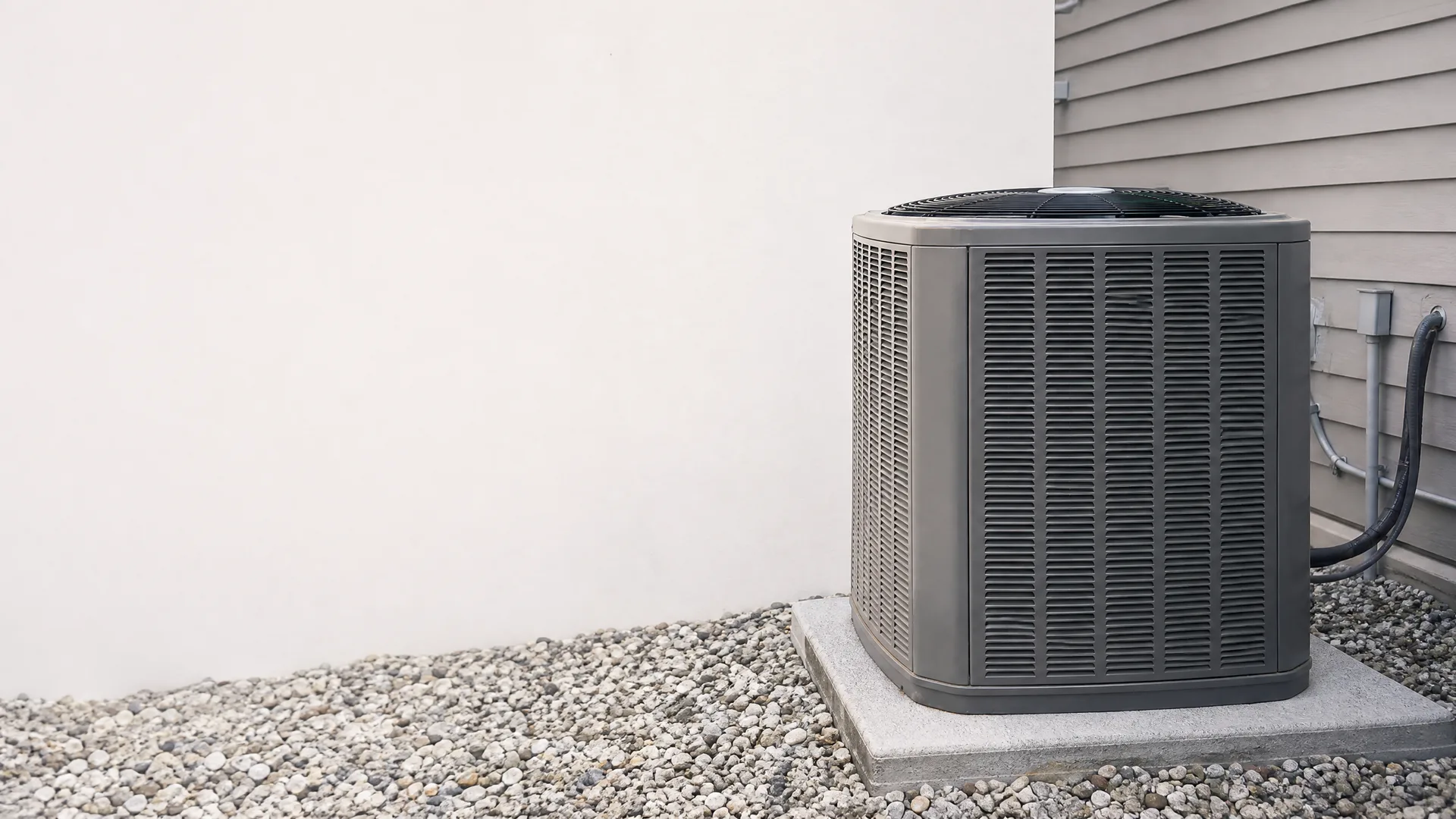
An outdoor air conditioner condenser unit on a concrete pad beside a light stucco wall and vinyl-sided wall, surrounded by gravel.

A breaker tripping from a failing part

If the trip happens every time the compressor kicks on, heat in the panel isn't the cause. A capacitor that's weakened, a coil caked with dirt, or a compressor pulling more current than it should will trip the breaker on a mild day the same as a hot one. Resetting it buys a few minutes at most. The part behind it needs a contractor's diagnosis, not another reset.

Cooling runs June through August

Three months of real heat is a short window, but it's three months your compressor runs flat out every day. A tripping breaker now means something is already wrong, and waiting until September won't fix it on its own.

NOAA nClimDiv 1991-2020

Resetting it yourself once

Flip the breaker off, wait thirty seconds, flip it back on. That's reasonable to try once, and plenty of homeowners do. If the AC runs fine after that, it might have been a one-off, heat in the panel, a loose connection that settled. But if you're doing this every afternoon, resetting the same breaker becomes a chore you didn't sign up for, and each reset with the compressor already stressed is another chance it trips something worse. A breaker is there to protect the wiring. It's not a switch you're meant to be using twice a day.

Having someone else find out why

A licensed contractor can put a meter on the compressor and see what it's actually pulling against what the circuit is rated for. That tells you in minutes whether it's the capacitor, the coil, or something in the compressor itself, instead of you guessing from the outside. You stop being the one who resets the breaker and starts being the one who gets an answer. No more calling around Suffolk County trying to find someone who'll pick up, no more explaining the same symptoms three times to three different companies. You send one form and the finding-someone part is off your plate.

An outdoor air conditioner condenser unit on a concrete pad beside a house with light horizontal lap siding, with an electrical disconnect box and conduit on the wall behind it.
Before you get your air conditioner repair
An outdoor air conditioning condenser unit on a concrete pad beside a house with white horizontal lap siding, with an electrical disconnect box and insulated refrigerant line on the wall and a shrub over mulch to the right.
After you get your air conditioner repair
  1. The compressor draws a hard surge of current the instant it starts.

  2. A weak capacitor forces the motor to pull extra current to start.

  3. That extra draw crosses the breaker's rated limit.

  4. The breaker's internal metal strip heats past its limit and trips.

A woman with long wavy brown hair in a knit sweater reclines on a couch with eyes closed under a textured blanket, an open book on her lap, beside a lit table lamp and potted plant.
A smiling middle-aged man in a dark knit sweater sits at a dimly lit dinner table with a glass of red wine, a bowl of food, and a lit candle in the foreground.

Finding a pro stops being your job

A breaker that trips on your AC isn't something to live with through August. Every reset, every hour without cooling while you wait to see if it happens again, is time you don't get back, and in a Suffolk County summer the next sticky stretch is never far off. You could start calling around, explaining the tripping to one shop after another, comparing who can even look at it this week. Or you could send the request once and let a licensed contractor take it from here, the diagnosis, the part, the fix. Your power bill out here already runs higher than most of the country pays, and a compressor pulling more current than it should only adds to that while it waits to be fixed. The breaker is doing its job, protecting the wiring by shutting things down before they get worse. Let someone qualified find out why it has to.

A gray outdoor air conditioner condenser unit on a concrete pad beside a house with white horizontal siding and a brick foundation, with a wall-mounted disconnect box and conduit, and a green shrub with mulch at left.

The condenser pulling its normal load

This is what a unit looks like when the breaker has no reason to trip. The coil is clear, the pad is clean, and the lines running up to the disconnect box are doing nothing more than carrying the current the unit was built to draw.

An outdoor air conditioning condenser unit on a concrete pad beside a house with white horizontal vinyl siding, with a gray electrical disconnect box and refrigerant lines on the wall behind it.

The condenser working against itself

Dirt coats the grille and the top cover here, thick enough to see from across the yard. A coil caked like this makes the compressor work harder to move the same heat, and that extra effort is current the breaker eventually refuses to allow.

Electrician or AC Contractor

Calling an electrician

  • An electrician can tell you whether the breaker itself is worn out or wired to the wrong amperage for the unit.
  • They can check the panel, the wire gauge, and the connections at the disconnect box for damage or looseness.
  • If the breaker trips on other circuits too, or the panel feels warm, that's an electrical problem worth having looked at directly.
  • An electrician won't open up the condenser or check the refrigerant charge, since that's outside what their license covers.
  • Replacing the breaker without knowing why the AC is overloading it just means the new one trips too.

Calling an AC contractor

  • An AC contractor can check the capacitor, the compressor, and the refrigerant charge, the parts that actually decide how much current the unit pulls.
  • They can measure the amp draw at the compressor and compare it to what the unit is rated for.
  • If the condenser coil is caked with dirt, they can clean it, since a dirty coil makes the compressor work harder and pull more current.
  • They can tell you if the compressor itself is failing, which is the most common reason a breaker trips every time the AC starts.
  • If the problem turns out to be the breaker or the panel and not the unit, they'll tell you that too, so you know who to call next.
A two-story light-colored house with horizontal siding, a covered front porch with white railings and columns, flanked by green trees and shrubs, with a concrete walkway leading to a wet sidewalk and street.

Suffolk County summers run humid, and the average dew point across June, July and August sits at 63°F. That's the kind of air that feels heavy even standing still, and it's the air your condenser has to pull heat out of every time it runs. A muggy stretch makes the compressor work longer and harder per cycle than it would on a dry 85-degree day, and that extra load shows up as extra current draw. If your capacitor is already weak or the coil's already dirty, those are the afternoons you'll notice the breaker trip, not the mild ones.

NASA POWER T2MDEW

A closed silver laptop and a light ceramic mug of dark coffee on a wooden table, with a wooden chair, kitchen counter with sink, pendant lamp, potted plant, and a window showing a sunset sky in the background.

A tripping breaker is the unit telling you something

A breaker that trips when your AC starts is doing its job. It's protecting the wiring from a compressor that's pulling more than it should. The fix might be a capacitor, a dirty coil, or something in the panel itself, but the breaker won't tell you which. Something has to look at the unit and the wiring behind it to know for sure.

You don't have to spend your evening on that search, calling around to find someone licensed in Suffolk County, explaining the tripping and the resets to three different people, then sitting with quotes trying to guess who's worth the call. Send the form once and that part of it is off your plate. What's left is getting the unit looked at before the next hot stretch finds the same weak spot.

A speckled beige ceramic vase holding thin dried branches sits on a round wooden table near a window with sheer curtains, with a dark upholstered chair and draped blanket blurred in the background.
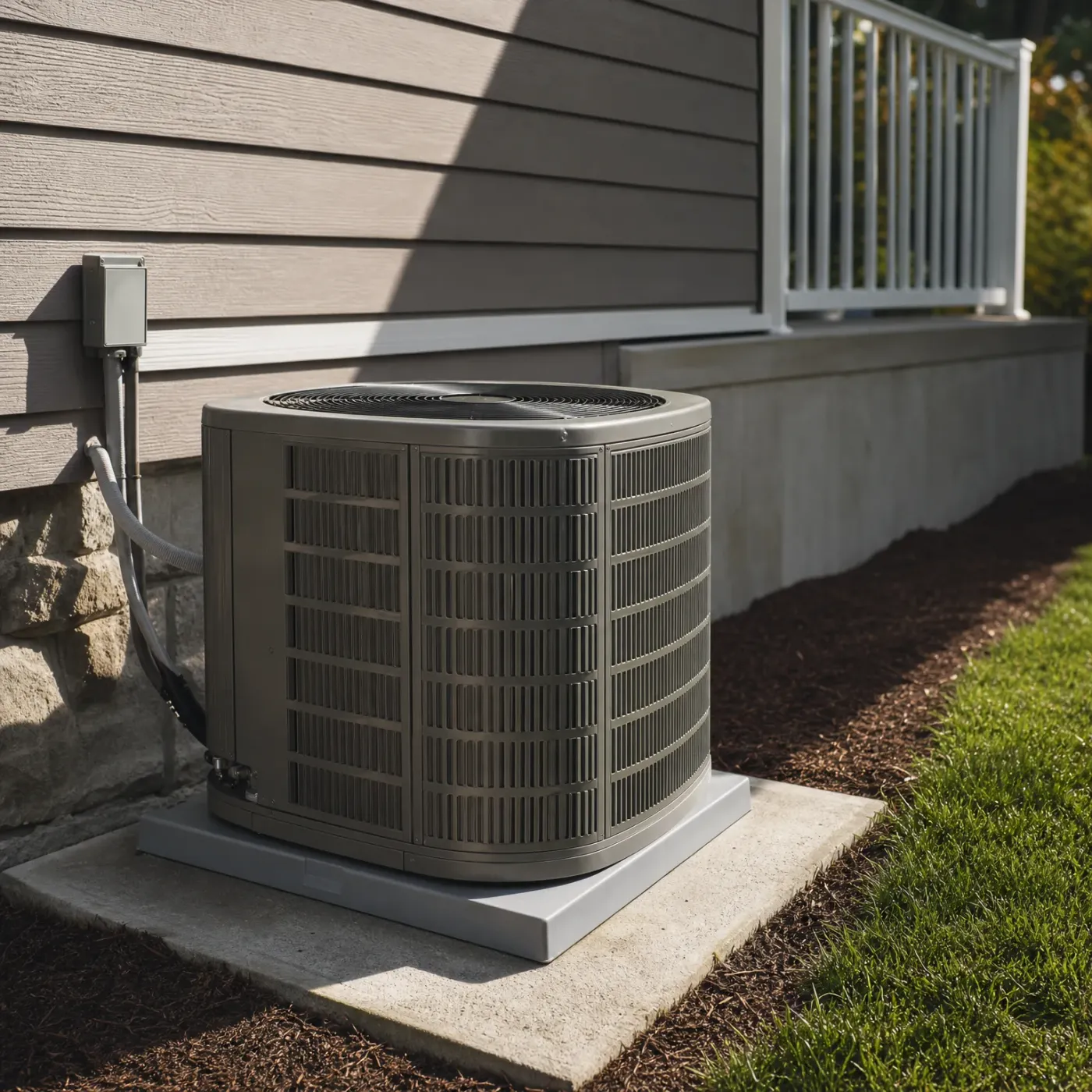
An outdoor air conditioner condenser unit on a concrete pad beside a house with horizontal lap siding, a stone foundation, an electrical disconnect box on the wall, mulch bed and lawn to the right, and a white railing above a concrete retaining wall in the background.

Let someone else find the pro

Hand off the search

Describe what your air conditioner is doing once, in one form.

No fee to send it, and nothing to sign.