Why your AC keeps tripping the breaker in New York

RepairCentral ACNew York
Step 1 of 2

What ZIP code is the job in?

Why does my AC keep tripping the breaker?

It is the middle of a sticky New York summer and the AC shuts off mid-run, then the breaker won't reset, or it resets and trips again a few minutes later. With power costing what it does here, a unit that trips once might be forgiven, but one that keeps doing it points to something real going on with the equipment, not a fluke in the panel.

A tripping breaker almost always means the AC is drawing more current than it should

A breaker trips to protect the wiring from too much current, so when it keeps happening, the air conditioner is pulling more power than it's supposed to. A weak or failing capacitor makes the compressor or fan motor work harder to start, and that extra draw is often enough to trip the breaker. A dirty condenser coil or a failing compressor can do the same thing, forcing the unit to pull more current just to keep running. On the muggiest days, when the AC runs longest and hardest, a borderline part is most likely to give out and show up as a trip. Either way, this isn't something to reset and ignore. Running the unit repeatedly on a tripping breaker can damage the compressor, which is the most expensive part to replace.

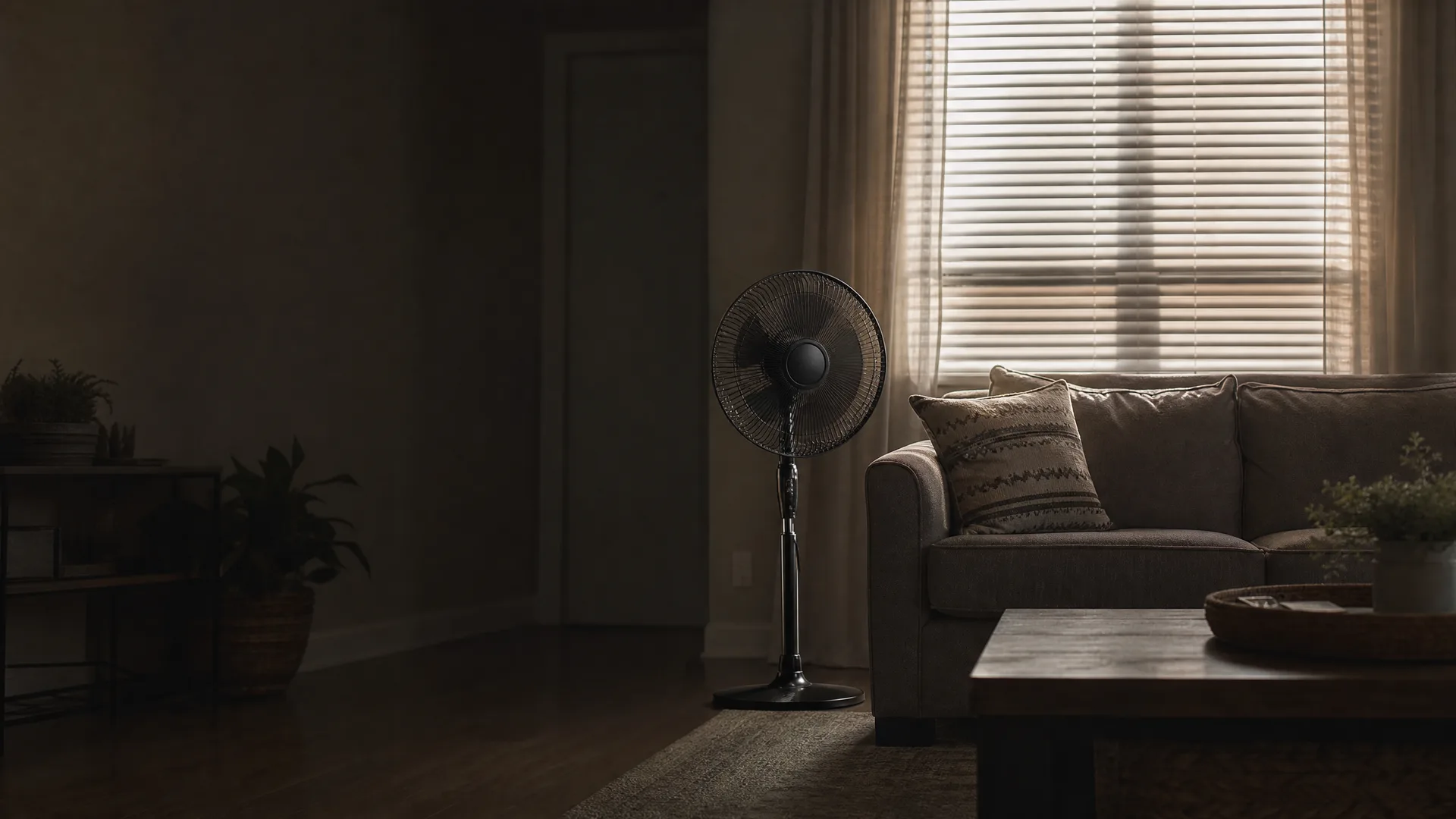
A dimly lit living room with a black pedestal fan on a wood floor beside a gray sofa with a patterned pillow, a wooden coffee table in the foreground, potted plants at left, and a curtained window with blinds behind.

It's just past two and the sun has the living room blinds pulled tight against it. The floor fan is going next to the couch, pointed at nobody in particular, just moving the heat around. You hit reset on the breaker panel and come back to check the thermostat. For a few minutes the air feels like it's catching up. Then the hum stops. No click, no fan noise, just the quiet that means it's off again. You go back down the hall to look at the panel and the switch has already kicked back to the middle. Outside, the compressor sits there silent in the heat. The fan on the couch is still the only thing moving air in the room.

Trips Once vs. Trips Immediately

Breaker trips once

  • The unit runs for a while first, sometimes hours, before it trips, which points to something warming up and drawing more current than it should.
  • It happens on the hottest afternoons and not on milder days, which fits a compressor or capacitor working harder when the heat load is up.
  • Resetting the breaker once gets you a few more hours of cooling before it happens again, rather than an immediate repeat.
  • The breaker itself feels warm to the touch, which can mean the breaker is wearing out rather than the AC pulling too much power.
  • Nothing else in the house trips when the AC trips, so the circuit is likely sized right and the problem is in the unit or the wiring to it.

Breaker trips right away

  • The AC trips the breaker the moment it starts up, or within the first minute, which points to a short or a locked motor rather than heat buildup.
  • Resetting the breaker trips it again almost immediately, sometimes before the unit makes any sound at all.
  • You smell something burnt near the outdoor unit or the panel, which is not something to wait out through another summer.
  • The outdoor fan or compressor hums but does not turn, then the breaker trips a few seconds later.
  • This kind of trip usually means a part has failed outright, a seized motor, a grounded wire, or a shorted compressor, not a part that is simply strained.
A gray outdoor air conditioning condenser unit on a composite pad beside a house with horizontal lap siding, with a wall-mounted disconnect box, refrigerant lines, and a wooden fence and shrubs to the left.

Running normally

The breaker holds and the condenser cycles on and off the way it should, pulling the same current each time it starts. Air comes out cold at the registers, and the unit shuts off clean at the end of each run instead of straining through it.

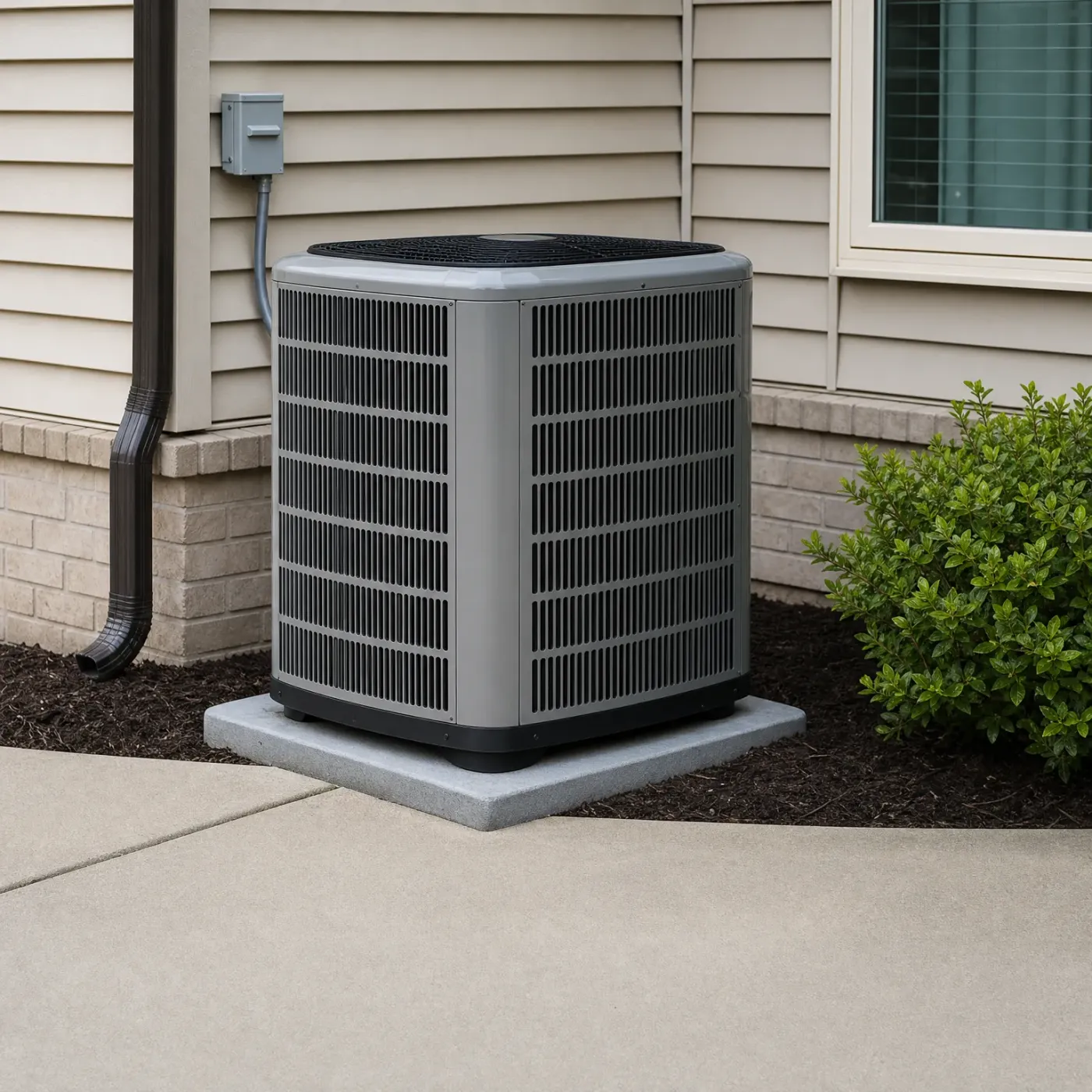
An outdoor air conditioning condenser unit on a concrete pad beside a house with light vinyl siding, with electrical conduit running to a wall-mounted disconnect box and a shrub in mulch to the right.

Tripping the breaker

The condenser outside draws more than the circuit can carry, and the breaker cuts power before anything burns up. Whatever is making it pull that extra current, a weak start capacitor, a failing compressor, a loose wire at the disconnect, still needs a licensed contractor to find it.

A woman with long light-brown hair in a gray knit sweater sits in a living room looking off to the side, with a sectional sofa, houseplant, lamp, wooden table and large windows behind her.
A woman in a chunky gray turtleneck sweater sits indoors looking off to the side, with a blurred dining table, chairs, pendant lamp and window behind her.
A woman in a cream knit sweater with her hair in a bun stands near a window, looking off to the side, with a gray sofa, houseplant and open kitchen with pendant lights blurred behind her.
A woman with long brown hair in a cream knit sweater stands near a window, looking to the side, with a white sofa, shelving, and a hallway visible behind her.
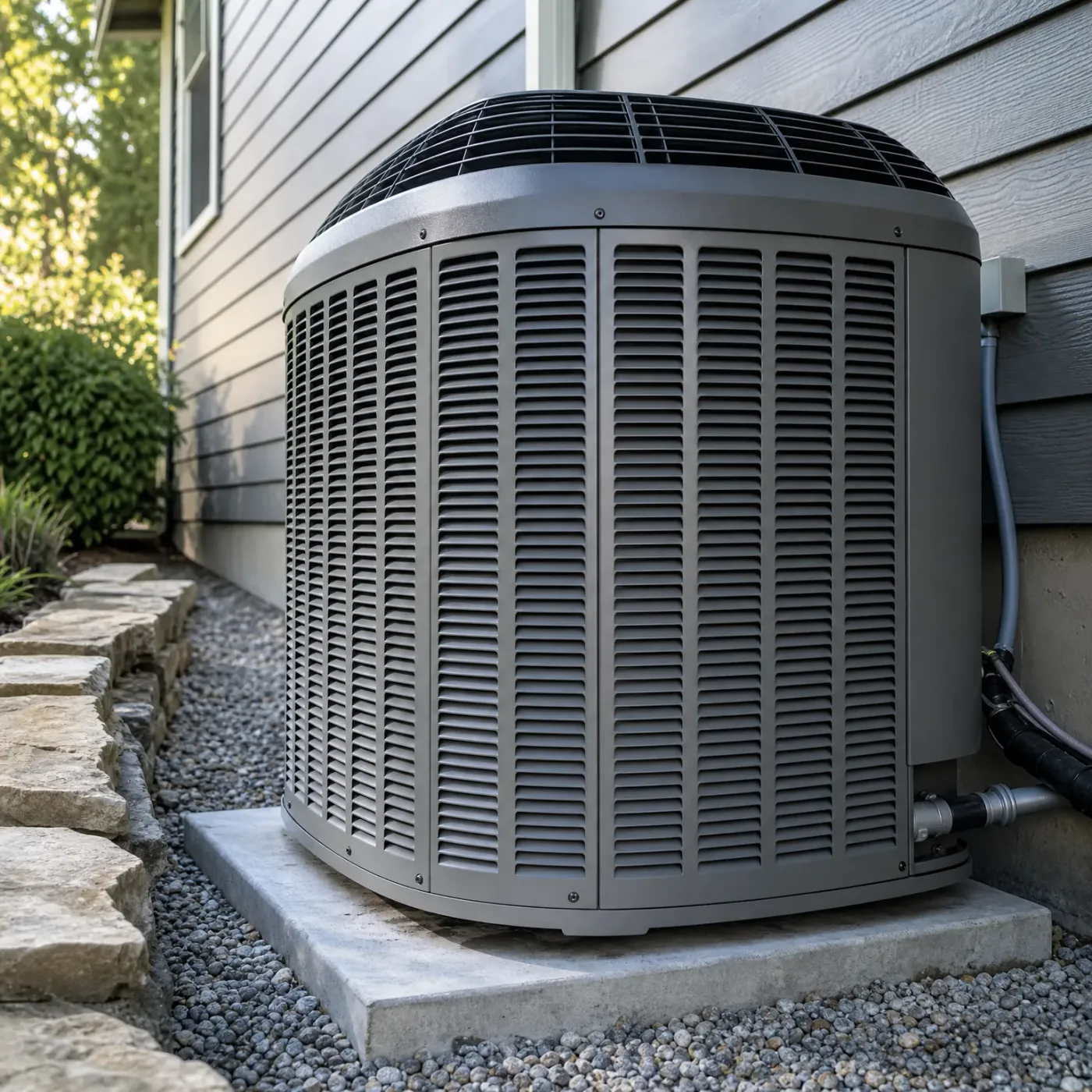
A gray outdoor air conditioning condenser unit with louvered sides and a black top grille sits on a concrete pad beside a house with horizontal lap siding, surrounded by gravel and a stone border.

Hand off the air conditioner problem

Your request stays with one local pro.

Once you send the form, finding a pro is off your list.

Reach a local pro

No fee to send it, and nothing to sign.

An outdoor air conditioning condenser unit sits on a concrete pad beside a house with horizontal vinyl siding, with a gray electrical disconnect box and insulated refrigerant line on the wall above, surrounded by bare mulched ground.
Before you get your air conditioner repair
A gray outdoor air conditioning condenser unit sits on a concrete pad beside a house with horizontal siding, connected by insulated lines to a wall-mounted disconnect box, with a shrub and gravel bed to the right.
After you get your air conditioner repair

A breaker that trips twice is telling you something

One trip can be heat or a loose connection. A second trip on the same afternoon usually means a part is failing under load and will keep tripping until it's found.

Find a licensed air conditioner pro

Running a tripped breaker back up wears the unit harder

Each reset lets the compressor try to start again under the same strain that tripped it last time. A local tech who services this equipment every summer can find what's drawing the extra current.

Find a licensed air conditioner pro

Is your house getting hotter while you keep hitting reset

You notice it in the rooms that always run warm anyway, the one upstairs or the one over the garage. The air stops moving from the vents and the house starts to climb, slow at first, then you're sweating by four o'clock. Walk outside and the condenser is silent, not even the fan spinning. Back at the panel, the breaker feels warm to the touch, maybe warmer than the others next to it. Each time it trips and you reset it, the unit draws that same hard pull of current, and a breaker reset again and again like that is wear on the wiring behind the panel, not just the AC. Meanwhile the humidity sits in the house with nowhere to go.

A gray outdoor air conditioning condenser unit on a concrete pad beside a house with horizontal vinyl siding, a brick foundation, downspout, electrical disconnect box, mulch bed and a green shrub.

Clean and pulling steady current

The fins are clear and the grille is open, so the condenser fan moves air through it the way it was built to. It pulls the same amperage every cycle, which is what lets the breaker hold all summer.

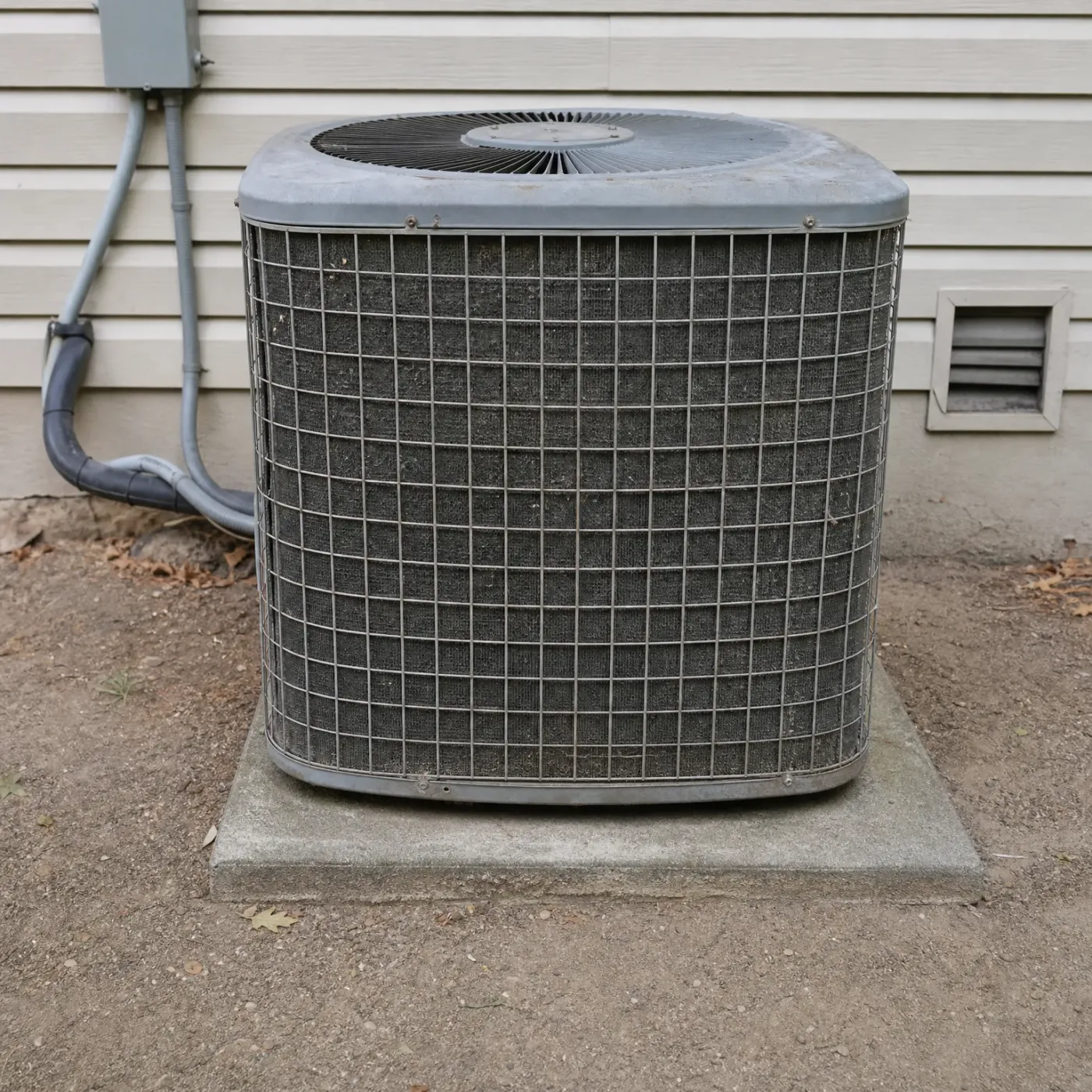
An outdoor air conditioning condenser unit with a dirty mesh coil guard sits on a concrete pad beside a house with horizontal lap siding, a wall vent, and conduit running to an electrical disconnect box.

Caked fins make the compressor work harder

Dirt packed into the fins blocks airflow, so heat has nowhere to go and the compressor pushes past what the breaker allows. A coil this dirty usually means it has gone more than one summer without a cleaning.

A woman with dark hair in a bun sits on a grey couch holding a sleeping child wrapped in a knit blanket, with a lit lamp and potted plant blurred in the background.
An older woman with grey-blonde hair in an updo and a beige turtleneck sweater smiles while looking to the side in a warmly lit kitchen, with a round loaf of bread on the counter in front of her and a dark window showing snow outside.

Waiting it out on your own

You keep hitting reset and hope the next cycle holds. Maybe it does for an hour, maybe ten minutes, and then you're back at the panel again. Meanwhile the upstairs room is climbing past what the thermostat says it should be, and whoever's trying to nap or work up there is the one who feels it first. Each trip is the breaker doing its job, cutting power before whatever's failing does more damage. Put off finding out what that part is and the unit keeps drawing hard every time it starts, until the day it doesn't start at all.

Getting a tech on it

A licensed contractor who works on this equipment all summer can read a tripping pattern fast. A trip after hours of running points somewhere different than a trip at startup, and they'll know which part to check first instead of guessing. Once the failing part is found and replaced, the unit pulls the same current every cycle and the breaker stops caring. Send the request and the search for someone is off your plate. You get matched with one local contractor, not a handful of companies calling, and the house starts cooling the way it's supposed to again.

Power costs 26.39 cents per kilowatt-hour statewide

At 26.39 cents per kilowatt-hour, a compressor that's drawing more current than it should isn't just tripping your breaker, it's running up your bill every time it strains through a cycle before it does. A unit pulling the right amperage costs less to run and quits nuisance-tripping on you.

EIA-861 2025 statewide residential average

A breaker that trips once might be heat. One that trips twice in the same afternoon is a part failing under load, and it will keep doing it until someone finds which one. That takes a meter on the compressor and the fan motor while the unit runs, not another trip to the panel. A local contractor who services this equipment all summer has seen which part usually goes first in a system your age, and checks that before anything else. You'll get matched with one licensed contractor near you, so you're not fielding calls from three companies trying to book the same job. You know the breaker is going to trip again on the next hot afternoon. The only question is whether someone has looked at the compressor and the capacitor before then, or after.

Sunlit corner of a room with a wooden sideboard holding a ceramic vase of olive branches and a dark wooden bowl, beside a white-framed window, a hardwood floor and woven rug.
A wooden cabinet holding a pale ceramic vase with leafy branches stands beside a beige wall in a sunlit room with hardwood floors, a jute rug, and a window showing green foliage outside.
Sunlit room corner with a beige upholstered sofa holding a rust-brown cushion, beside floor-length linen curtains at a window, over a wood floor with a woven rug.
Corner of a room with beige walls, a framed photograph, a floor-length linen curtain beside a window, an upholstered armchair with a knit pillow, white baseboards and trim, wood flooring and a pale rug.
Sunlit living room corner with a beige upholstered armchair with a cushion, linen curtains beside a wooden-framed window, green vertical panelled wall with a framed print, and a wooden table edge over a woven rug.

Finding a pro stops being your job

The pro who reaches out is licensed in New York.

Get one local pro

You're not committing to anything by asking.