What temperature to set your AC in New York summers
Send the form and the air conditioner tune-up stops being something to remember.
78 degrees is the number most contractors in New York will give you for when you're home and want savings on top of comfort. 68 when you're away or asleep, if your system can hold it without running nonstop. That gap matters more here than in a dry climate, because New York summers carry enough humidity that your AC spends real effort just pulling moisture out of the air, not only cooling it.
Power here costs more than almost anywhere else in the country. Every degree you push that thermostat down past 78 adds to a bill that's already higher per kilowatt-hour than what most of the country pays. A system that's behind on maintenance pushes that cost even further, since a dirty coil or a low charge makes the unit run longer to hit the same number on the thermostat.
Most homes in New York heat with gas, which means the AC is doing one job and doing it for months at a stretch, June through September usually, sometimes longer. A unit working that hard all summer needs its filter changed, its coil checked, its refrigerant level confirmed. Skip that and the temperature you set stops meaning much, because the system can't reach it efficiently, if at all.
If you're not sure your system is ready for the stretch ahead, or your energy bills already look high for the setting you're using, that's a maintenance question, not a thermostat question. Send the form below and the search for someone qualified becomes someone else's job instead of yours. No calling around, no explaining the same thing to three different companies, no sorting through quotes on your own. That part ends when you hit submit.
78 degrees works for most homes here when someone's inside and you want the AC to keep up without running up the bill. The reason it's not lower is humidity. New York summers hold a lot of moisture in the air, and a thermostat only reads temperature. Your system actually spends a good part of its runtime pulling water out of the air, not just cooling it, so the room can hit 78 on the dial and still feel sticky until the air dries out. Drop the setting to 72 to chase that stickiness away and you ask the compressor to run far longer than it needs to, which costs more with power priced the way it is here. At night or when the house is empty, 68 holds if your system can maintain it without short cycling. A system that's kept up with maintenance will hold these numbers more steadily than one that's falling behind.
A thermostat setting only holds if the system behind it still can. New York's humidity leans hard on a coil already losing capacity from a dirty filter or a refrigerant charge that drifted off, and 78 degrees stops feeling like 78 the first humid week it has to work past that. Maintenance is what keeps the setting honest: a tech checking the coil, the charge, the airflow, so the number on the wall still means something when the air outside is thick. Most homeowners don't have a contractor lined up for this, and finding one means calling around, explaining the system, waiting on quotes to compare. Send the request here and that search is done. One contractor gets it, not five, and you're not the one chasing the next available appointment during the hottest stretch of the year.
Running the way it should
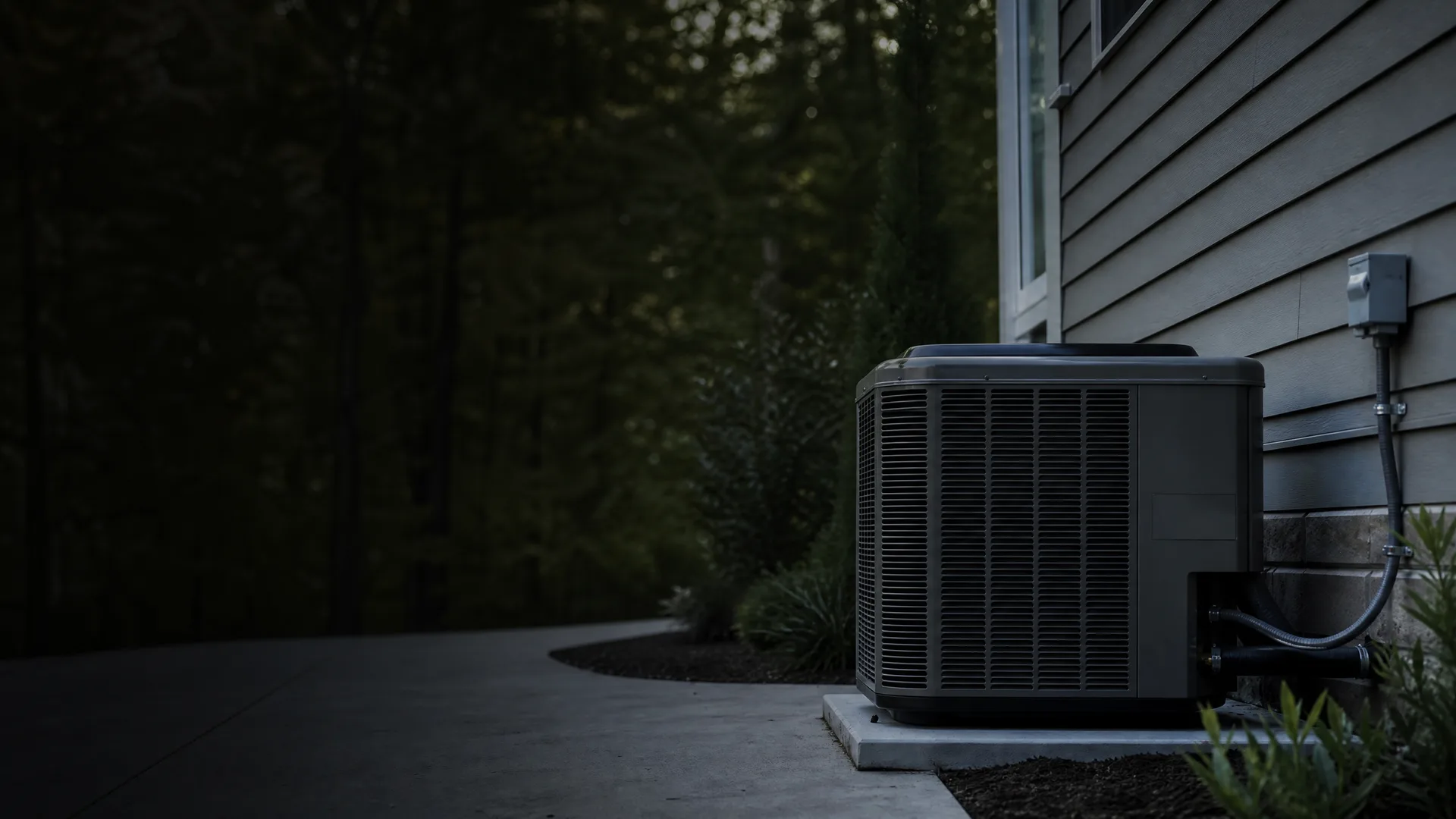
The coil and fins stay clean, the pad is clear of debris, and the unit pulls air evenly from all sides. At 78 degrees, a system like this can still bring the moisture down and hold the house steady through a sticky afternoon.
Losing ground
Grime on the fins blocks airflow, and dirt holds onto the coil the way it holds onto a furnace filter you forgot to change. Set it to 78 and this unit runs longer to get there, if it gets there at all, and the air stays damp even when the number on the thermostat looks right.
1 degree
Each degree you push the thermostat down in New York's humidity asks the coil to pull more moisture out of the air, not just cool it.
Power costs 26.39 cents per kilowatt-hour statewide
At 26.39 cents per kilowatt-hour, every degree you push that thermostat down costs more here than almost anywhere else in the country. A system that's losing capacity to a dirty coil or low refrigerant has to run longer to hit 78, and at this rate, that extra runtime shows up fast on the bill.
EIA-861 2025 statewide residential average
Clean coil, clear pad
This is what lets 78 degrees work. Mulch and lawn are a few feet back, the coil is free of dust, and air moves through the fins the way it was designed to. A unit like this can still wring the moisture out of a sticky afternoon without running nonstop.
Blocked and straining
Conduit and lines still run up the wall, but nothing says what shape the coil is in underneath. Gravel pressed in close or a season of pollen built up on the fins makes the system work harder for the same 78 degrees, and some days it won't get there at all.
78 degrees, if the system behind it can still hit it
That's the number. 78 when you're home, 68 when you're out or asleep if the system can hold it. New York's humidity is why 78 isn't lower, and it's also why that number only holds when the coil is clean and the refrigerant charge is right. A maintenance visit is what confirms that before the next heat wave finds out for you.
Finding someone to do that check is its own chore. Searching for a contractor, calling around, explaining the same problem three times, sorting through quotes that all sound different. Send the form once and that part is done. You're not left holding a list of names to vet on your own time.
Stop chasing an air conditioner pro
Fill out one form instead of calling around for an air conditioner tune-up.