






A row of two-story wood-sided houses with porches and gabled roofs behind a white picket fence, with a mowed lawn in front and large tree branches overhanging from the left.

Heat Pump Repair in Bronx, NY

Tell us about the job

Takes about a minute. No obligation.

RepairHeat PumpBronx County, NY
Step 1 of 2

What ZIP code is the job in?

A refrigerant leak is a good example of a problem that punishes you for waiting. Run the system low on charge and the compressor has to work harder to move the same amount of heat, and that extra strain falls on the one part that is hardest to replace. Ice on the outdoor coil works the same way. A little frost melts off on its own during the defrost cycle, but if airflow stays blocked and the frost keeps building, the compressor can end up flooded with liquid refrigerant, which it was never built to handle. Even a dirty filter plays into this. It chokes airflow across the indoor coil, and the compressor ends up absorbing that strain too. Whatever started the problem, the longer the system keeps running on it, the more parts get pulled into the damage.

7 months
October through April, your system heats
4 months
June through September, it cools
28°F
the average winter night it heats against
83°F
the average summer afternoon it cools against
Isometric line illustration of a cutaway single-story house showing interior rooms, ceiling ductwork connected to an indoor air handler, and refrigerant lines running to an outdoor condenser unit on a pad.
Your system heats October through April and cools June through September.

NOAA nClimDiv, 1991–2020 normals

Heat here starts up in October, after September sits idle.

A heat pump that's been coasting all September will show its weak spot the first cold week it has to work.

Half the homes in the Bronx are old enough that their heat pump isn't the first one the house has had

Half the homes here were built by 1955
16 winter storms from 2015 to 2024
Winter nights average 28°F

New York runs among the highest electric rates in the country, 24.43 cents per kilowatt-hour in 2024. A heat pump leaning on a weak capacitor or running low on charge pulls more power to do the same job, and at that rate the difference shows up on the bill fast. Waiting on a repair here costs more than waiting would somewhere with cheaper power. The fix is usually the same whether you call now or in a month. The bill in between is not.

This heat pump hasn't been pushed hard. A repair should still make sense.

Your heat pump works a real winter here, overnight lows averaging 28°F, and a real summer too, but it isn't fighting extremes most of the year. That's less wear than a lot of places put on this equipment. So if it's acting up now, the cause is usually something specific that a tech can find and fix, not a system worn out from strain. Worth getting it looked at.

Find a contractor
A man in a cap, dark sweatshirt and tan work pants, seen from behind, climbs porch steps toward a dark green paneled door while carrying a canvas tool bag.
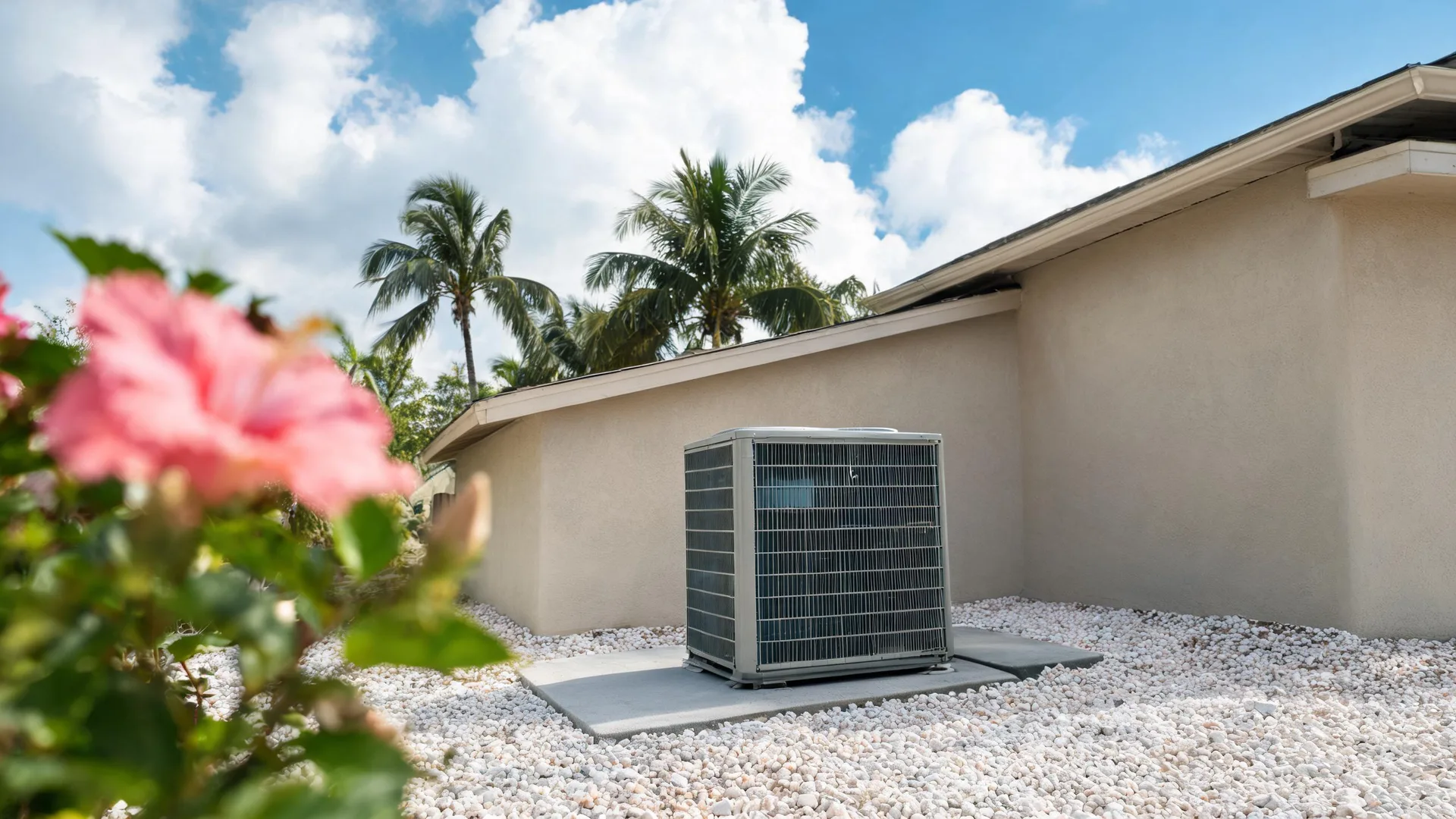
A gray heat pump outdoor unit mounted on a concrete pad next to the stone-accented exterior wall of a house.

Worth knowing what you're repairing

If the heat pump outside is the one that came with the house, find out when it was installed before paying for a repair that only buys a few more months. A unit from the first time around for a house built by 1955 is well past the point where a repair is worth much. A tech can give you a straight answer on how much life is left in it once they're out there looking at the actual problem.

The reversing valve is a weak point

A heat pump has one part a straight air conditioner doesn't have. The reversing valve switches it between heating and cooling. It can stick or leak internally, and when it does the system may blow cold air during a heat cycle or just stop switching modes. It takes the most wear of anything in the system because it's the one part working every time the system changes direction.
Most failures trace back to something simple

A failed capacitor. A worn contactor. A clogged filter choking airflow. A low refrigerant charge. None of these look serious on their own, but a heat pump run on any of them for long enough passes the strain to the compressor. Catching the small failure early is what keeps the rest of the system out of it.

A heat pump in trouble usually tells you before it quits outright. Short cycling is one of the clearest signs, where the system kicks on, runs a few minutes, and shuts off again instead of completing a normal cycle. Warm air blowing during heating mode points at the reversing valve more often than anything else. A hissing sound near the lines can mean refrigerant escaping, and that one gets worse the longer it runs. Ice building up on the outdoor unit and not clearing during the defrost cycle means airflow or refrigerant charge is off. If the system runs constantly without ever satisfying the thermostat, something is making it work harder than it should to move the same amount of heat.

A diagnostic starts outside, not with a screwdriver. A tech will run the system in both modes and watch what it actually does before touching anything, because a reversing valve that won't switch looks different from a compressor that's struggling, even though both can mean warm air where you want cold. Gauges go on the lines to check the charge, since too little refrigerant and a failing part can show the same symptoms on the thermostat. They'll pull the cover and look at the capacitor and contactor, check the filter, check the coil for ice or dirt buildup. Most of this takes less time than people expect, because the list of things that actually go wrong on a heat pump is shorter than it seems. Once they find the cause, you get a straight answer on what it takes to fix it and whether that's still worth doing on this system.