






An outdoor air conditioning condenser unit on a concrete pad next to the gray vinyl siding of a residential home.

AC Maintenance in Lindenhurst, NY

Tell us about the job

Takes about a minute. No obligation.

Tune-up, service, or cleaningCentral ACSuffolk County, NY
Step 1 of 2

What ZIP code is the job in?

Suffolk County saw 566 severe weather events between 2015 and 2024. Damaging wind made up most of that, 434 times in those ten years, and that's what works on an outdoor condenser sitting out in the open. Add 17 hail events and 10 tornadoes in the same stretch, and the case or the fan blades can take a hit before anyone notices. Winter storms came through 82 times, which matters less for the unit itself but still means debris and branches down around it by spring. A tune-up before the weather turns is when a technician finds the bent fin or the cracked line, not after the system is already straining to keep up.

3 months
June through August, your air conditioner is on duty
80°F
the average summer afternoon it cools against
17 hail events
in ten years, and hail bends the fins on outdoor coils
434 wind events
in ten years, and wind drives debris into outdoor units
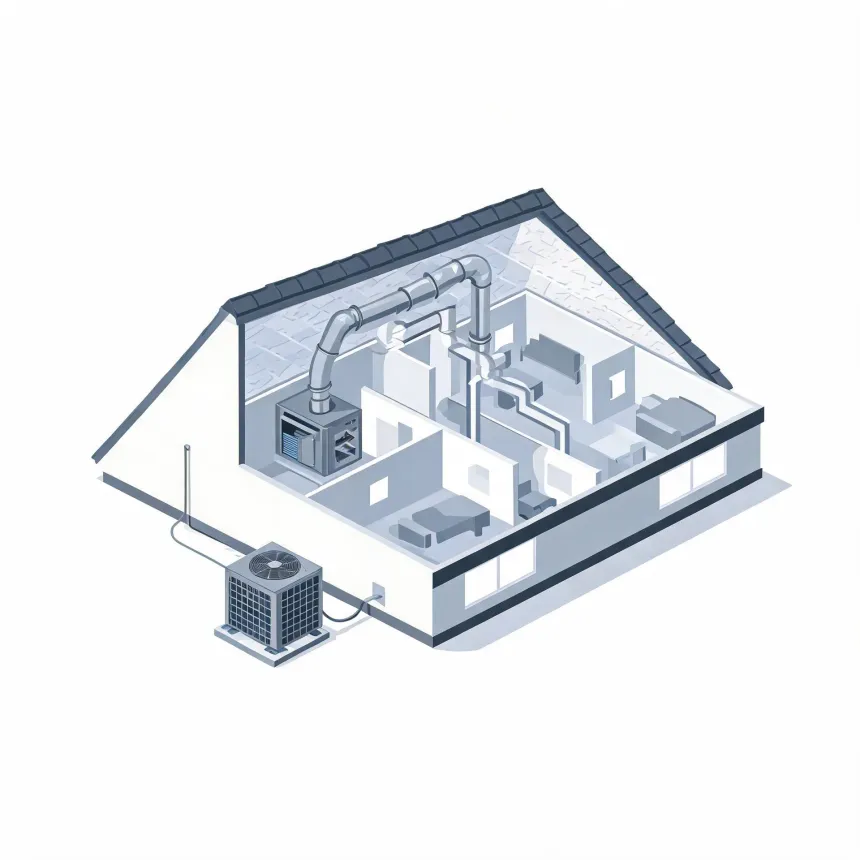
Isometric illustration of a cutaway house showing interior rooms, an attic furnace with large ducts, and an outdoor condenser unit connected by a line set, on a white background.
Your air conditioner works hardest from July through August.

NOAA nClimDiv, 1991–2020 normals

Cooling in Lindenhurst starts in June and runs through August.

Have the AC checked in May, before it has to work.

Half the homes here were old enough to have earned a system or two already

Half the homes here were built by 1970
Cooling runs June through August
Summer afternoons average 80°F
A dirty AC costs more to run, and power here already costs more than most placesElectricity here runs 26.13 cents a kilowatt-hour, more than in most US counties.

If your AC is the one that came with the house, a yearly check is what catches the small stuff before it turns into a breakdown on the first hot day. A technician can look at the wiring connections, check the refrigerant charge, and see how the condenser held up over winter. None of that takes long, but skipping it for a few years in a row is how a worn part gets found the hard way. If the system was swapped out more recently, the same check still matters, just with less guesswork about what else might be wearing out alongside it.

Get the outdoor unit checked before storm season finds its weak spot

A check before the season turns is when a technician can still get to the outdoor unit easily and look it over without a storm bearing down. That's the time to find the bent fin, the loose connection, or the debris sitting where it shouldn't be.

Find a contractor
A man in a cap, dark jacket and tan work pants, seen from behind, carries a canvas tool bag up concrete steps toward a dark green front door of a gray clapboard house with a potted shrub beside it.
An outdoor air conditioning condenser unit mounted on a concrete pad surrounded by gravel, photographed against a partly cloudy blue sky.

What's actually doing the work inside the cabinet

The filter is the first thing in the airstream, and it's the part most likely to get forgotten. Once it loads up with dust, air has a harder time getting through, and the system has to run longer to move the same amount of air. That strain doesn't stop at the filter. Behind it sits the evaporator coil, and whatever the filter doesn't catch tends to end up there, coating the coil in a layer that acts like insulation. A coil that can't shed heat the way it's supposed to makes the whole system work harder for less cooling. Starved airflow from a clogged filter can also let the coil get too cold and ice over, which only makes the airflow problem worse. Below the coil is the drain, there to carry away the condensation the cooling process produces. That line can clog with algae or dust, and when it does, the water backs up instead of draining out. A float switch will shut the system down if it senses that backup, or if there's no switch, the water finds somewhere else to go, usually a ceiling or a floor. None of these three parts fails on its own. A dirty filter feeds a dirty coil, and a dirty coil sheds more into the drain. Keeping the filter clean is the one piece of this a homeowner can handle between visits. The coil and the drain are what a technician checks during a tune-up, because by the time either one is causing trouble, it's usually past the point of a quick fix.

A quick visit checks if it runs. A thorough one checks why it might not.

Anyone can turn the system on, feel cold air, and call it done. A real tune-up means pulling the panel off and looking at the wiring connections for scorch marks or looseness, checking the capacitor's readings against what it should be, and measuring refrigerant charge rather than guessing from how cold the air feels. A system can blow cold air today and still have a capacitor weeks from failing or a charge low enough to be icing the coil from the inside.

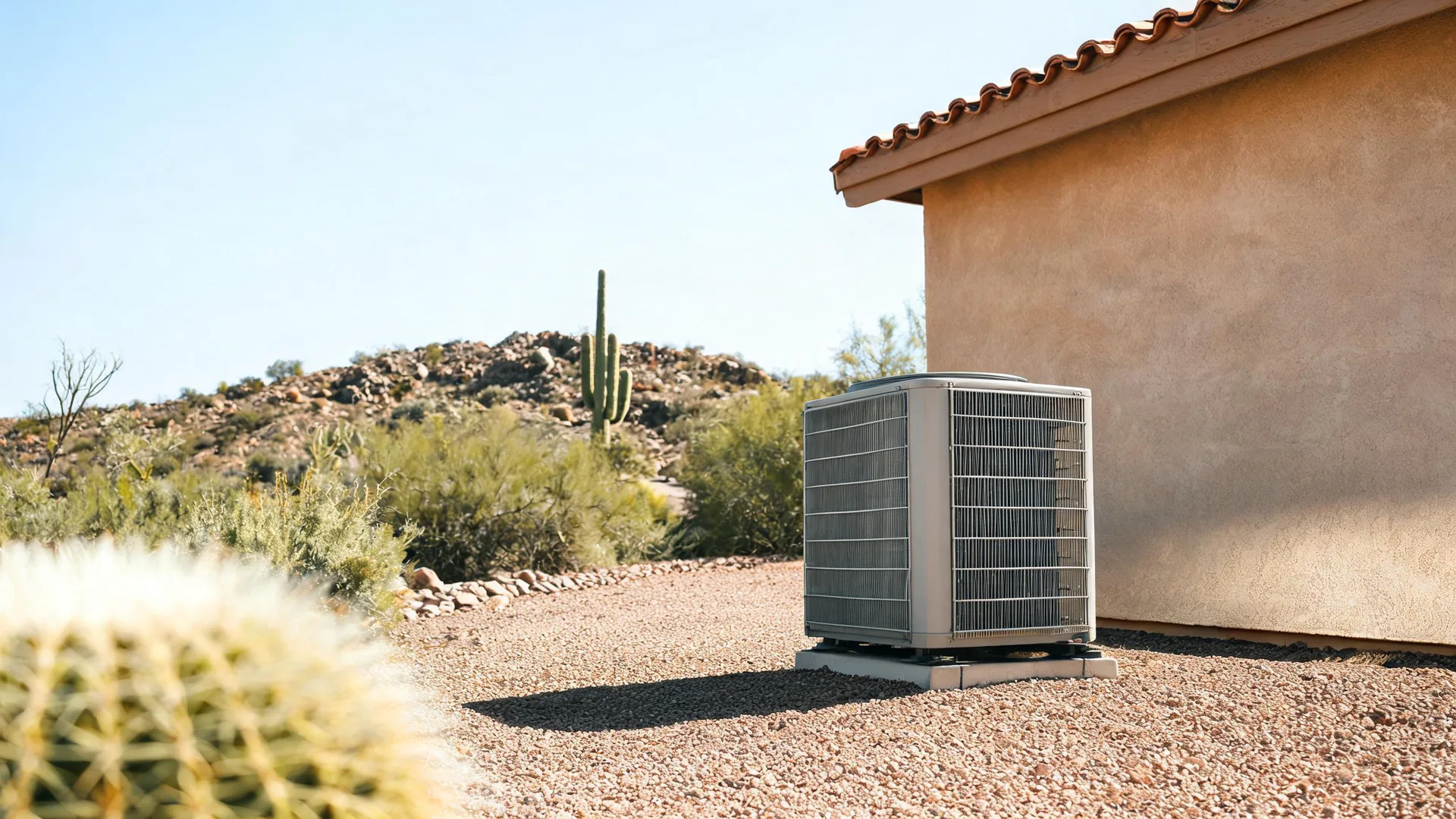
Cleaning the coil is not the same as glancing at it

A quick check looks at the outdoor unit from a few feet back and calls the coil fine if nothing looks obviously wrong. A thorough one pulls the fins apart enough to see between them, and washes the coil if it's caked with dirt or grass clippings. A coil that looks clean on the outside can still be packed with debris further in, and a coil that can't shed heat properly is what drives up strain on the compressor long before anything actually breaks.

Overhead view of an air conditioning condenser unit on a concrete pad next to a house with asphalt shingle roofing and vinyl siding.

Book your AC tune-up in May, before homes here start needing cooling in June.

  1. Jan
  2. Feb
  3. Mar
  4. Apr
  5. May
  6. Jun
  7. Jul
  8. Aug
  9. Sep
  10. Oct
  11. Nov
  12. Dec

A tune-up checks the refrigerant charge, cleans the coils, tests the capacitor and tightens the electrical connections.

A tune-up is what catches a system working harder than it needs to before that shows up on the bill. Power here already costs more than most places, so a dirty coil or a weak capacitor driving up runtime costs more here too. The part of a tune-up that actually touches running cost is the coil cleaning and the airflow check, not just confirming the unit turns on. A technician who washes the coil and checks the refrigerant charge is dealing with the two things most likely to be driving the bill up quietly all summer. Skipping that check doesn't make the system stop working. It just means paying more each month for the same cooling.