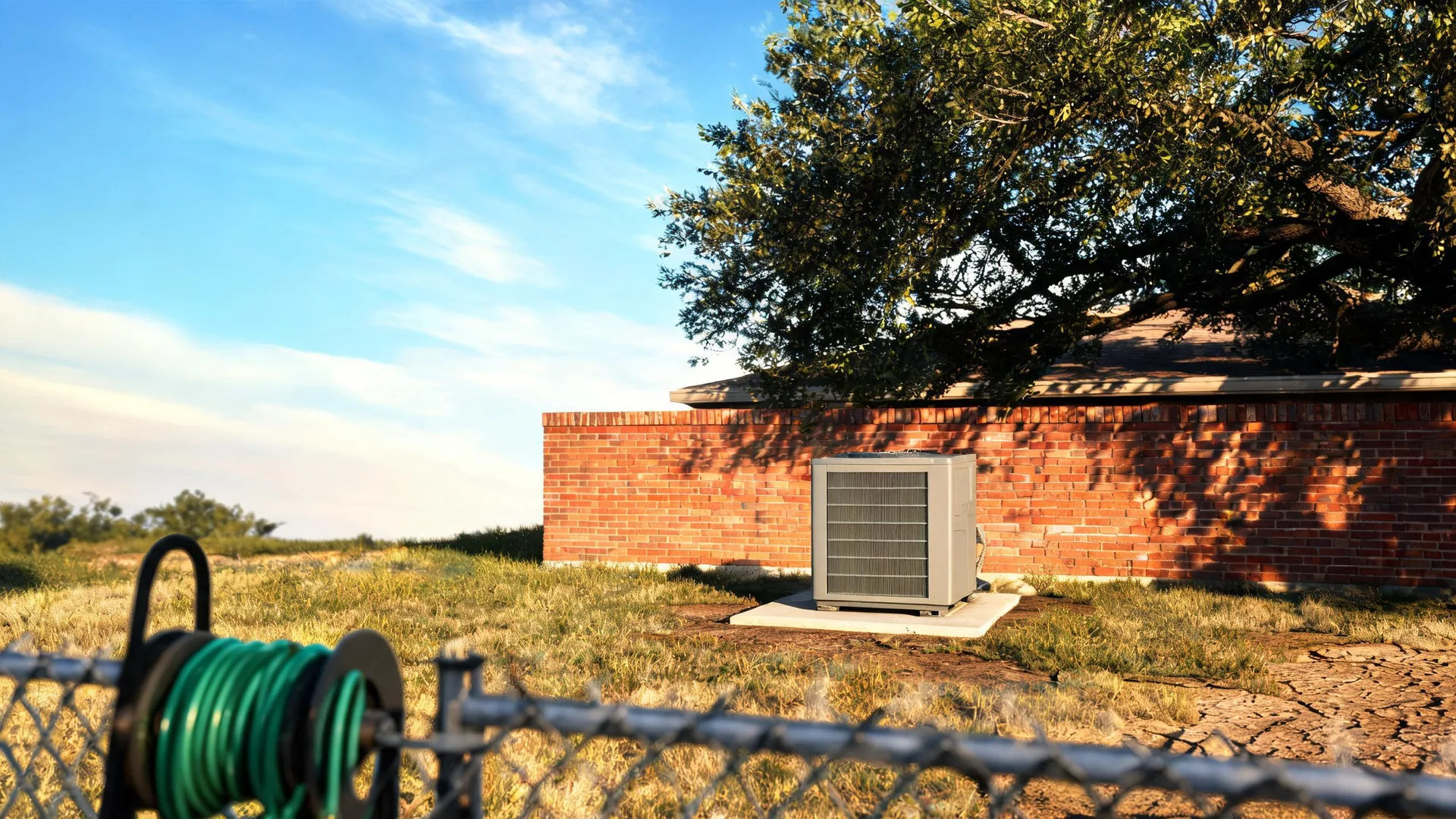
Overhead view of a gray residential air conditioning condenser unit mounted on a concrete pad beside a house with asphalt shingle roofing.

AC Maintenance in Buffalo, NY

Tell us about the job

Takes about a minute. No obligation.

Tune-up, service, or cleaningCentral ACErie County, NY
Step 1 of 2

What ZIP code is the job in?

Short cycles or weak airflow mean don't wait

If your AC shuts off soon after it starts, or the air from the vents feels weaker than it used to, something is already working harder than it should. A dirty coil, a low charge or a failing capacitor all show up this way before they show up as a dead system.


A yearly check catches what you can't see

The coil, the capacitor and the refrigerant charge all sit behind panels you don't open. A technician can check the charge, clean the coil and test the capacitor under load, which tells you about problems before they turn into a breakdown on the hottest day of the year.

2 months
July through August, your air conditioner is on duty
78°F
the average summer afternoon it cools against
31 hail events
in ten years, and hail bends the fins on outdoor coils
241 wind events
in ten years, and wind drives debris into outdoor units
Isometric cutaway illustration of a single-story house showing interior ductwork and an air handler connected by lines to an outdoor condenser unit on a pad beside the building.
Your air conditioner works hardest from July through August.

NOAA nClimDiv, 1991–2020 normals

Your air conditioner only has to earn its keep from July through August here.

Two months of real work a year means less wear, so a yearly check goes a long way.

Erie County's weather tests the power grid, not your AC

329 severe weather events from 2015 to 2024
11% of homes statewide lost power a day or more in 2024
241 damaging wind events from 2015 to 2024
Older home, older systemHalf the homes in Erie County were built in 1957 or earlier.

One check in spring covers it. A technician cleans the coil, tests the capacitor and confirms the charge is right before the weather asks anything of the system. Nothing about Buffalo pushes an AC harder than that. There's no extra dust load, no salt air, nothing here that wears a coil down faster than it would anywhere else. What's worth paying for is getting it done before the system has to lean on itself, not after. At 24.43 cents per kilowatt-hour, a unit running on a dirty coil or a weak capacitor costs more every time it kicks on, and that adds up even over a short stretch of real use.

Get it checked before the two months it works for

Book the check before July. Two months of hard running is all this system has to survive here, and a technician can confirm it's ready in one visit.

Find a contractor
An outdoor air conditioning condenser unit mounted on a concrete pad beside a house, with electrical conduit running to a wall-mounted disconnect box.

The older the system, the more a yearly check tells you

If your system has been there since the house changed hands, or longer, nobody's tracked what it's been through. A yearly check means a technician looks at the same system at the same point every year, so a coil that's starting to clog or a capacitor that's starting to weaken gets caught against last year's visit, not guessed at cold.

The filter protects the coil, not the air

A clogged filter starves the coil of airflow. The coil can still get cold, but with nothing moving past it, it starts icing over instead of cooling the house. Once ice builds up, the system is losing capacity and the compressor is working against a blocked path.

The drain line is the part nobody checks

The coil pulls moisture out of the air all season, and that water has to leave through the drain line. Algae and debris build up in that line over time with no warning signs until it backs up. A clogged drain doesn't just stop draining, it sends water into the pan and sometimes past it, into the ceiling or the closet below.

Overhead view of an outdoor AC condenser unit on a concrete pad next to a house with a dark shingle roof.

Book your AC tune-up in June, before homes here start needing cooling in July.

  1. Jan
  2. Feb
  3. Mar
  4. Apr
  5. May
  6. Jun
  7. Jul
  8. Aug
  9. Sep
  10. Oct
  11. Nov
  12. Dec

A tune-up checks the refrigerant charge, cleans the coils, tests the capacitor and tightens the electrical connections.

A real tune-up starts outside, at the condenser. The technician pulls the panel and checks the capacitor under load, not just by sight, because a capacitor can look fine and still be weak. The coil gets cleaned, since anything coating it traps heat and makes the system work harder to do the same job. The refrigerant charge gets checked against what the manufacturer specifies, not topped off by guess. The contactor gets looked at too, since that's the part that switches the compressor on and off, and a pitted one can fail without warning. Airflow across the whole system gets confirmed last, because none of the rest matters if the air can't move.