






Two white multi-story colonial houses with lit windows and black shutters photographed at night, fronted by a stone wall.

AC Installation in Yonkers, NY

Tell us about the job

Takes about a minute. No obligation.

New system or replacementCentral ACWestchester County, NY
Step 1 of 2

What ZIP code is the job in?

Electricity in Westchester County averaged 24.45 cents per kilowatt-hour in 2025, among the higher rates in the country. An air conditioner here runs on that rate all summer. The air gives it real work to do, too. Dew points average 62°F across June, July and August, and that kind of air keeps a system cycling to pull moisture out, not just to cool it down. Two systems rated for the same size can land on very different bills once you account for what power costs here. How well the unit is matched to the house and how well it's installed will show up on the bill long after the purchase price is forgotten.

3 months
June through August, your air conditioner is on duty
82°F
the average summer afternoon it cools against
16 hail events
in ten years, and hail bends the fins on outdoor coils
13.4 SEER2
the federal minimum any new unit must meet
Isometric line illustration of a cutaway single-story house showing interior rooms, ductwork, an indoor air handler or furnace, and a refrigerant line running to an outdoor condenser unit on a pad.
Your air conditioner works hardest from July through August.

NOAA nClimDiv, 1991–2020 normals

Half the homes in Westchester County were built in 1959 or earlier.

A new system has to be sized to the house it's going into, not to the one it replaces.

Most homes here heat with gas, and that shapes what an AC install looks like

52% of homes heat with gas
Climate zone 4A
Power here costs 24.45 cents per kilowatt-hour

Westchester County falls under zone 4A in the 2021 energy code, a mixed climate that demands real work from both sides of the system, cooling included. Any split system under 45,000 Btu an hour installed here has to meet the federal minimum for units built from 2023 on: at least 13.4 Btu of heat removed for every watt-hour of electricity it uses over the summer. That floor narrows what a contractor can offer you. It also means the new unit, at minimum, won't run as wastefully as an older one it might replace. A federal tax credit is available on qualifying equipment, on top of whatever the efficiency itself saves you at that electric rate.

What you install now is what every summer bill runs on

Power here is already expensive, and that rate does not change once the new system is in. What changes is how much of it the system asks for, all summer, every summer after this one. Ask what SEER2 rating the system carries and how the contractor sized it to your house.

Find a contractor
A man in a cap, gray long-sleeve shirt and tan pants climbs concrete steps toward a dark green front door, carrying a worn canvas tool bag.
A gray residential air conditioning condenser unit mounted on a concrete pad outdoors, surrounded by green grass under a partly cloudy blue sky.

Three months of work a year, decided in one

Cooling here runs three months a year, June through August. May is the month before that starts, and it's the natural time to get a system installed. Wait until the first hot stretch and the job happens under pressure, with whatever unit can go in fastest. Done in May, the system gets picked and placed on its own schedule. Winter nights here average 24°F, so whatever goes in has to hold up across a real range of weather, not just the three months it was bought for.

The SEER2 number is a summer average, not a promise

That rating comes from testing the unit across a range of outdoor temperatures and averaging the result. On a mild day the system beats its rating. On a brutal stretch it falls short. The number on the label tells you how the unit performs over a whole season, not what it does on any one afternoon.

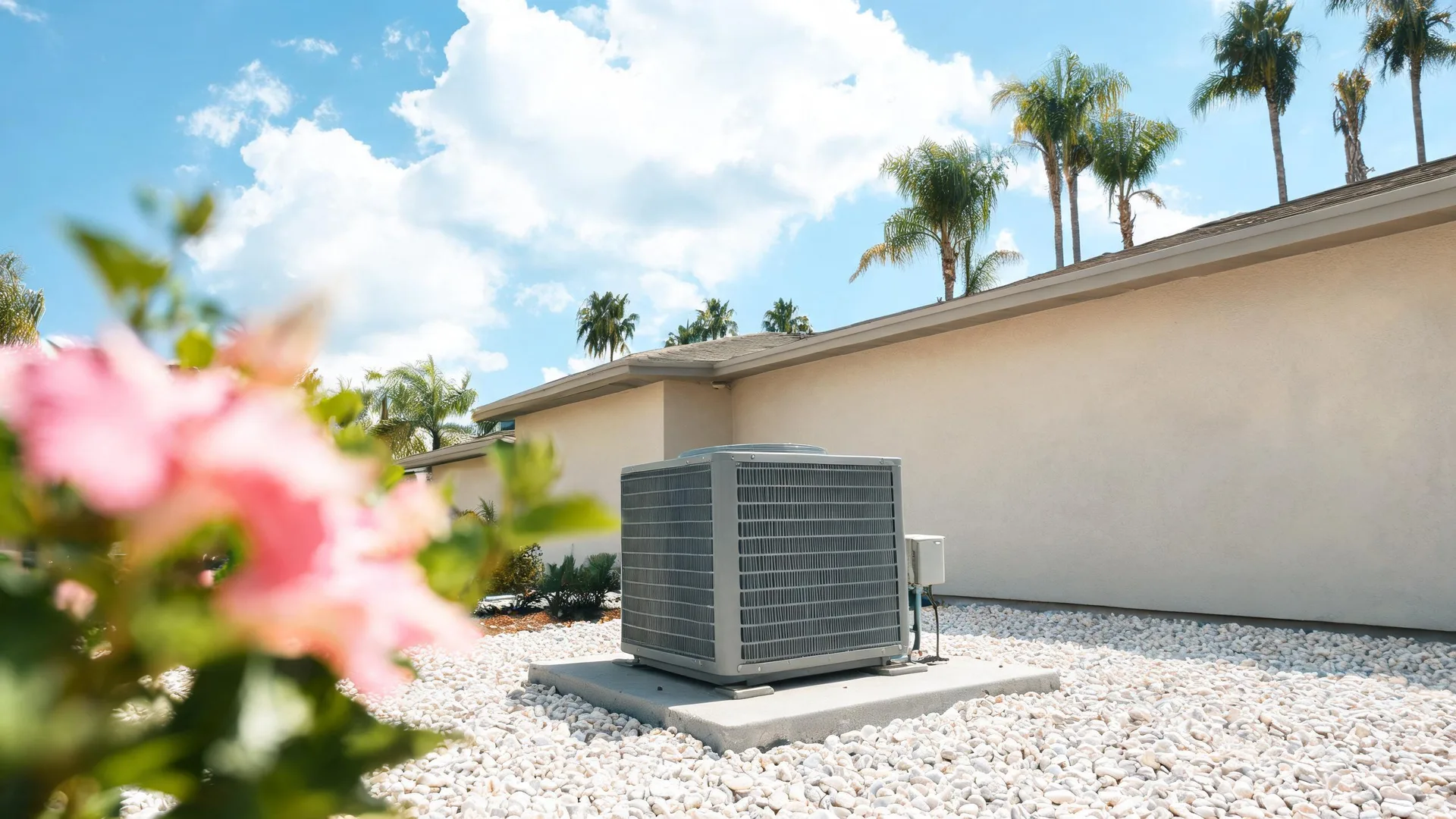
A high rating on a badly sized unit still runs poorly

The rating describes the equipment by itself, tested on its own. It says nothing about the ductwork it gets hooked to or the house it's installed in. A top-rated condenser paired with a unit that's too big or too small for the space will short cycle or run constantly, and either way the rating on the box stops meaning much once it's installed wrong.

Aerial view of a gray outdoor air conditioning condenser unit mounted on a concrete pad next to a house with vinyl siding.

A higher-efficiency unit would save about $30 a year to run in Westchester County compared with a new unit at the federal minimum.

  • A higher-efficiency unit$260 a year
  • A new unit at the federal minimum, 13.4 SEER2$290 a year

Estimates for a typical Westchester County home, from EIA household energy data, New York fuel prices and NOAA climate normals. Your home will differ.

Installation starts with a load calculation, not a guess based on the old unit's size. A contractor measures the house room by room and figures out how much heat it gains, then picks equipment to match. The indoor coil and the outdoor condenser get matched as a set, since pairing mismatched parts hurts efficiency even when each piece is rated well on its own. Line sets get run between the two, the refrigerant lines that carry heat from inside to outside, and those get pressure tested for leaks before anything is charged. The system is charged with refrigerant to the exact amount the manufacturer specifies, checked against the line length, not just filled until it feels right. Once it's running, a tech checks the airflow at the vents and the temperature split between the air going in and the air coming out, because that split tells you whether the system is actually doing its job.