






An outdoor air conditioning condenser unit mounted on a concrete pad next to a blue-sided residential house at sunset.

AC Installation in Watertown, NY

Tell us about the job

Takes about a minute. No obligation.

New system or replacementCentral ACJefferson County, NY
Step 1 of 2

What ZIP code is the job in?

Utility gas heats 39 percent of homes in Jefferson County, more than any other fuel, with electricity and propane filling most of the rest. That matters for an AC install because a gas furnace usually means ductwork is already in place. A new central air system can often use those same ducts, paired with a condenser outside and a coil added at the furnace. If your home heats with electricity instead, through baseboards or a heat pump, the installer will need to check whether ducts exist at all before pricing out central air versus another option.

2 months
July through August, your air conditioner is on duty
78°F
the average summer afternoon it cools against
5 hail events
in ten years, and hail bends the fins on outdoor coils
13.4 SEER2
the federal minimum any new unit must meet
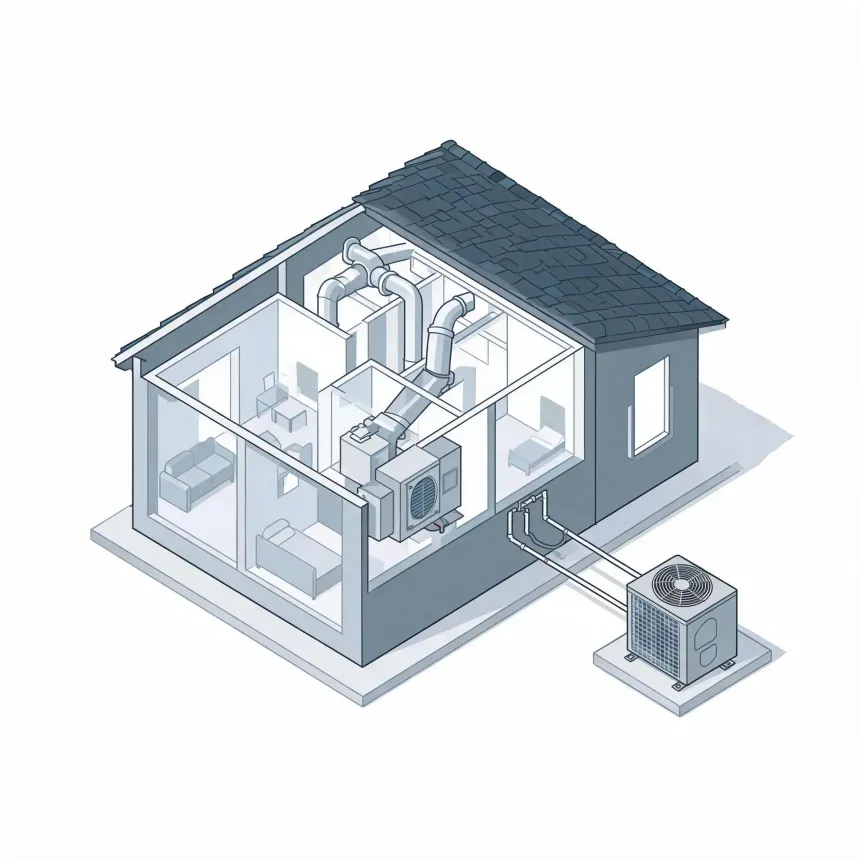
Isometric cutaway illustration of a small house showing interior rooms with furniture, an indoor air handler with ducts in the attic space, and refrigerant lines running to an outdoor condenser unit on a pad.
Your air conditioner works hardest from July through August.

NOAA nClimDiv, 1991–2020 normals

AC here runs July and August, just two months a year.

June is the month to get the new system in, before the first hot day finds you without one.

Two months of real work a year means this system never has to strain

Cooling runs July through August
Summer afternoons average 78°F
123 damaging wind events from 2015 to 2024
An install that fits the house, not just the adHalf the homes in Jefferson County were built in 1972 or earlier.

The efficiency rating on that new condenser's label tells you how much cooling it squeezes out of the power it uses. A higher number means lower bills for the same cooling, but it does not tell you how fast the house cools down or how cold it can get on the worst day. That comes down to matching the unit's capacity to the size of the home, not the rating. A system sized right and rated well outperforms an oversized one with a better label, because an oversized unit cycles on and off too fast to pull moisture out of the air. The rating also only holds up if the rest of the install is done right, the refrigerant charge set correctly and the coil matched to the condenser. A good number on a mismatched system never delivers what the label promises.

Get the system sized for the house you actually have

Half the homes in Jefferson County were built in 1972 or earlier. An install in a house that age means the installer has to work with the ductwork and layout already there, not a blank slate. That's a conversation worth having before the condenser gets picked out, not after.

Find a contractor
A man in a cap, dusty work shirt and tan trousers walks up front steps toward a dark green panelled door, carrying a canvas tool bag with hand tools, beside a potted shrub.
A gray cylindrical air conditioning condenser unit mounted on a concrete pad next to a light-colored vinyl-sided house exterior.

Pick reliable over top-tier

July and August, then it shuts off for the year. A system that only runs two months doesn't need the highest efficiency rating on the shelf to hold up. Put the money into correct sizing and a clean install instead, the coil matched to the condenser, the charge set right. That work matters more here than chasing a top-tier label built for places where the unit runs most of the year.

Ask who is doing the load calculation

A contractor should size the system by measuring the house, the windows, the insulation and the layout, not by matching whatever size is already out there. A load calculation is what tells you the right capacity. Without it, you're just guessing, and a guess tends to run bigger than it needs to be.

Ask what happens to the ductwork

The condenser and coil are only part of the job. If the ducts are old, undersized, or leaking at the seams, the new system pushes air through the same weak path the old one did. A straight answer here is whether the installer plans to test or seal the ducts, or just hook up to what's there.

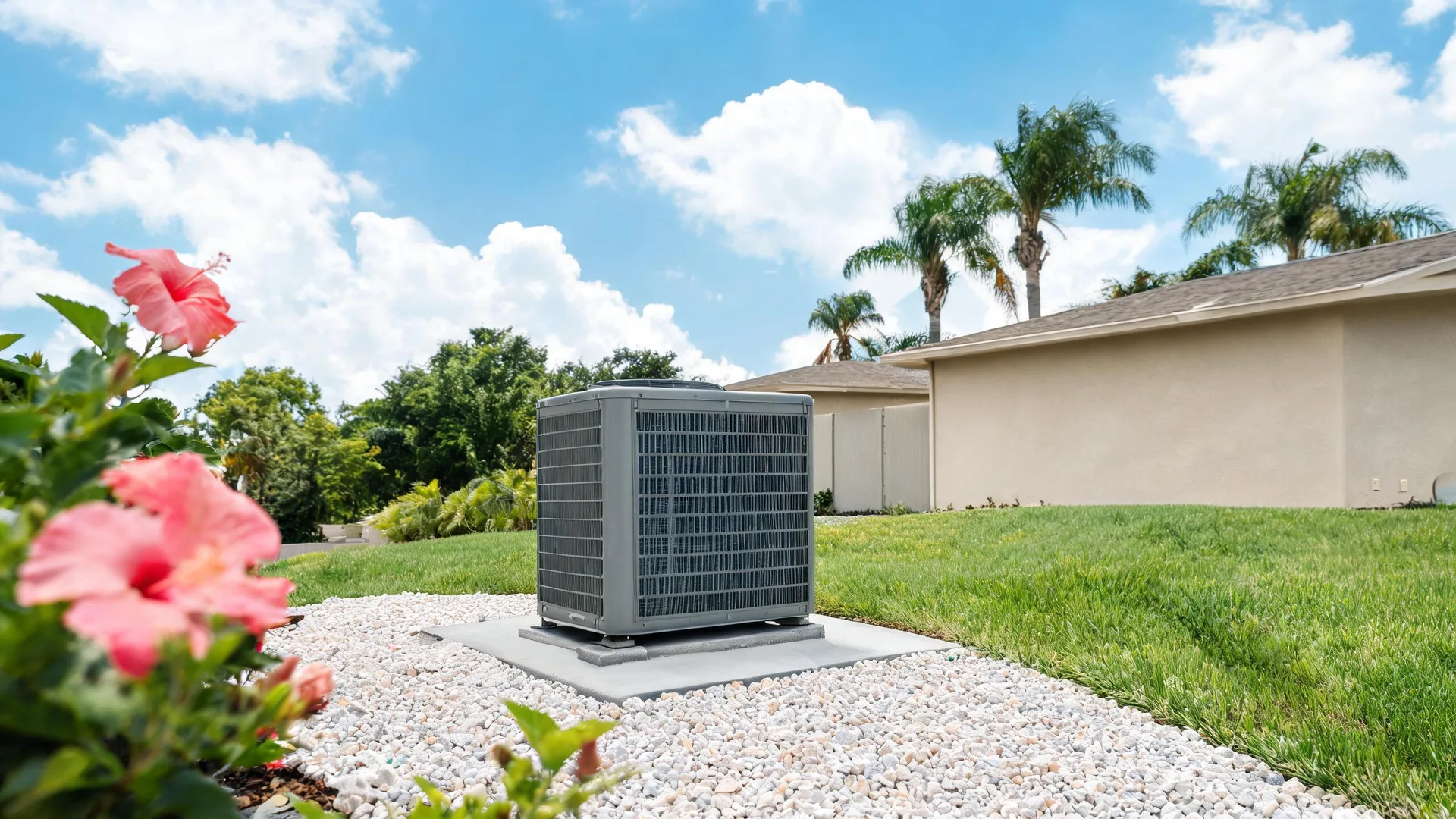
An outdoor central air conditioning unit mounted on a concrete pad beside a blue-sided house at sunset.

Going above the federal minimum saves little here, about $10 a year.

  • A higher-efficiency unit$130 a year
  • A new unit at the federal minimum, 13.4 SEER2$140 a year

Estimates for a typical Jefferson County home, from EIA household energy data, New York fuel prices and NOAA climate normals. Your home will differ.

Install day starts before the crew touches the condenser. Expect the old system pumped down or recovered first, since refrigerant can't just be vented. Then the old condenser and coil come out, and the new coil gets matched into the plenum above the furnace. Setting the line set and running new electrical takes real time, especially if the disconnect or breaker needs upgrading for the new unit. Once the condenser is set on its pad outside, the lines get connected, the system gets evacuated to pull moisture and air out, then charged to the exact weight the manufacturer specifies. A good installer checks static pressure in the ducts and airflow at the registers before calling it done, not just whether cold air comes out.