A row of illuminated white colonial houses along a road photographed at dusk.

AC Installation in Utica, NY

Tell us about the job

Takes about a minute. No obligation.

New system or replacementCentral ACOneida County, NY
Step 1 of 2

What ZIP code is the job in?

Most homes here run on gas heat

Utility gas heats 57.3% of occupied homes in Oneida County. That furnace likely shares a duct system with the air conditioner, which matters for this installation because the new AC has to work with the ductwork already in place.


The coil and the furnace are a pair

When a gas furnace is already there, central air installation usually means matching an outdoor condenser to an indoor coil that sits in the furnace's own duct run. Getting that pairing right is most of the job.

2 months
July through August, your air conditioner is on duty
78°F
the average summer afternoon it cools against
23 hail events
in ten years, and hail bends the fins on outdoor coils
13.4 SEER2
the federal minimum any new unit must meet
Isometric cutaway illustration of a house with a dark shingled roof, showing interior ductwork connected to an indoor air handler and an outdoor condenser unit beside the building.
Your air conditioner works hardest from July through August.

NOAA nClimDiv, 1991–2020 normals

Cooling runs about two months a year here, July and August.

A system that doesn't run hard all year doesn't need the top tier to hold up.

A standard system handles Utica summers fine

Power costs 24.43 cents a kWh statewide
Cooling runs July through August
Summer afternoons average 78°F

June is a better month for this than July. Cooling starts in July here, and that's when installers get busy with broken systems instead of planned ones. Putting the new system in before the heat arrives means the install happens on a day that works for you, not whenever a crew can fit you in. It also means the system gets tested and running before it has to do any real work. With only July and August to actually use it, there's no reason to wait until the first hot week forces the decision.

A standard system is the right call here

Oneida County has seen its share of rough weather, including 57 winter storms and 195 damaging wind events over the past decade. None of that changes what your AC needs to be. A standard system, properly sized and installed, holds up fine through a Utica summer.

Find a contractor
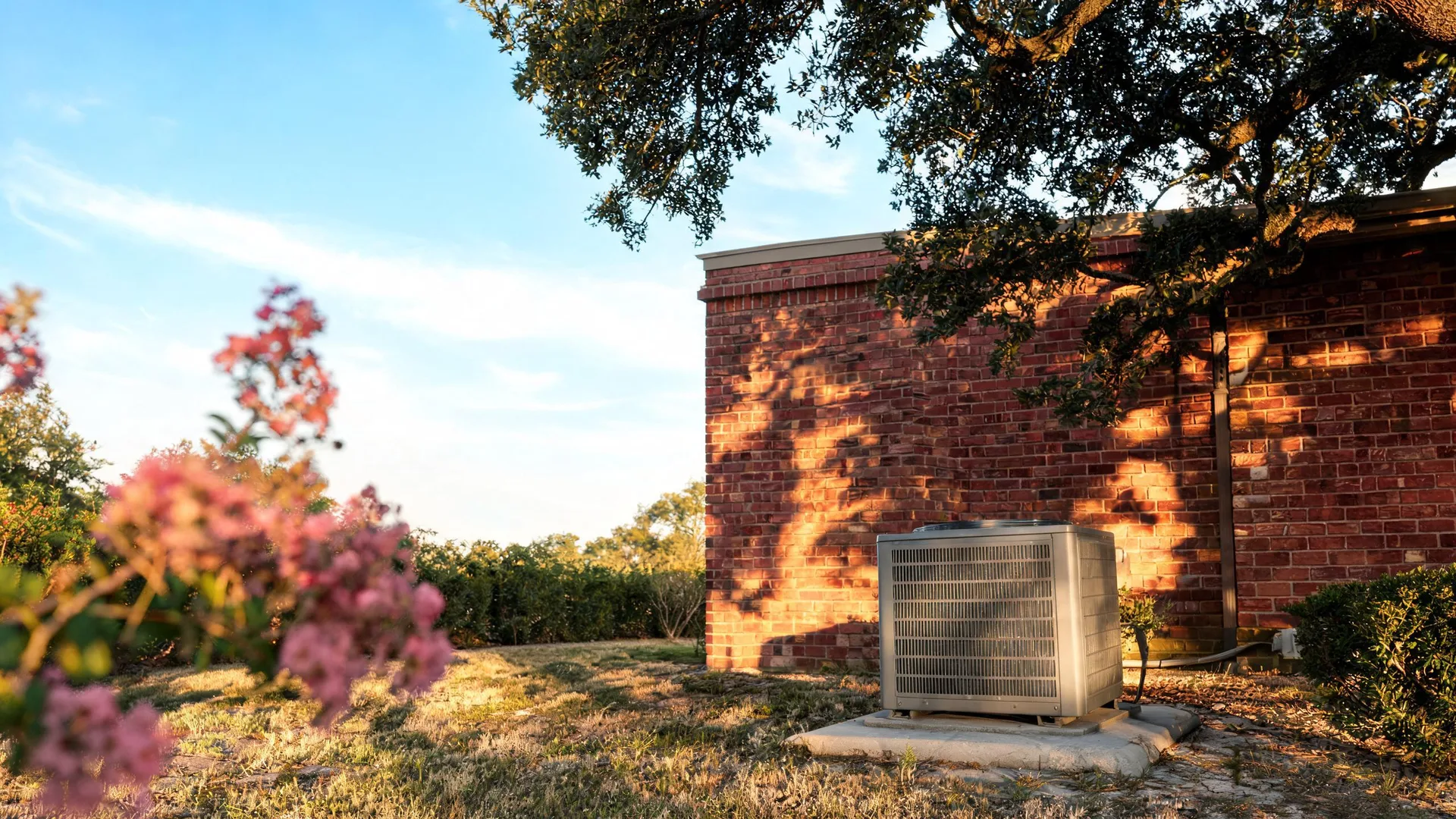
An outdoor air conditioning condenser unit mounted on a concrete pad beside a house, with electrical conduit running to a wall-mounted disconnect box.

An older home needs the install matched to it

Half the homes in Oneida County were built in 1958 or earlier. A house that age usually wasn't set up with the ductwork a modern system expects, even if a furnace was added later. Installing new AC in a house like that means checking what the duct run can actually handle, not just sizing the outdoor unit to the square footage.

The old condenser usually goes that day

Whoever installs the new system disconnects the old outdoor unit, recovers the refrigerant from it, and hauls it away as part of the job. Refrigerant can't just be vented into the air, so a licensed installer has the equipment to pull it out of the lines before anything gets disconnected.

The coil might be the harder piece

If the old coil sits inside the furnace and the new system needs a different one, that swap means opening up the plenum and resealing it after. A mismatched leftover coil restricts airflow even if the rest of the system is new, so it's worth asking whether it's being replaced or reused.

Aerial view of a residential air conditioning condenser unit mounted on a concrete pad next to a house with vinyl siding and a sliding glass door.

Going above the federal minimum saves little here, about $10 a year.

  • A higher-efficiency unit$120 a year
  • A new unit at the federal minimum, 13.4 SEER2$130 a year

Estimates for a typical Oneida County home, from EIA household energy data, New York fuel prices and NOAA climate normals. Your home will differ.

Installation day starts before anyone touches the old unit, with a walkthrough to confirm the new equipment matches what was quoted and the duct connections it'll tie into. The old condenser comes out first, refrigerant recovered, lines disconnected, unit hauled off. If the indoor coil is being swapped too, that means opening the plenum, setting the new coil, and sealing it back up so air isn't leaking around it. Setting the new condenser, running refrigerant lines, and wiring it in is its own careful step, since a line set that's kinked or poorly connected causes problems long after the crew leaves. Once everything's connected, the system gets charged with refrigerant to the exact amount the manufacturer specifies, not just topped off by feel. Before anyone leaves, it should run through a full cycle while someone checks airflow at the vents and confirms the system is actually cooling the way it's supposed to.