





A row of illuminated white colonial houses photographed at twilight along a tree-lined road with a stone wall in the foreground.

AC Installation in Troy, NY

Tell us about the job

Takes about a minute. No obligation.

New system or replacementCentral ACRensselaer County, NY
Step 1 of 2

What ZIP code is the job in?

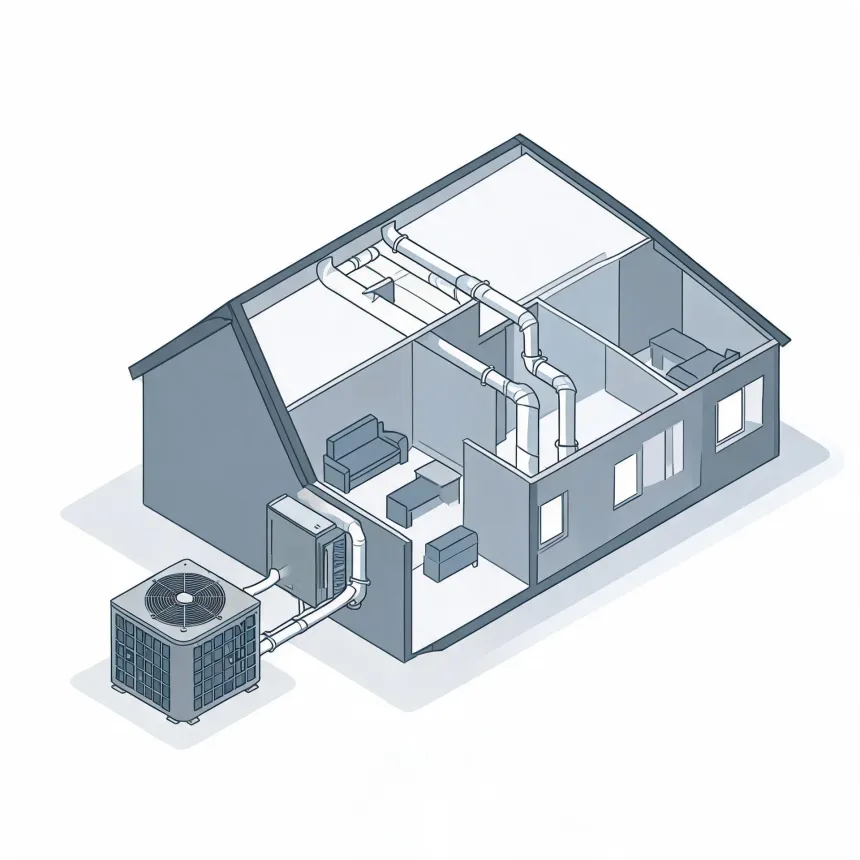
Gas heats close to half the homes in Rensselaer County, and most of those furnaces share a blower and ductwork with central air. That matters for this job. If gas furnace ducts already run through the house, installing AC usually means matching a new outdoor condenser and coil to that existing system rather than building a duct network from nothing. Homes heated by electricity, oil or propane may or may not have ducts in place, so that's worth checking before you assume the same path applies.

2 months
July through August, your air conditioner is on duty
79°F
the average summer afternoon it cools against
14 hail events
in ten years, and hail bends the fins on outdoor coils
13.4 SEER2
the federal minimum any new unit must meet
Isometric line illustration of a cutaway house showing interior rooms with ductwork, an indoor air handler, and an outdoor condenser unit connected by lines, on a white background.
Your air conditioner works hardest from July through August.

NOAA nClimDiv, 1991–2020 normals

Half the homes in Rensselaer County were built in 1962 or earlier.

A house that age needs a condenser and coil sized to its existing ducts, not just its square footage.

A normal-size system does the job in Troy

Power costs 24.43 cents a kWh statewide
Cooling runs July through August
Summer afternoons average 79°F
A normal-size system does the job in TroyCooling here runs about two months a year, July and August, with afternoons averaging 79°F.

Troy sits in climate zone 5A, a cool zone where furnaces carry more of the year's work than air conditioners do. But any split-system AC going in still has to meet the federal minimum of 13.4 SEER2 if it was built after January 1, 2023. That rule applies whether the house is heating-dominant or not, so it limits which condensers and coils a contractor can legally install here. A lower-rated unit sitting in a warehouse does not get a pass because winters are long. On top of the efficiency floor, a federal tax credit is available for qualifying equipment, separate from whatever the install itself runs.

June is when to put in a new AC, not July

Cooling in Rensselaer County runs July through August. Put in a new condenser and coil in June and it's set before the first hot stretch. Wait until the heat is already on and you're choosing a system in a hurry, on whatever timeline a contractor has open that week.

Find a contractor
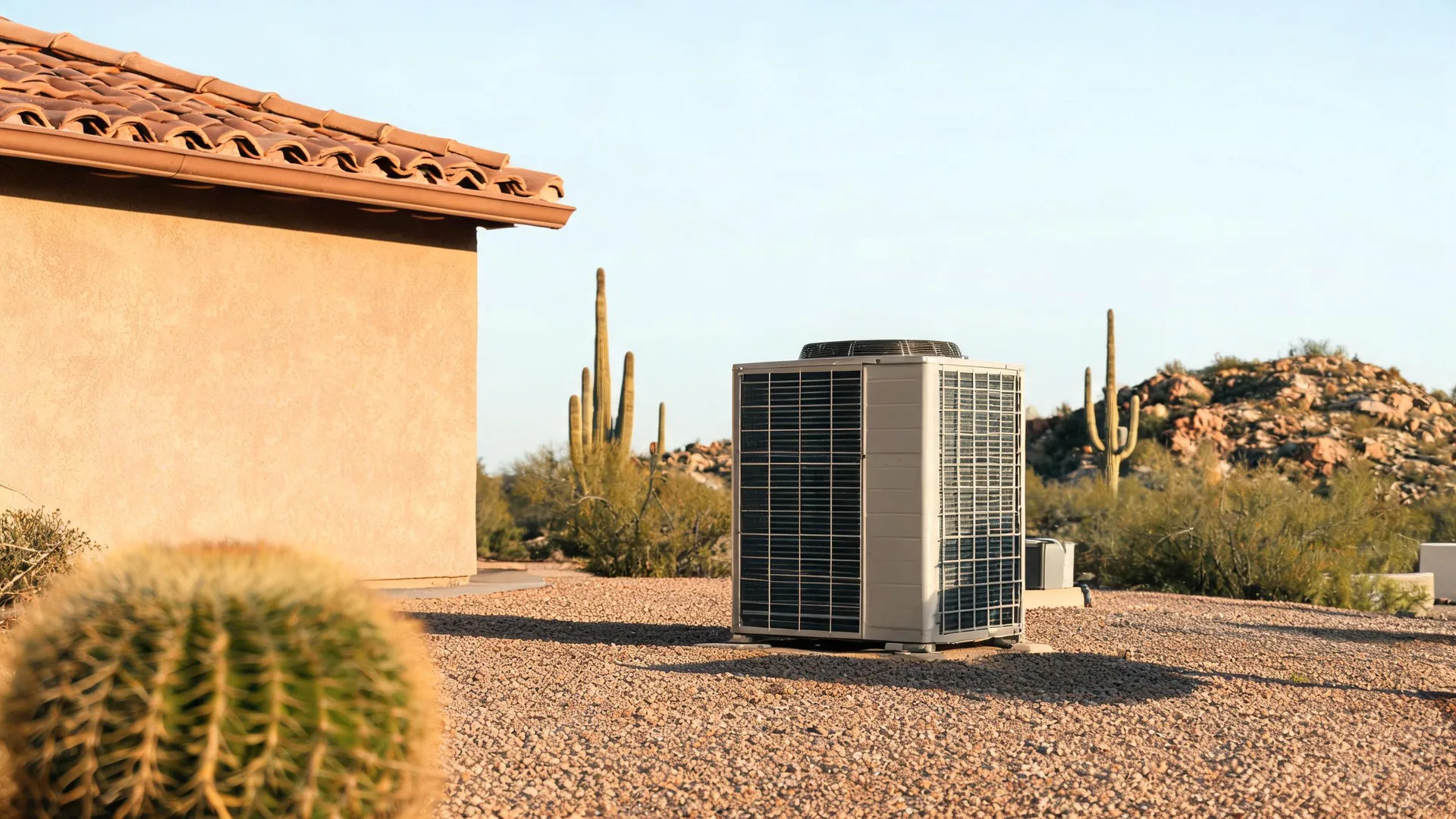
A gray cylindrical air conditioning condenser unit mounted on a concrete pad next to a light-colored vinyl-sided house exterior.

Two months of work a year

A condenser here runs July and August, then sits the rest of the year. That's a light duty cycle, and most of the wear on a condenser comes from hours spent running under load. Less time working means less reason to chase the highest efficiency number on the shelf. A mid-tier condenser matched correctly to the coil and the existing ductwork will hold up fine under a load this light. What matters more is correct sizing and a clean installation.

Ask for the load calculation, not a guess off square footage

A contractor should run a room by room load calculation before quoting equipment, using the house's windows, insulation and duct layout. Homes the same size can need different size condensers depending on how they're built. If a quote comes back before anyone measures the ducts or checks the attic, that number was pulled from a chart, not from the house.

Ask whether the new coil matches the existing blower and ducts

When a new condenser and coil pair with a furnace that is staying in place, the coil has to match the blower's airflow and the duct sizing already in the house. A coil that moves more air than the ducts can carry causes noise and uneven cooling. This is the question that separates a straightforward swap from a job that needs duct work too.

Aerial view of a gray outdoor air conditioning condenser unit mounted on a concrete pad next to a house with vinyl siding.

Going above the federal minimum saves little here, about $20 a year.

  • A higher-efficiency unit$140 a year
  • A new unit at the federal minimum, 13.4 SEER2$160 a year

Estimates for a typical Rensselaer County home, from EIA household energy data, New York fuel prices and NOAA climate normals. Your home will differ.

A contractor starts by shutting off power to the outdoor unit and the furnace or air handler before touching anything. The old condenser gets disconnected and set aside, and if the coil above the furnace is being replaced too, that comes out next. The new coil goes in matched to the existing ductwork and blower, then the line set connects it to the new condenser outside. Before any refrigerant goes in, that line gets pressure tested to make sure there are no leaks at the connections. Once it holds, the system gets charged, started, and checked for proper temperature drop across the coil. None of this takes special effort because the equipment is high-end. It takes the same care on a mid-tier system as on anything else, because a leak or a bad connection causes problems no matter what's written on the nameplate.