





A long white picket fence runs along a mowed grass lawn in front of a row of single-story houses with gray siding and dark shingled roofs, backed by tall leafy trees.

AC Installation in Syracuse, NY

Tell us about the job

Takes about a minute. No obligation.

New system or replacementCentral ACOnondaga County, NY
Step 1 of 2

What ZIP code is the job in?

Most homes in Onondaga County heat with utility gas, about 7 in 10. That usually means a gas furnace paired with a separate AC unit, with the furnace blower moving air through the same ducts the air conditioner uses. If your house already has ductwork sized for a gas furnace, adding or replacing central air is straightforward since the ducts are already there to use. Homes on electric heat often run a heat pump instead, which handles cooling and heating in one system. Knowing which setup you have tells you what kind of installation this actually is.

2 months
July through August, your air conditioner is on duty
79°F
the average summer afternoon it cools against
15 hail events
in ten years, and hail bends the fins on outdoor coils
13.4 SEER2
the federal minimum any new unit must meet
Isometric cutaway illustration of a single-story house showing interior rooms, ceiling ductwork connected to an indoor air handler, and an outdoor condenser unit beside the exterior wall.
Your air conditioner works hardest from July through August.

NOAA nClimDiv, 1991–2020 normals

Onondaga County saw 186 damaging wind events and 22 winter storms in the last decade.

None of that changes what size or efficiency AC your house needs.

Half the homes here were built by 1964, and a new AC has to fit the one you've got

Half the homes here were built by 1964
Climate zone 5A
Power costs 24.43 cents a kWh statewide
Cooling runs two months here. Get it in before July.June is the month to have it done, before the first hot stretch of summer hits.

Summer here is short. Cooling runs about two months, July and August, with afternoon highs averaging 79 degrees. That's not a load that beats up a system. The rest of the year the AC sits idle while the furnace does the work. A unit that only runs two months a year doesn't wear the way one does in a hot climate, so there's less reason to pay up for the highest efficiency model on the shelf. A mid-range system sized right for your house will hold up fine here. What matters more than chasing the top SEER2 number is picking equipment that's reliable and matched to your ductwork.

Your new AC has to meet 13.4 SEER2. Make sure the quote does.

Any new split system going into a Syracuse home has to meet 13.4 SEER2 at minimum, the federal floor for zone 5A. That's the baseline to compare quotes against. A system meeting that minimum also qualifies for a federal tax credit, worth checking into before you sign anything.

Find a contractor
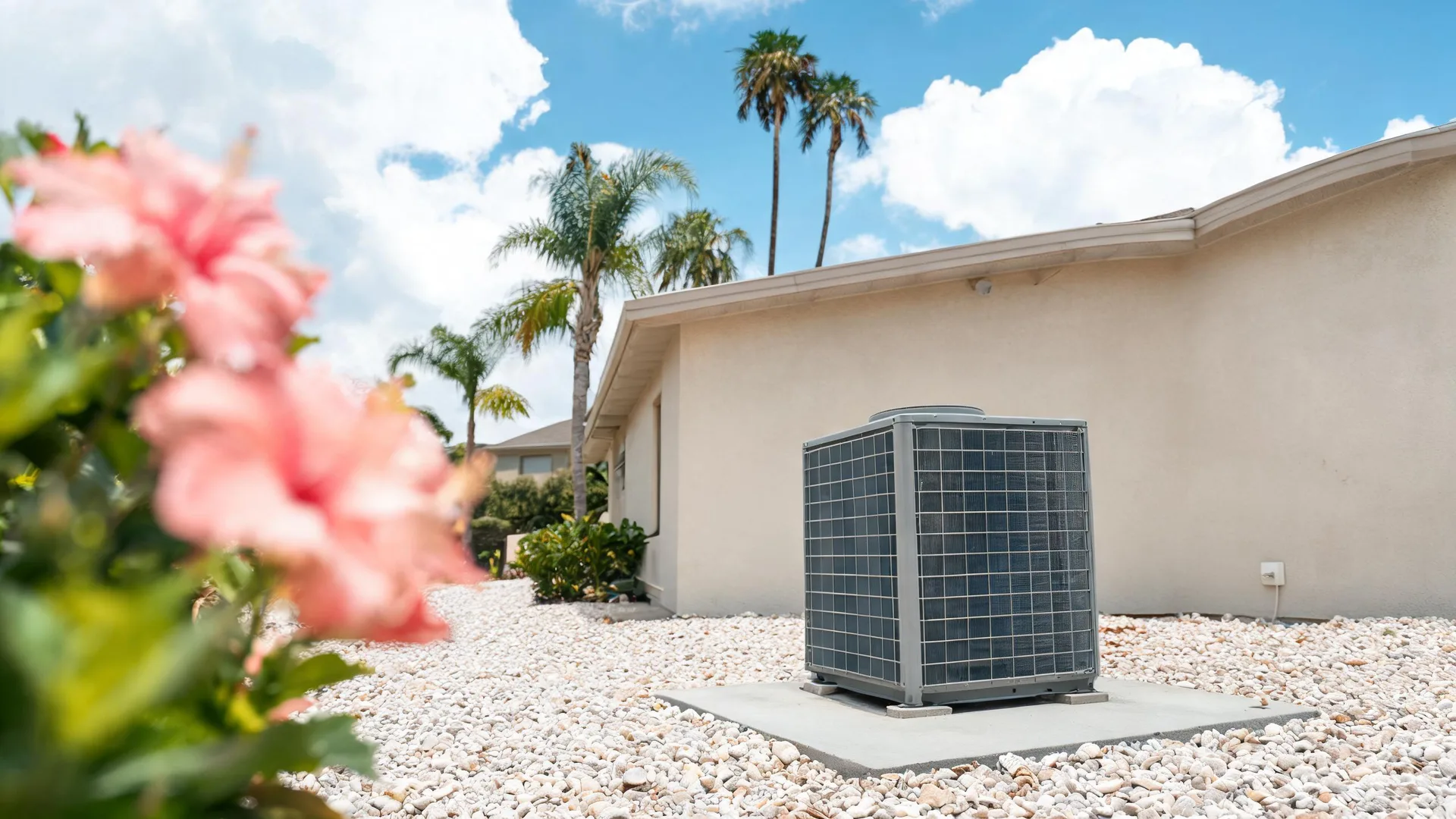
A gray residential air conditioning condenser unit mounted on a concrete pad outdoors, surrounded by green grass under a partly cloudy blue sky.

Mostly idle, year round

That two month stretch is also when a time-lapse of this system would show it actually cycling. The rest of the year it sits. A machine that spends most of its life idle doesn't build up the wear that pushes someone toward premium equipment. Put the budget toward correct sizing and a clean installation instead of chasing a SEER2 number above the floor.

Ask for the load calculation, not a guess off square footage

A contractor should size your AC using a room by room load calculation that accounts for your windows, insulation and layout. An installer who quotes a tonnage based on square footage alone is guessing, and a system that's oversized will cycle on and off too fast, leaving the house cold but damp since it never runs long enough to pull moisture out of the air.

Ask what happens to the ductwork, not just the condenser

The outdoor unit is only part of the job. Ask whether the existing ducts and line set get inspected, and whether the indoor coil gets replaced too so the whole system is matched. A new condenser hooked to an old mismatched coil or undersized ducts will never hit the efficiency it's rated for, no matter what's written on the spec sheet.

Aerial view of a residential air conditioning condenser unit mounted on a concrete pad next to a house with vinyl siding and a sliding glass door.

Going above the federal minimum saves little here, about $20 a year.

  • A higher-efficiency unit$140 a year
  • A new unit at the federal minimum, 13.4 SEER2$160 a year

Estimates for a typical Onondaga County home, from EIA household energy data, New York fuel prices and NOAA climate normals. Your home will differ.

Installation day starts outside, not in. The crew will set the new condenser on its pad, run the refrigerant line set, and that part goes fast. The slower work happens at the indoor coil, where it sits in the plenum above or beside the furnace. If the new coil is a different size than the old one, that sheet metal gets modified to fit, not forced. Expect the system to get evacuated and charged with refrigerant before anything is powered on, since any air or moisture left in the lines will ruin the compressor down the road. Once it's running, a tech checks the charge against the manufacturer's spec and checks airflow at the vents, not just whether cold air is coming out. A system can blow cold and still be wired or charged wrong, and that only shows up months later as a failed compressor or a coil that freezes up.