





A low-angle view across a mowed lawn toward a single-story light-colored house with a dark shingled roof and dark shutters, framed by large deciduous trees and a blurred shrub in the foreground under an overcast sky.

AC Installation in Schenectady, NY

Tell us about the job

Takes about a minute. No obligation.

New system or replacementCentral ACSchenectady County, NY
Step 1 of 2

What ZIP code is the job in?

Most houses in Schenectady County heat with utility gas, 69.1% of them. That usually means a gas furnace paired with a separate AC coil, both using the same ductwork and the same air handler. If that's what you have, adding or replacing central air means matching new equipment to that setup, not rethinking it. Electricity comes next at 17.9%, and those houses are more likely running a heat pump or electric furnace, which changes what the AC side needs to connect to. Fuel oil and propane heat the rest, usually through their own furnace or boiler, so the AC installation still has to work with whatever is already moving air through the house.

2 months
July through August, your air conditioner is on duty
79°F
the average summer afternoon it cools against
10 hail events
in ten years, and hail bends the fins on outdoor coils
13.4 SEER2
the federal minimum any new unit must meet
Isometric line illustration of a cutaway house showing interior rooms with furniture and ceiling ductwork, connected to an outdoor condenser unit with a fan beside the building.
Your air conditioner works hardest from July through August.

NOAA nClimDiv, 1991–2020 normals

Cooling runs about two months a year here, July and August.

A system that's only asked to work two months a year doesn't need to be the top of the line.

The weather here tests equipment, not the size you need

248 severe weather events from 2015 to 2024
11% of homes statewide lost power a day or more in 2024
188 damaging wind events from 2015 to 2024

There's no local reason to size up or pay extra for efficiency here. A standard central air system, matched to your home's square footage and existing ductwork, cools a Schenectady house fine. New York electricity runs 24.43 cents per kilowatt-hour, which is on the higher side, but cooling only runs a couple months a year in this county, so a high-efficiency model takes a long time to earn back its extra cost. Put the money into correct sizing and a clean installation instead. A unit sized right for your home and ducts will run less and last longer than a bigger or fancier one forced through the same ductwork.

Get it in before July

Cooling starts in July here. June is the month to have a new system in, so installation happens on your timeline instead of during the first hot week of summer.

Find a contractor
A man in a tan jacket, cap, and work boots carries a canvas tool bag up wooden porch steps toward a dark green front door of a house with light horizontal siding and a potted shrub.
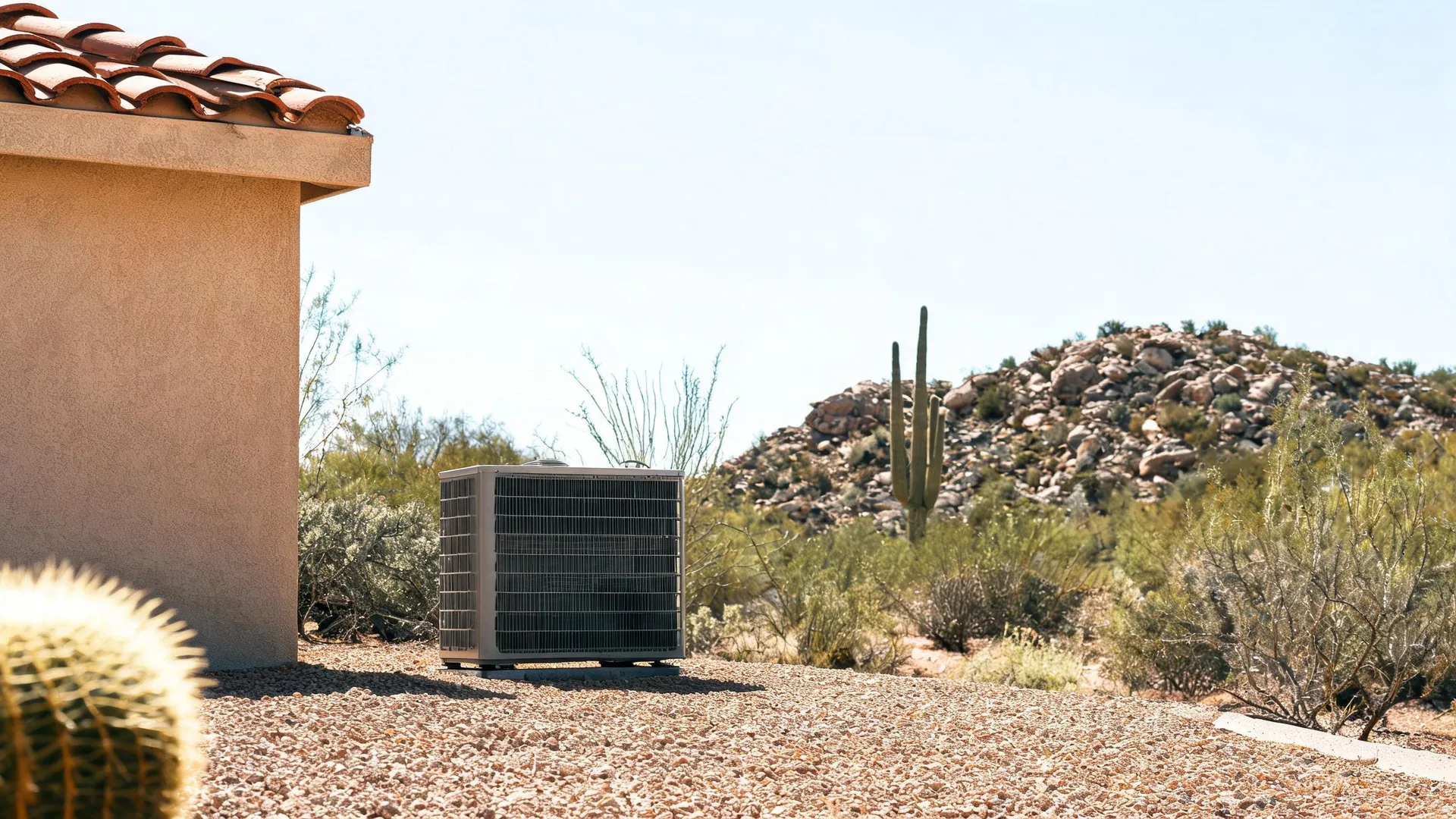
An outdoor air conditioning condenser unit mounted on a concrete pad surrounded by gravel, photographed against a partly cloudy blue sky.

Older homes need a contractor who checks the ductwork, not just the square footage

Half the houses in Schenectady County date to 1956 or earlier. A furnace or AC installed in a house that old is going into whatever ductwork and electrical setup was put in at some point after, not necessarily sized or routed for what you're putting in now. That's worth checking before the new equipment shows up, not after. A system sized for your square footage still needs ducts that can move that much air, and a panel that can carry the load if you're adding anything electric.

Ask what size they're proposing, and why

A contractor should size your system off a load calculation, pulling in your square footage, window area, insulation and duct layout, not a quick guess based on the old unit. Ask them to walk you through the number. An oversized system cools the air fast but shuts off before it pulls the moisture out, so the house feels clammy even at the right temperature.

Ask whether the ductwork was tested, not just measured

A new system is rated to move a certain amount of air, and the ducts carrying that air either hold up to it or they don't. Ask whether the contractor checked static pressure or just looked at the vents and called it good. Leaky or undersized ductwork chokes a new system no matter how good the equipment is, and that's worth catching before the unit goes in, not after it's running.

Overhead view of a gray residential air conditioning condenser unit mounted on a concrete pad beside a house with asphalt shingle roofing.

Going above the federal minimum saves little here, about $20 a year.

  • A higher-efficiency unit$150 a year
  • A new unit at the federal minimum, 13.4 SEER2$170 a year

Estimates for a typical Schenectady County home, from EIA household energy data, New York fuel prices and NOAA climate normals. Your home will differ.

On install day, the old equipment comes out first, the indoor coil and the outdoor unit both, along with whatever line set connected them. If the new system runs on a different refrigerant, that line set usually gets replaced rather than reused. The installer sets the new outdoor unit on a pad, fits the indoor coil into the plenum next to the furnace, and runs new line set between them. Before any refrigerant goes in, that line set gets pressure tested, because a bad connection that leaks slowly won't show up as weak cooling right away, it shows up down the road. Once everything's connected and charged to the manufacturer's spec, the installer checks airflow at the vents and confirms the thermostat is actually talking to the new equipment. A clean installation leaves you with a system charged correctly, not just one that's turned on and blowing cold air.