





Overhead view of an outdoor AC condenser unit on a concrete pad next to a house with a dark shingle roof.

AC Installation in Rochester, NY

Tell us about the job

Takes about a minute. No obligation.

New system or replacementCentral ACMonroe County, NY
Step 1 of 2

What ZIP code is the job in?

Electricity in Monroe County runs 21.61 cents per kilowatt-hour on average, higher than most of the country. Summers here are milder too, with a dew point around 58°F in June, July and August, so the air doesn't sit heavy the way it does further south. That means this system isn't running flat out all summer the way one would in a muggier state. But fewer hours doesn't make the rate any cheaper. Every hour this unit runs here costs more than the same hour would most other places, so a unit that runs inefficiently loses money faster here than it would somewhere with lower rates.

2 months
July through August, your air conditioner is on duty
79°F
the average summer afternoon it cools against
15 hail events
in ten years, and hail bends the fins on outdoor coils
13.4 SEER2
the federal minimum any new unit must meet
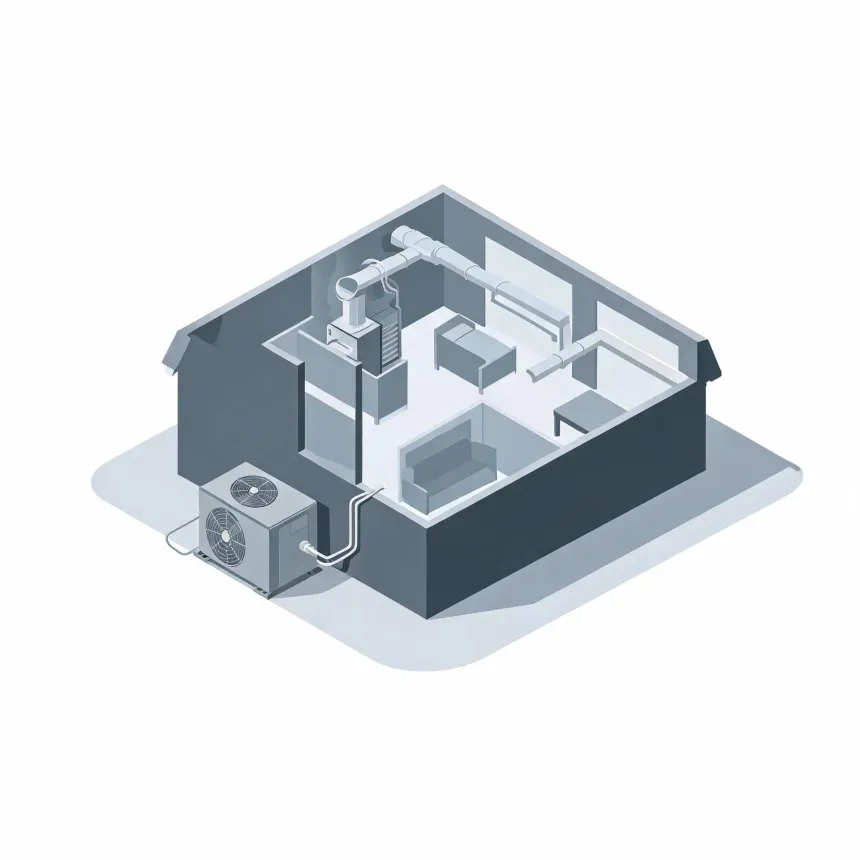
Isometric grayscale illustration of a cutaway house interior showing a furnace with ductwork, interior rooms with furniture, and an outdoor condenser unit connected by lines at the exterior wall.
Your air conditioner works hardest from July through August.

NOAA nClimDiv, 1991–2020 normals

Gas heats three out of every four homes in Monroe County.

If a furnace already handles the heat, the new AC just needs to match the ductwork and the breaker it has.

Half these homes were built before central air was standard

Half the homes here were built by 1965
Cooling runs July through August
Summer afternoons average 79°F
Two Months to Run, So Get It Right Before JulyCooling here runs July through August. June is when to put in the new system, not after the first heat wave.

Monroe County falls under zone 5A in the 2021 energy code, a cool zone where the heating load matters more than the cooling load. That doesn't loosen the rules on the air conditioner going in. Any split-system under 45,000 Btu an hour built since January 2023 has to hit at least 13.4 SEER2, the federal floor. That number is a minimum, not a target, so anything sold new here already clears it. A contractor sizing a system for your home is working from that floor up, matched to your ductwork and what the breaker can carry.

What You Pay Per Hour Depends on What You Install

The rate on your electric bill doesn't drop because a unit is efficient. A higher SEER2 system just needs fewer of those expensive kilowatt-hours to put out the same cooling. That gap shows up on every bill for as long as the unit runs, so it's worth asking a contractor what SEER2 rating they're proposing before the install, not after.

Find a contractor
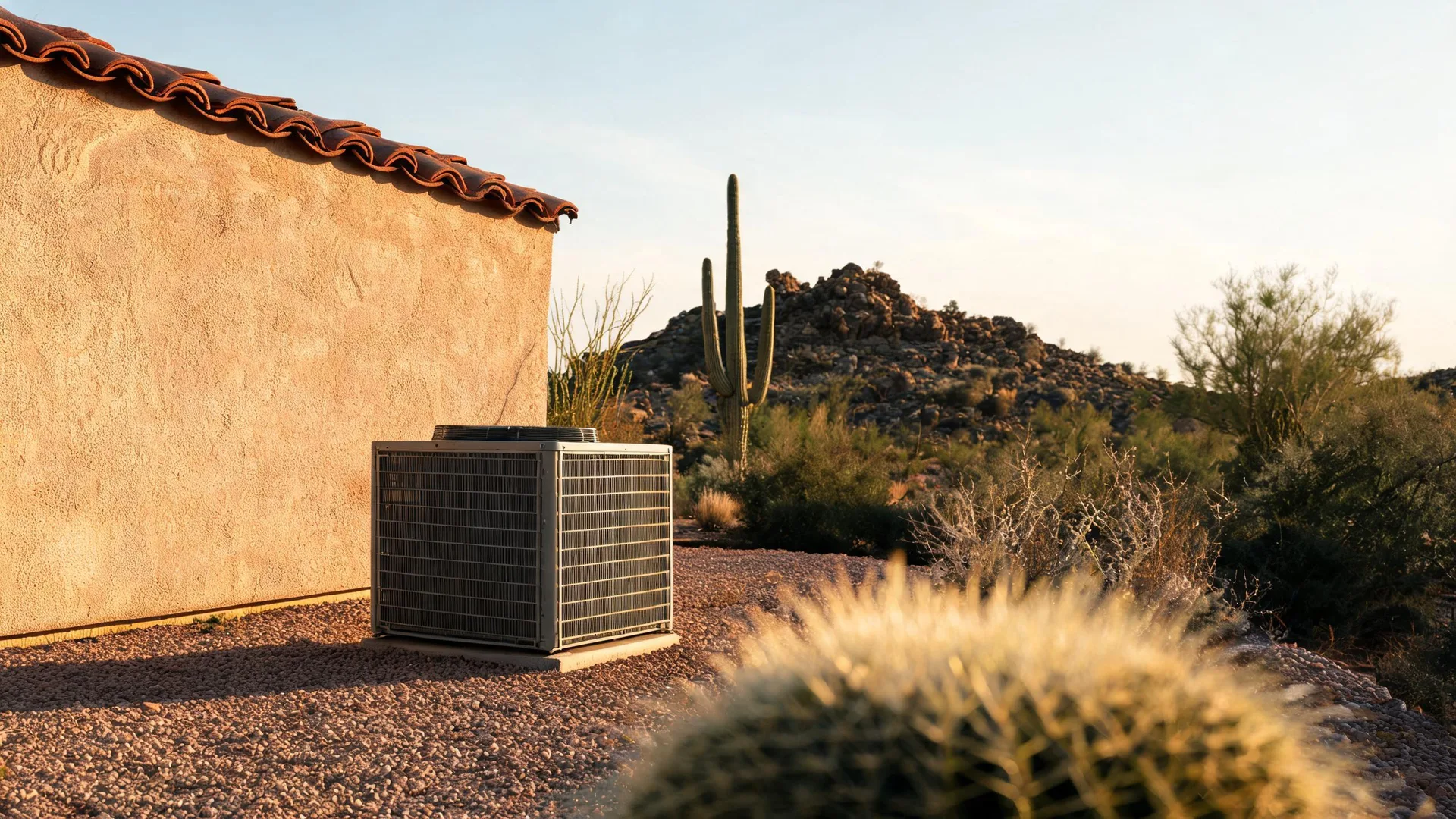
An outdoor air conditioning condenser unit mounted on a concrete pad beside a house, with electrical conduit running to a wall-mounted disconnect box.

Matching the New System to the Old House

Half the houses in Monroe County went up in 1965 or earlier. If yours is one of them, the ductwork and the electrical panel were likely sized for whatever heated the place, not for running a new air conditioner alongside it. A system going into a house like that needs a contractor who checks the ducts and the breaker against what the new unit actually draws, not one who just swaps in a bigger box.

Ask for the load calculation, not just a size

A contractor should measure the house room by room before naming a tonnage. Square footage alone leaves out the windows, the insulation and the ductwork, and a unit sized off square footage alone can end up too big. An oversized system cools the air fast and shuts off before it pulls the moisture out, so the room feels clammy even at the right temperature.

Ask what happens to the existing ductwork

The new condenser and coil have to move the amount of air the ducts were built to carry. Ducts that are too small for the new system choke the airflow, and that strain can shorten the life of the compressor. Before signing anything, ask whether the ducts were inspected or just reused as they are.

Aerial view of a gray central air conditioning condenser unit on a concrete pad next to a house with vinyl siding.

Going above the federal minimum saves little here, about $20 a year.

  • A higher-efficiency unit$180 a year
  • A new unit at the federal minimum, 13.4 SEER2$200 a year

Estimates for a typical Monroe County home, from EIA household energy data, New York fuel prices and NOAA climate normals. Your home will differ.

Installation day starts with the parts of the old system coming out, the indoor coil, the outdoor condenser, and the lines running between them. A contractor will check the line set before deciding whether to reuse it or run new copper, since the old lines have to match the size and the refrigerant the new unit needs. The condenser gets set on a pad outside, leveled so the compressor inside it wears evenly. Indoors, the new coil goes in above or beside the furnace, and that's where a leak check matters most, because a bad seal there shows up as lost refrigerant months later. Once everything's connected, the system gets charged with refrigerant to the exact amount the manufacturer specifies, not just filled until it runs cold. Before anyone leaves, the airflow across the coil and the temperature drop at the vents both get checked, since that's what confirms the system was sized and installed the way it was supposed to be.