Most homes here run on gas
Utility gas heats 41% of homes in Oswego County, more than any other fuel. Bottled or LP gas adds another 22%. A furnace paired with central air is the setup most installers here see first.

Takes about a minute. No obligation.
Utility gas heats 41% of homes in Oswego County, more than any other fuel. Bottled or LP gas adds another 22%. A furnace paired with central air is the setup most installers here see first.
Gas or oil, electric baseboard, whatever heats your home, the AC side gets sized and installed on its own. What matters is your ductwork and your home's cooling load, not what's in the furnace room.
NOAA nClimDiv, 1991–2020 normals
Electricity in New York runs 24.43 cents per kilowatt-hour, well above the national average.
A correctly sized system matters more here than in cheaper-power states, but it still doesn't call for anything beyond standard equipment.



Oswego County sees its share of rough weather, 240 severe events logged between 2015 and 2024, most of it wind and winter storms rather than hail or tornadoes. None of that changes what your AC install needs to be. A standard outdoor unit is built to take wind and snow load sitting outside all year. What's worth asking about is the power. New York households lose power for a day or more more often than most of the country, and when that happens your AC just sits off until it's back, no different from any other appliance in the house. That's a conversation about a generator or surge protection if you want one, not about the air conditioner itself.
Cooling here only runs July and August. Put a new system in before July and it's running on day one, with no rush to size it right or wait on equipment. Wait until the first hot week and you're making that choice under pressure, if you have any choice left at all.
Find a contractor
Two months a year, July and August, with afternoon highs averaging 78. That's a short season and a mild one. Most of the AC's life is spent off, not running against a hot summer sun for months at a stretch. A system that sits idle most of the year wears less, and the parts that do wear, the compressor, the fan motor, wear from age and from dust and neglect more than from hard use. That's good news if you already have a system and something's gone wrong with it. It's probably worth fixing. It also means you don't need to chase the highest efficiency unit on the lot. A standard, well-sized system will do the job here for as long as it's asked to, which isn't long each year.
A system too big for the space cools the air fast and shuts off before it pulls the moisture out, so the room feels damp and clammy even at the right temperature. Too small and it runs flat out all season and still can't keep up on the hottest days. Getting the size right means someone calculating the load from your square footage, your windows, your insulation and your ductwork, not picking a number off a chart.
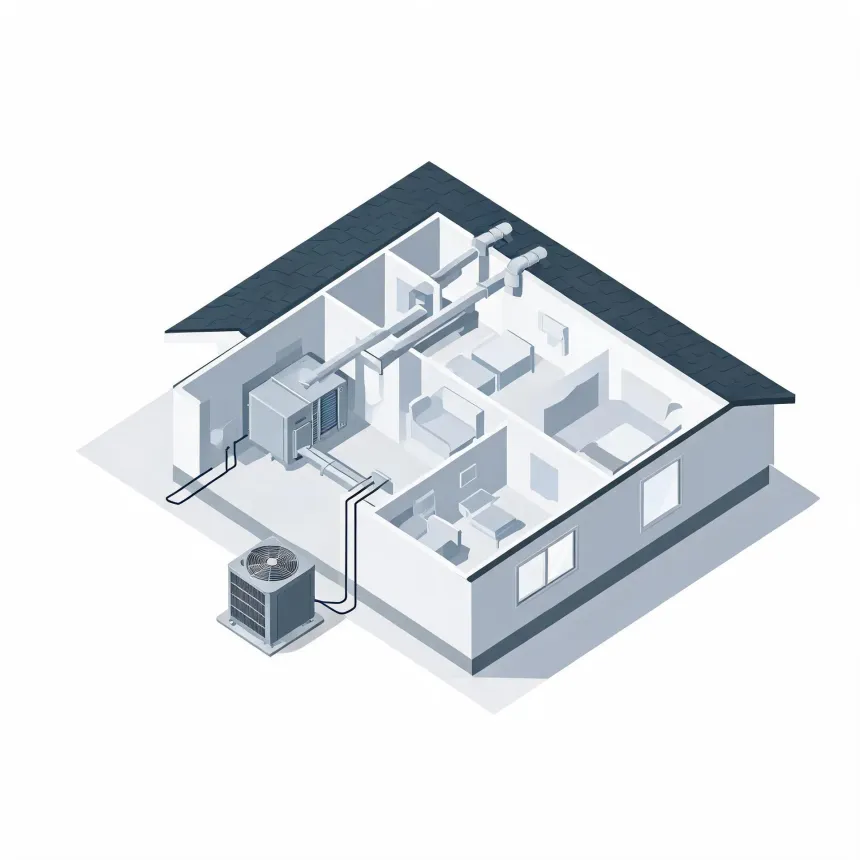
A new outdoor unit and coil dropped onto old, leaky or undersized ducts will never perform the way the equipment is rated to. Air has to move through the house at the right volume and pressure, and if the ducts can't carry it, the system struggles no matter how good it is. Sealing, resizing or adding a return often matters more to how the house actually feels than which unit sits outside.
Estimates for a typical Oswego County home, from EIA household energy data, New York fuel prices and NOAA climate normals. Your home will differ.
Install day starts with the old equipment coming out, not the new one going in. The outdoor unit gets disconnected, the old coil comes out of the plenum above or beside the furnace, and the refrigerant lines get checked since most installs reuse the existing line set if it's in good shape. The indoor coil goes in next, matched to the new outdoor unit, and that match matters more than people expect, an unmatched pair will never hit its rated efficiency. Electrical gets tied in, a disconnect box mounted by the outdoor unit, and the whole system gets charged with refrigerant to the exact weight the manufacturer specs, not just until it feels cold. Before anyone leaves, it gets tested running, airflow checked at the registers, and the charge confirmed with gauges. None of that takes guesswork if the sizing and duct work were done right beforehand. Most of the surprises on install day come from what's behind the walls, not the equipment itself.