Two white multi-story colonial houses with lit windows and black shutters photographed at night, fronted by a stone wall.

AC Installation in Oneida, NY

Tell us about the job

Takes about a minute. No obligation.

New system or replacementCentral ACMadison County, NY
Step 1 of 2

What ZIP code is the job in?

Gas is the common setup here

Utility gas heats 41.2% of homes in Madison County, more than any other fuel. Fuel oil and propane together heat over a third of homes, and electricity heats 14.5%. If your furnace runs on gas, that puts you with most of your neighbors.

Your AC install plugs into what's already there

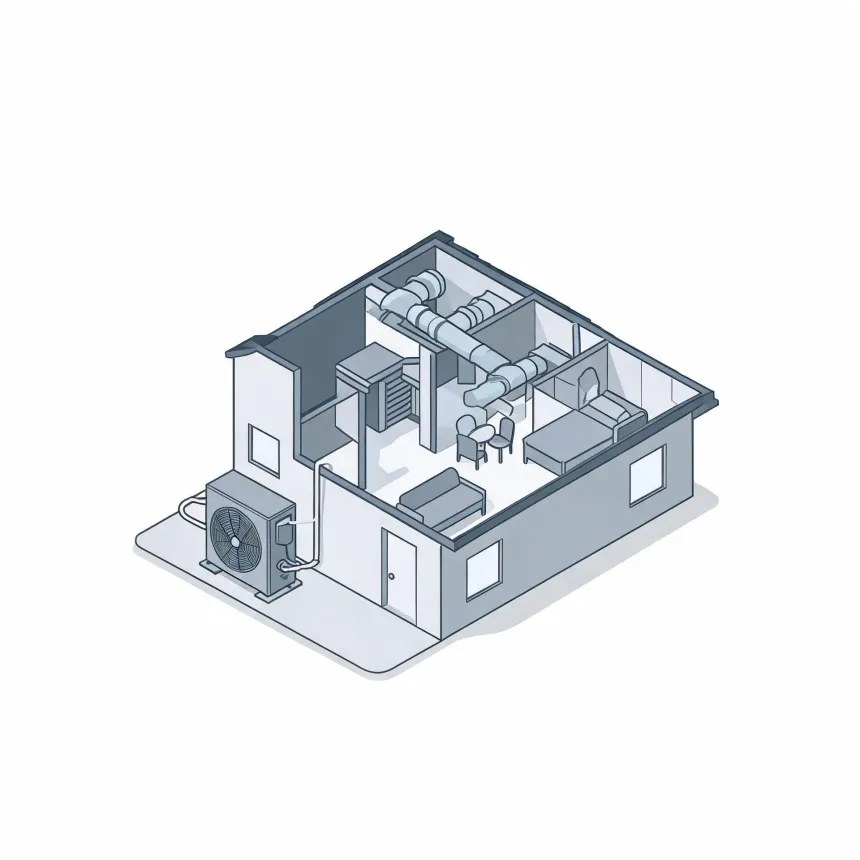
Central air almost always pairs with a gas furnace, using its blower and ductwork to move cool air. If gas already heats your house, adding or replacing AC usually means matching new equipment to that same duct system rather than building one from scratch.

2 months
July through August, your air conditioner is on duty
77°F
the average summer afternoon it cools against
13 hail events
in ten years, and hail bends the fins on outdoor coils
13.4 SEER2
the federal minimum any new unit must meet
Isometric line illustration of a cutaway house showing interior rooms with furniture and ceiling ductwork, connected to an outdoor condenser unit with a fan beside the building.
Your air conditioner works hardest from July through August.

NOAA nClimDiv, 1991–2020 normals

Electricity here runs 24.43 cents per kilowatt-hour, close to the national average.

A correctly sized system costs no more to run than it should, so there's no reason to size up or down from what this house needs.

Two months of cooling, so June is when to get this done

Cooling runs July through August
Climate zone 6A
Power costs 24.43 cents a kWh statewide

Ask what size each contractor is proposing, and ask how they got that number. It should come from a load calculation that looks at the square footage, the windows, the insulation, and how many rooms the ductwork serves, not a quick guess based on the old unit. Ask what SEER2 rating the system carries, since that tells you its efficiency, not how much cooling it can do. Ask whether the condenser and coil are matched as a set, because pairing mismatched equipment can keep it from running the way either piece was designed to. Ask what happens to the existing ductwork, whether it gets inspected or just reconnected, since leaks or the wrong size ducts will hold back even a good unit. Ask what the warranty covers on the compressor versus the labor, and who handles the claim if something fails.

Two mild months of cooling means the install matters more than the model

Cooling here only runs about two months, July and August, with afternoon highs averaging 77°F. That's not hard duty for a condenser. A correctly sized system from a solid mid-range line will hold up fine, so the money is better spent on correct sizing and a clean install than on chasing the highest SEER2 number on the lot.

Find a contractor
A man in a cap, dark jacket and work pants carries a worn canvas tool bag up stone steps toward a dark green front door, with a shrub in a green planter beside the entry.
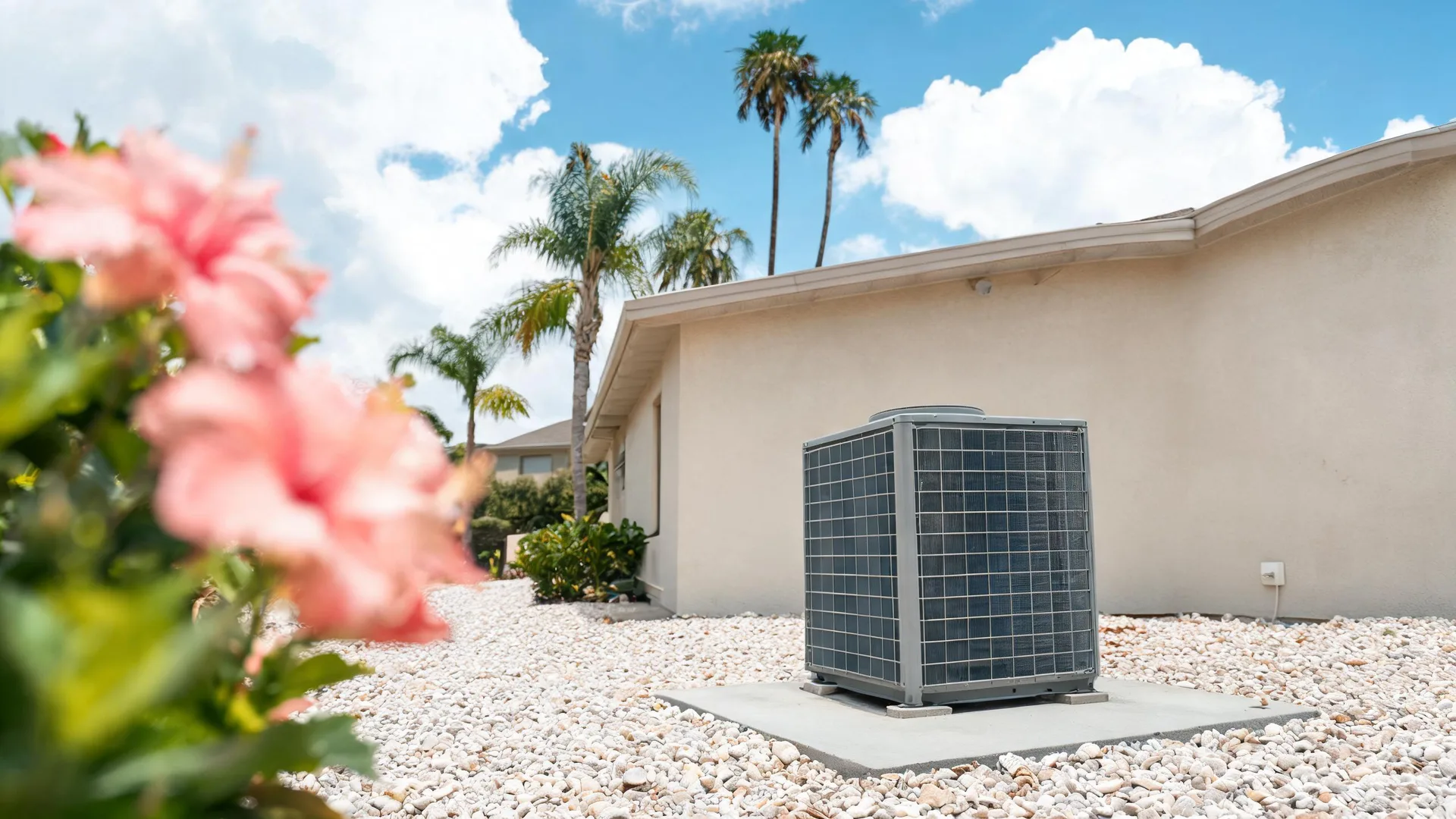
A gray residential air conditioning condenser unit mounted on a concrete pad outdoors, surrounded by green grass under a partly cloudy blue sky.

This house was built before central air was the plan

Half the homes in Madison County were built in 1964 or earlier. A house that age wasn't built with central air in mind. Whatever ductwork is in there now may have been added later, or sized for a furnace blower that's since been replaced. A new system has to work with what's actually behind the walls, not with a standard assumption about what an older house should have. That's part of what a load calculation and a look at the existing ducts are for.

The ductwork decides more than the equipment does

If the existing ducts are the right size and sealed well, the installer can put the new system in and move on. If a duct run is too small for the new equipment, or there's a leak in a joint somewhere, that has to get fixed first or the new unit will never perform the way it's rated to. Nobody knows which case this is until the ducts are actually opened up and looked at.

Where the equipment sits adds work before anything gets installed

A condenser needs clear space around it and a solid, level pad to sit on. A coil has to fit the air handler or furnace it's paired with, and some furnace cabinets need modifying to accept a new coil. Running new line set or electrical to reach the condenser's spot adds labor too. None of that shows up in the price of the unit itself, only in the work of putting it where it needs to go.

Aerial view of a residential air conditioning condenser unit mounted on a concrete pad next to a house with vinyl siding and a sliding glass door.

Going above the federal minimum saves little here, about $10 a year.

  • A higher-efficiency unit$110 a year
  • A new unit at the federal minimum, 13.4 SEER2$120 a year

Estimates for a typical Madison County home, from EIA household energy data, New York fuel prices and NOAA climate normals. Your home will differ.

A system that's too big cools the room fast and shuts off before it pulls moisture out of the air, so the house feels clammy even at the right temperature. One that's too small runs constantly and still can't keep up on the hottest afternoons, and all that extra runtime wears on the compressor. Getting the size right starts with a load calculation, which weighs the square footage against the windows, the insulation, the ceiling height, and how many rooms the ductwork has to reach. It's not a guess based on what the old unit was rated for, since that unit may have been wrong from the start, or the house may have changed since it went in. A new window, an added room, or insulation that's settled over the years all shift the number. The contractor doing that math before quoting a size is the one actually sizing the system to the house.