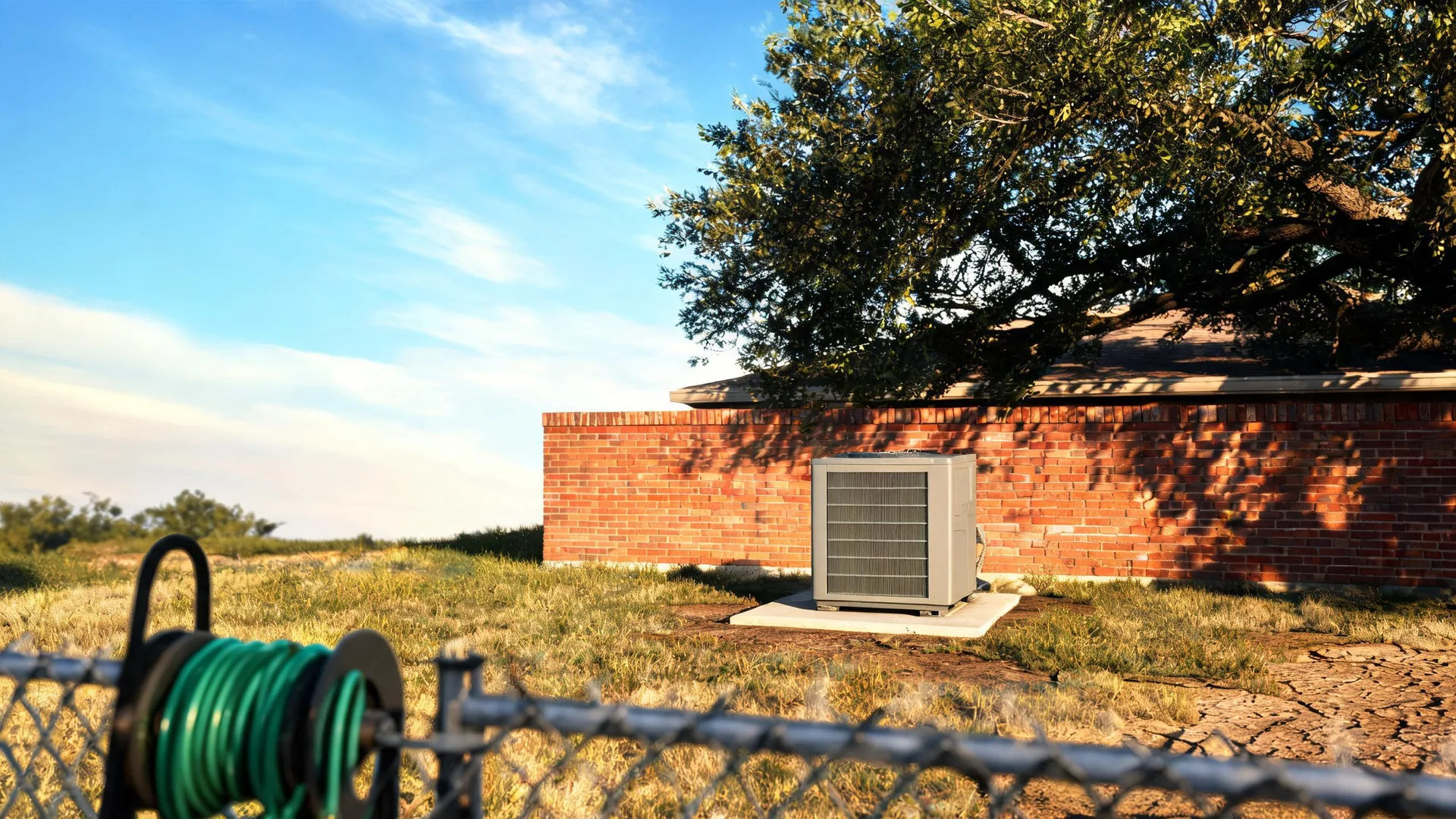
Overhead view of a gray residential air conditioning condenser unit mounted on a concrete pad beside a house with asphalt shingle roofing.

AC Installation in Niagara Falls, NY

Tell us about the job

Takes about a minute. No obligation.

New system or replacementCentral ACNiagara County, NY
Step 1 of 2

What ZIP code is the job in?

Electricity here runs 24.43 cents per kilowatt-hour

New York homes paid that rate in 2024, well above the national average. Every hour your air conditioner runs, that rate is what it costs you. A system that uses less power to do the same job keeps more of that difference in your pocket.


SEER2 is what to compare when you're pricing units

The SEER2 rating tells you how efficiently a unit turns electricity into cooling, nothing else. At 24.43 cents per kilowatt-hour, the gap between a low-efficiency unit and a high-efficiency one shows up on every bill from the first month on.

2 months
July through August, your air conditioner is on duty
79°F
the average summer afternoon it cools against
17 hail events
in ten years, and hail bends the fins on outdoor coils
13.4 SEER2
the federal minimum any new unit must meet
Isometric cutaway illustration of a single-story house showing interior ductwork and an air handler connected by lines to an outdoor condenser unit on a pad beside the building.
Your air conditioner works hardest from July through August.

NOAA nClimDiv, 1991–2020 normals

Half the homes in Niagara County were built in 1958 or earlier.

An AC installed in a house that old has to work with the ductwork and layout already there, not the other way around.

Two months of real duty a year, that's all this system owes you

Cooling runs July through August
Summer afternoons average 79°F
87 damaging wind events from 2015 to 2024
Gas heats this county, and your AC runs on the same houseUtility gas heats 76.2% of homes in Niagara County. The air conditioner is almost always the part added on.

Cooling runs about two months here, July and August. That short stretch is exactly why June matters. Get the new system in before July and a contractor has room to size it right and install it on a normal schedule. Wait until the first hot week and you're deciding in a hurry, running the old unit hard while you wait, picking from whatever happens to be on the truck. Same system either way. One path you choose, the other chooses you.

Zone 5A sets the floor for what goes in

Niagara Falls falls under zone 5A, a cool, humid climate code where heating carries the bigger load. Any split-system air conditioner under 45,000 Btu/h installed here still has to meet the federal minimum of 13.4 SEER2. That's the floor, not a ceiling. A federal tax credit is available toward higher-efficiency equipment that clears it.

Find a contractor
A man in a dark long-sleeve shirt and tan work pants climbs porch steps toward a dark green front door, carrying a worn canvas and leather tool bag, with a potted conical shrub beside the entry.
An outdoor air conditioning condenser unit mounted on a concrete pad beside a house, with electrical conduit running to a wall-mounted disconnect box.

Size it to the house, not the house's age

If a contractor is sizing a system for a house built in 1958 or earlier, have them run a load calculation on the house itself instead of matching the old unit's tonnage. The only way to know what size fits is to measure the house that's actually there, not the age on the record.

Ask what the warranty actually covers

Compressor and parts warranties from the manufacturer are separate from the labor warranty the contractor gives you. A long parts warranty means nothing if the installer who has to honor it is gone or won't stand behind the work. Ask what's covered, for how long, and who you call if something fails.

Ask how they're sizing the system

A contractor should walk the house and run a load calculation, not match the tonnage of whatever is being replaced. The right size depends on the windows, the insulation and the layout, not on what was installed before. If a quote shows up before anyone measures the house, ask what the number is based on.

Overhead view of an outdoor AC condenser unit on a concrete pad next to a house with a dark shingle roof.

A higher-efficiency unit would save about $30 a year to run in Niagara County compared with a new unit at the federal minimum.

  • A higher-efficiency unit$180 a year
  • A new unit at the federal minimum, 13.4 SEER2$210 a year

Estimates for a typical Niagara County home, from EIA household energy data, New York fuel prices and NOAA climate normals. Your home will differ.

Installation day starts before the new unit ever comes off the truck. The crew pulls the old condenser and air handler, checks the line set, and decides whether it gets reused or replaced. Old refrigerant lines sized for a different unit can choke the new system's performance, so a contractor worth hiring tests that line rather than assuming it's fine. Inside, the evacuation step matters as much as anything that happens outdoors. Pulling a vacuum on the line set clears out moisture and air that would otherwise ruin the refrigerant charge, and skipping it is how a brand new system ends up running poorly in its first summer. Once the new condenser is set and the lines are connected, the charge gets weighed in to the manufacturer's spec, not eyeballed. Before anyone leaves, the system should run a full cycle while someone checks the temperature split at the vents, because that's the one test that tells you the whole chain, from refrigerant to airflow, is actually working together.