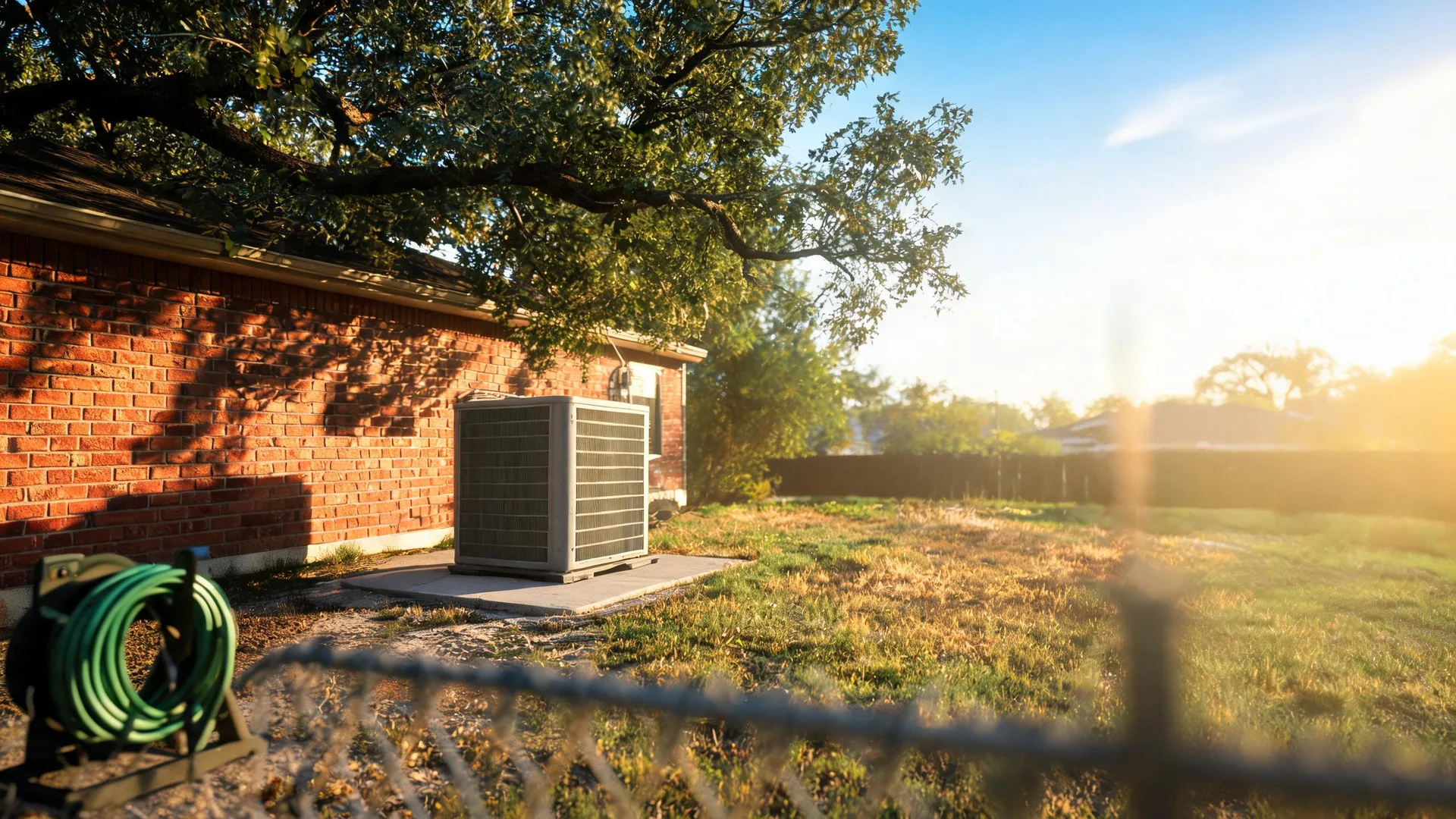
Most homes here run on gas heat
Utility gas heats 53.6% of homes in Wayne County, more than any other fuel. That gas furnace is usually paired with central air on the same ductwork, which matters when you're adding or replacing an AC system.
Takes about a minute. No obligation.
Utility gas heats 53.6% of homes in Wayne County, more than any other fuel. That gas furnace is usually paired with central air on the same ductwork, which matters when you're adding or replacing an AC system.
If your home has a gas furnace, the ducts needed to move cool air are already in place. Installing AC usually means matching a new coil and condenser to that existing system rather than building ductwork from scratch.

NOAA nClimDiv, 1991–2020 normals
Half the homes in Wayne County went up in 1968 or earlier.
An install here has to work with the house as it was built, not a layout picked off a plan today.



If your house in Newark is on the older side, get a load calculation before anyone quotes a number. A contractor should size the new condenser and coil to the house you actually have, the windows, the square footage, how the rooms are laid out, not just swap in whatever tonnage was there before. Old ductwork built for a smaller unit can choke a bigger one, and a system that's too large for the space cools fast but doesn't run long enough to pull the humidity down. Ask what method they used to size it and have them walk you through the numbers.
Cooling here only runs from July through August. Put the new system in during June and it's already running before you need it, not going in while the house is already hot.
Find a contractor
Two months a year, July and August, with afternoon highs averaging 79. That's a short season and a mild one. A condenser spends most of the year sitting idle, and the heat load in this part of the state falls on the furnace, not the AC. That's good news for whatever you install. It won't see the kind of run hours that wear out a system faster, so the most efficient unit on the lot isn't buying you much here. Pick one that's built well and sized right, and it should hold up. Age and upkeep end up mattering more than how many hours it ran.
SEER2 tells you how efficiently the system can run under test conditions, not what it will actually use in your house. A unit with a high rating installed badly, undersized ductwork, a low charge, a coil that doesn't match the condenser, will run worse than a mid-rated system put in correctly. The number on the label is only honest if the install matches it.
SEER2 measures cooling output against energy used over a season. It says nothing about tonnage, how much cooling capacity the system has for the square footage you're trying to cool. A contractor still has to size the unit to your house separately from whatever efficiency tier you pick. A high rating on an undersized or oversized unit doesn't fix a sizing problem.
Estimates for a typical Wayne County home, from EIA household energy data, New York fuel prices and NOAA climate normals. Your home will differ.
Install day starts with the old equipment coming out, the condenser outside and the coil in the plenum above or beside the furnace. The line set gets disconnected and usually replaced rather than reused, since old copper can carry contaminants into a new system. Once the new coil is set and the condenser is in place, the installer brazes the line set connections, pressure tests the whole system for leaks, then pulls a vacuum to clear out moisture and air before any refrigerant goes in. That vacuum step matters more than people think. Any moisture left in the lines turns to acid once the system runs, and it'll eat away at the compressor over time. After charging the system to the manufacturer's spec, a good installer checks airflow at the vents, confirms the thermostat is talking to the new equipment correctly, and lets the system run a full cycle before calling the job done.