






Overhead view of an air conditioning condenser unit on a concrete pad next to a house with asphalt shingle roofing and vinyl siding.

AC Installation in Monticello, NY

Tell us about the job

Takes about a minute. No obligation.

New system or replacementCentral ACSullivan County, NY
Step 1 of 2

What ZIP code is the job in?

Oil heats most homes in Sullivan County, close to half. Electricity is a distant second, with propane not far behind it and gas barely a factor at all. None of that touches the AC question directly, since central air runs on electricity everywhere. What it does mean is that a lot of homes here never had ductwork sized with cooling in mind, because an oil furnace or boiler was the only job it had to do. If your system came with the house, it's worth checking whether the ducts were planned for a heat pump or air conditioner or just the furnace. That changes what installation actually involves here.

2 months
July through August, your air conditioner is on duty
78°F
the average summer afternoon it cools against
17 hail events
in ten years, and hail bends the fins on outdoor coils
13.4 SEER2
the federal minimum any new unit must meet
Isometric cutaway illustration of a single-story house showing interior rooms with ductwork and an air handler, connected by refrigerant lines to an outdoor condenser unit on the left.
Your air conditioner works hardest from July through August.

NOAA nClimDiv, 1991–2020 normals

The size of the system matters more than the brand on it.

A unit sized to the house instead of the ductwork ends up fighting the ducts for the life of the system.

Wind takes the power out more than the heat takes out your AC

185 severe weather events from 2015 to 2024
11% of homes statewide lost power a day or more in 2024
149 damaging wind events from 2015 to 2024

June is a good month to get this done. Cooling here only runs from July through August, so there's no rush once the heat hits, but there's also no slack if the old system quits on you in July. Get the new one in during June and it's sized right, installed right, and already running before the first hot week. Wait until July and you're choosing from whatever's in stock, on whatever schedule a contractor can fit you into.

Two months of summer means you can buy for reliability, not the spec sheet

Cooling here only runs July through August, with afternoon highs around 78. That is not a hard job for a system to do. A reliable mid-range unit will handle it without strain, so there is little reason to pay more for the highest efficiency rating on the lot.

Find a contractor
A man in a dark long-sleeve shirt and tan work pants, seen from behind, carries a canvas tool bag up porch steps toward a dark green front door beside a potted shrub.
A gray residential air conditioner condenser unit mounted on a concrete pad in an open grass field.

A new system here won't work hard a day in its life

Two months of real run time a year is light duty for any compressor. Pick the mid-range unit the action above points to and that's what it'll see, summer after summer. Nothing about this job calls for the top-tier model, and nothing about this climate will wear out a reliable one before its time.

The old unit gets disconnected and hauled off

Taking out a condenser means recovering the refrigerant from the lines first. That step always happens before anything gets unbolted. Once that's done, the old condenser comes out, the indoor coil too if it's being swapped, along with the line set. A straight swap can happen in a day. If the ductwork or electrical needs work to match the new system, it takes longer.

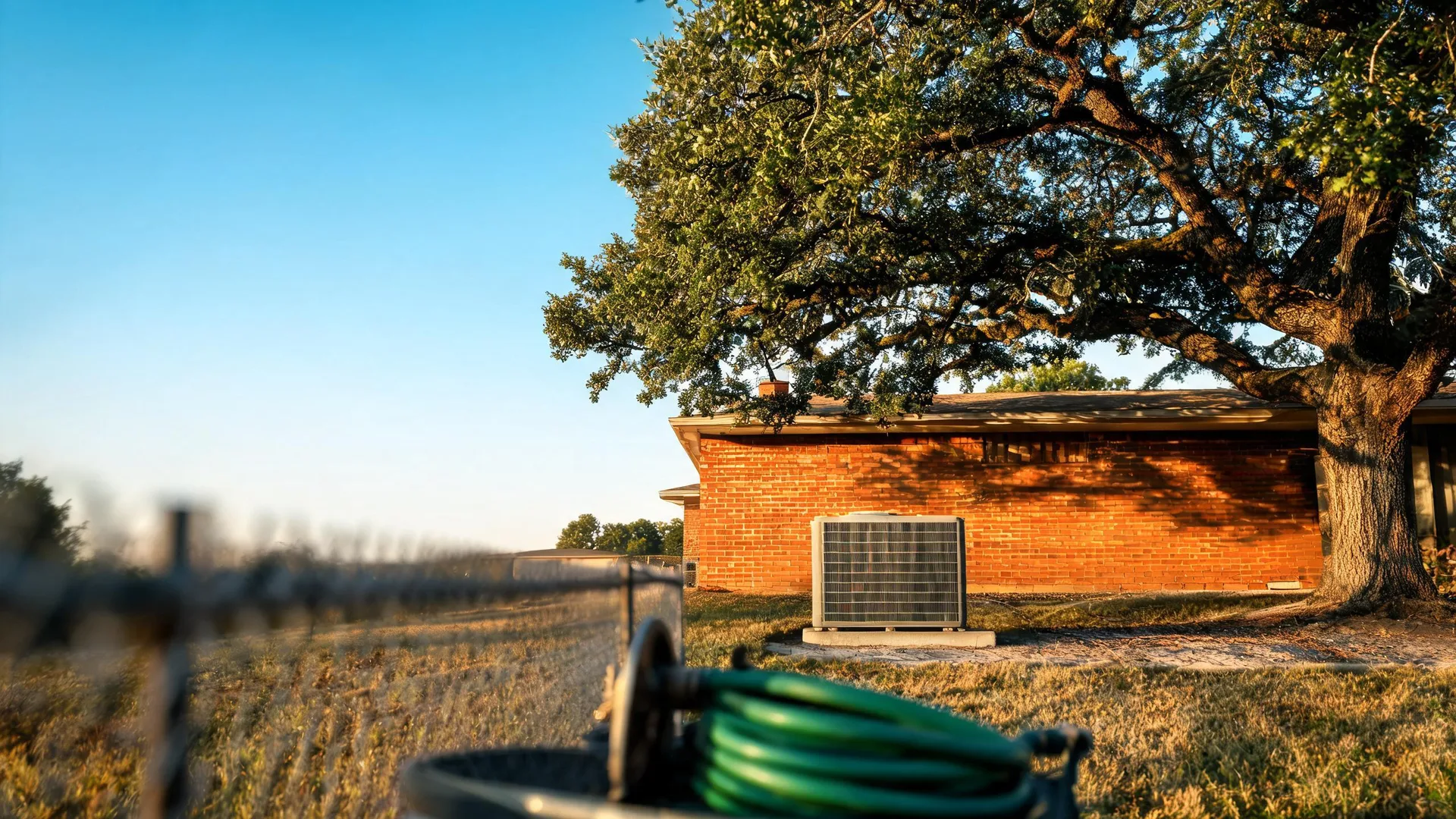
The coil usually goes with the condenser

An old condenser paired with a new indoor coil, or the other way around, can run into mismatched refrigerant or airflow that keeps the system from working the way it's rated to. That's why most contractors replace both halves together. Worth asking which one applies before assuming only the outdoor unit is being touched.

An outdoor air conditioning condenser unit mounted on a concrete pad next to a blue-sided residential house at sunset.

Going above the federal minimum saves little here, about $10 a year.

  • A higher-efficiency unit$110 a year
  • A new unit at the federal minimum, 13.4 SEER2$120 a year

Estimates for a typical Sullivan County home, from EIA household energy data, New York fuel prices and NOAA climate normals. Your home will differ.

A system has to be sized to the house, the windows, the insulation, how much shade it gets, not just the square footage on a listing. Too big and it cools the air fast, shuts off, and never runs long enough to pull the moisture out, so the house feels cold and damp at the same time. Too small and it runs constantly on the hottest days and still can't keep up. The contractor works this out room by room, adding up the heat the house gains through the walls, the roof, the windows facing the sun, then matches that load to a unit built to handle it. Ductwork factors in too, since even the right size condenser can't do its job through ducts that can't move enough air. None of this is a guess. It's a calculation, and it's worth asking to see it done rather than taking a number off the old unit's nameplate.