





A two-story red brick house with black shutters and a dark roof stands on a green lawn behind a dry stone wall, framed by large deciduous trees under an overcast sky.

AC Installation in Massena, NY

Tell us about the job

Takes about a minute. No obligation.

New system or replacementCentral ACSt. Lawrence County, NY
Step 1 of 2

What ZIP code is the job in?

Gas heats more homes in St. Lawrence County than anything else, at 33.5 percent. Oil or kerosene comes next at 23.8 percent, with propane close behind at 15.9 percent and electric heat well behind that. None of those numbers say anything about cooling, though. A gas furnace or an oil furnace both move air through the same ducts, and central air conditioning uses that ductwork to deliver cold air the same way regardless of what heats the house. So if your home already has ducts for a gas or oil furnace, adding AC usually means connecting a new outdoor unit and coil to what's already there. If your heat comes from a boiler or electric baseboard with no ductwork, central air means putting ducts in, or looking at a ductless system instead.

2 months
July through August, your air conditioner is on duty
77°F
the average summer afternoon it cools against
13 hail events
in ten years, and hail bends the fins on outdoor coils
13.4 SEER2
the federal minimum any new unit must meet
Isometric line illustration of a cutaway house showing interior rooms with furniture, ceiling ductwork, an indoor air handler, and an outdoor condenser unit connected by lines.
Your air conditioner works hardest from July through August.

NOAA nClimDiv, 1991–2020 normals

Your AC here only earns its keep in July and August, with afternoon highs averaging 77°F.

A system that works that lightly doesn't need to be the top-tier model to hold up.

Half the homes here were built by 1964. A new system has to fit that house.

Half the homes here were built by 1964
Climate zone 6A
Power costs 24.43 cents a kWh statewide
Two months, but they matterCooling runs July and August here. June is the month to get it in.

St. Lawrence County sees its share of rough weather, including damaging wind and winter storms most years. None of that changes what size AC a house needs. A unit sized to the house handles wind and ice the same whether it's standard or oversized. The thing that actually matters after a storm is the power coming back on, and a standard system does that by itself without anyone resetting it. There's no local reason to size up or pay for a higher tier than the house calls for.

A new system here has a baseline to meet

Any new split-system AC installed here has to meet 13.4 SEER2 at minimum, the federal baseline now, and zone 6A's energy code applies on top of that. That still leaves room for a standard system sized to the house, not a premium one. There's a federal tax credit available for qualifying high-efficiency equipment too, worth asking about before you settle on a model.

Find a contractor
A man in a tan jacket, cap, and work boots carries a canvas tool bag up wooden porch steps toward a dark green front door of a house with light horizontal siding and a potted shrub.
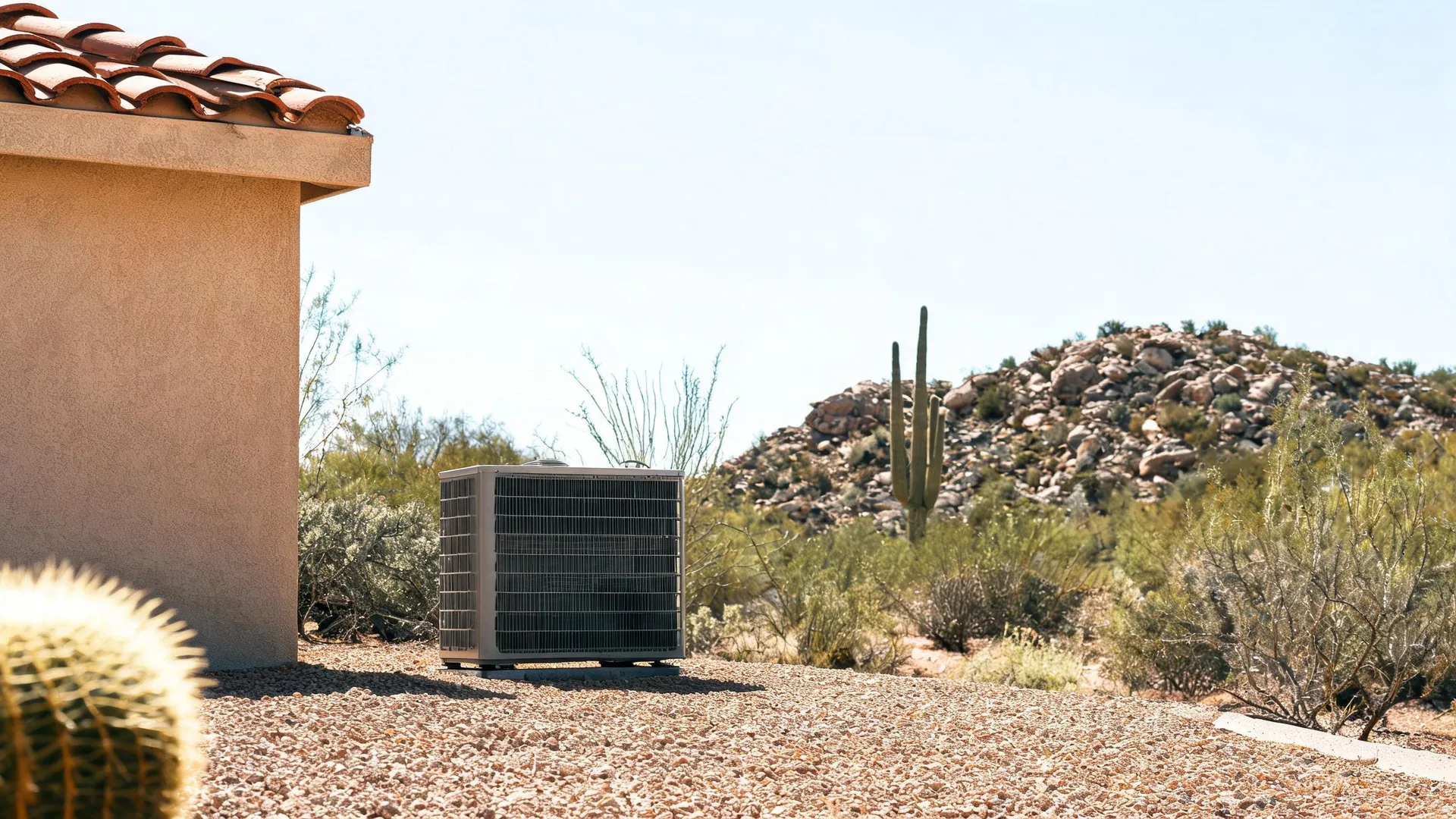
An outdoor air conditioning condenser unit mounted on a concrete pad surrounded by gravel, photographed against a partly cloudy blue sky.

Light duty, so spend on the install, not the tier

Two months a year, average highs around 77. That's the job this unit has here. When you're comparing models, put the money into the install instead of chasing a higher SEER2 tier than zone 6A already requires. Correct refrigerant charge, a properly sized coil, ducts that are sealed where they connect to it. A mid-tier system installed right will outlast a high-tier one installed carelessly, and in a climate this easy on the equipment, the installation is what decides how long it lasts.

Ask what size they calculated, not what size they'd install

A contractor should run a load calculation on the house itself, room by room, and tell you the number it came back with. If they quote a tonnage before they've looked at the windows, the insulation, and the layout, they're guessing. Oversized equipment cools the air fast and shuts off before it pulls the moisture out, which leaves a house feeling clammy even at the right temperature.

Ask what happens to the warranty if someone else services it later

Most equipment warranties cover parts no matter who touches the system, but some manufacturers only honor the labor portion if the installing contractor stays on as the servicer, or they void coverage if an uncertified tech works on it down the road. Get this in writing before you sign, not after something breaks. It changes who you can call later, not just who you're paying now.

Overhead view of a gray residential air conditioning condenser unit mounted on a concrete pad beside a house with asphalt shingle roofing.

Going above the federal minimum saves little here, about $10 a year.

  • A higher-efficiency unit$100 a year
  • A new unit at the federal minimum, 13.4 SEER2$110 a year

Estimates for a typical St. Lawrence County home, from EIA household energy data, New York fuel prices and NOAA climate normals. Your home will differ.

Installation day starts outside. The outdoor unit gets set on a pad, leveled, with clearance around it for air to move. Inside, the coil goes in above or beside the furnace, in the duct trunk, and connects to refrigerant lines running out to the condenser. Those lines get pressure tested for leaks before anything is charged. Then they get pulled into a vacuum, because moisture or air left in the lines will ruin the compressor over time. Once the vacuum holds, refrigerant goes in, weighed to the amount the line length and equipment call for. Last comes airflow, checking static pressure in the ducts and confirming the blower speed matches the coil. The charge and the airflow are what decide whether the system holds up for years or starts giving trouble in its first summer.