Most furnaces here run on gas
Utility gas heats 66.6% of homes in Chautauqua County. If your house is one of them, it most likely has a gas furnace with a central duct system already in place.

Takes about a minute. No obligation.
Utility gas heats 66.6% of homes in Chautauqua County. If your house is one of them, it most likely has a gas furnace with a central duct system already in place.
A new air conditioner installed as a split system uses the same ducts and the same air handler your furnace runs through. Knowing that now helps when a contractor asks what you have to work with.

NOAA nClimDiv, 1991–2020 normals
Cooling here only runs July and August.
June is the month to have a new AC in place, before the first hot week puts it to work.



Jamestown is in climate zone 5A, a cool zone where winter heating matters more than summer cooling. That doesn't change the rules on the air conditioner itself. Any new split-system central AC under 45,000 Btu/h has to meet 13.4 SEER2 at minimum, the same federal floor that applies everywhere else in the country. A contractor sizing your system works within that standard no matter how few months it runs. There's also a federal tax credit for equipment that goes above the minimum, worth asking about when you're comparing units.
A standard-efficiency system sized right for your house is what this job needs. Nothing about Jamestown's weather or its electric rates changes that math. At 24.43 cents per kilowatthour, a unit that meets the federal minimum will run fine for the two months a year it works.
Find a contractor
Two months of cooling, average afternoons around 78 degrees. That's a light pull on a compressor compared to places where the AC runs flat out against much hotter weather for most of the year. Yours won't see that kind of demand. What shortens a system's life here is more likely a bad install or a skipped filter change than the weather asking too much of it. A well-installed, correctly sized unit at the standard efficiency rating will do this job for years without needing to be the top-tier model.
A contractor pulls the old condenser, disconnects the line set from the air handler or furnace coil, and recovers the refrigerant before anything is cut loose. That refrigerant can't legally be vented into the air, it has to be captured. Once it's out, the old unit gets hauled away, usually as part of the install job rather than a separate trip.
If the duct system and air handler are in decent shape, the new condenser connects into what's already in place. The line set sometimes gets swapped too, especially if the new system runs a different refrigerant than the old one. A contractor checks this during the quote, so you'll know ahead of time what's being reused and what's coming out.
Estimates for a typical Chautauqua County home, from EIA household energy data, New York fuel prices and NOAA climate normals. Your home will differ.
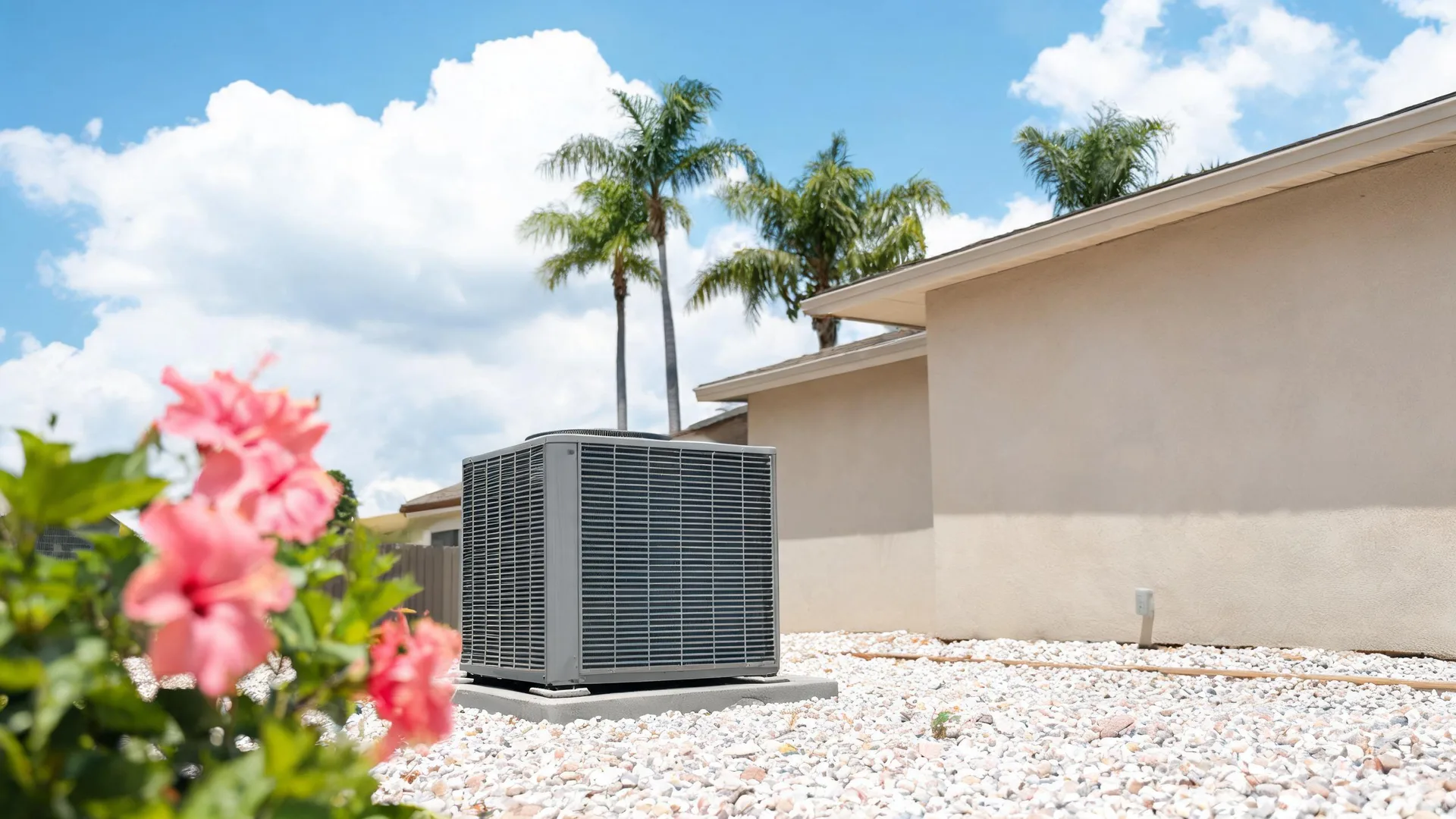
Install day starts with the old system coming out and ends with the new one running and tested. A contractor sets the new condenser on a pad outside, mounts or checks the coil that pairs with your furnace or air handler, and runs the line set between them. Once the connections are brazed and pressure tested, the system gets charged with refrigerant to the amount that unit calls for, not just topped off and left. After that, airflow gets checked at the vents and the refrigerant charge gets verified against the manufacturer's numbers, because a unit that's undercharged or overcharged won't deliver the cooling it's rated for. Expect some noise and some time with the power shut off while the electrical connections are made. By the end of the day you should see the thermostat calling for cooling and cold air actually reaching the rooms it's supposed to.