





A row of similar gray-sided houses with dark shingled roofs behind a new wooden picket fence, with a mown grass lawn in the foreground and leafy tree branches overhead.

AC Installation in Ithaca, NY

Tell us about the job

Takes about a minute. No obligation.

New system or replacementCentral ACTompkins County, NY
Step 1 of 2

What ZIP code is the job in?

Gas heats close to half the homes in Tompkins County, more than any other fuel. Most of those houses already have central ductwork to carry that heat, and the same ducts work for central air. That makes a central system the straightforward choice for an AC installation when the home already has a gas furnace. Electric heat and propane are also common here, and a lot of those homes still have ducts too, so the same logic can apply. Where there is no ductwork to begin with, a ductless system fits without tearing into walls.

2 months
July through August, your air conditioner is on duty
78°F
the average summer afternoon it cools against
7 hail events
in ten years, and hail bends the fins on outdoor coils
13.4 SEER2
the federal minimum any new unit must meet
Isometric cutaway illustration of a house interior showing ducted air handling equipment, ceiling ducts, furniture in two rooms, and an outdoor condenser unit connected by lines outside the wall.
Your air conditioner works hardest from July through August.

NOAA nClimDiv, 1991–2020 normals

Cooling here runs about two months a year, July and August.

A system that only works hard for two months doesn't need to be the top of the lineup.

Two months of summer heat don't call for oversized equipment

Power costs 24.43 cents a kWh statewide
Cooling runs July through August
Summer afternoons average 78°F

Tompkins County falls under zone 5A, a cool, humid climate where heating carries most of the load. Any new split-system central air conditioner under 45,000 Btu/h installed here has to meet 13.4 SEER2 at minimum, the federal standard for units built from 2023 on. That floor is already built into most equipment on the market now, so it narrows the field less than it used to. A federal tax credit is also available for qualifying high-efficiency equipment, worth checking before deciding on a system.

Have it installed before June

July is two months away. Get a new system in on your own schedule now, instead of calling around in June when everyone else has the same idea.

Find a contractor
A man in a dark jacket, tan work pants and cap, seen from behind, carries a canvas tool bag up concrete steps toward a dark green front door beside a potted shrub.
A gray residential air conditioner condenser unit mounted on a concrete pad in an open grass field.

Right-sized equipment cycles like this, on and off, not stuck running

Half the homes in Tompkins County were built in 1974 or earlier, half later. Age alone doesn't change what size unit a house needs. A well-maintained system from either era holds a sized load about the same, so sizing comes down to the house in front of you, not the decade it went up. Watch the time-lapse and the unit cycles on and off through the afternoon rather than running straight through. That's what a correctly sized system does. One sized too big for the space would short-cycle, cooling the air fast and shutting off before it pulls the humidity down, then starting again soon after.

The old system comes out first

A contractor disconnects the refrigerant lines, recovers what's left in the coil and lines, and pulls the old condenser and indoor coil before setting the new ones. Refrigerant doesn't just vent out. It has to be captured and handled separately, by law, which is part of the job on any swap.

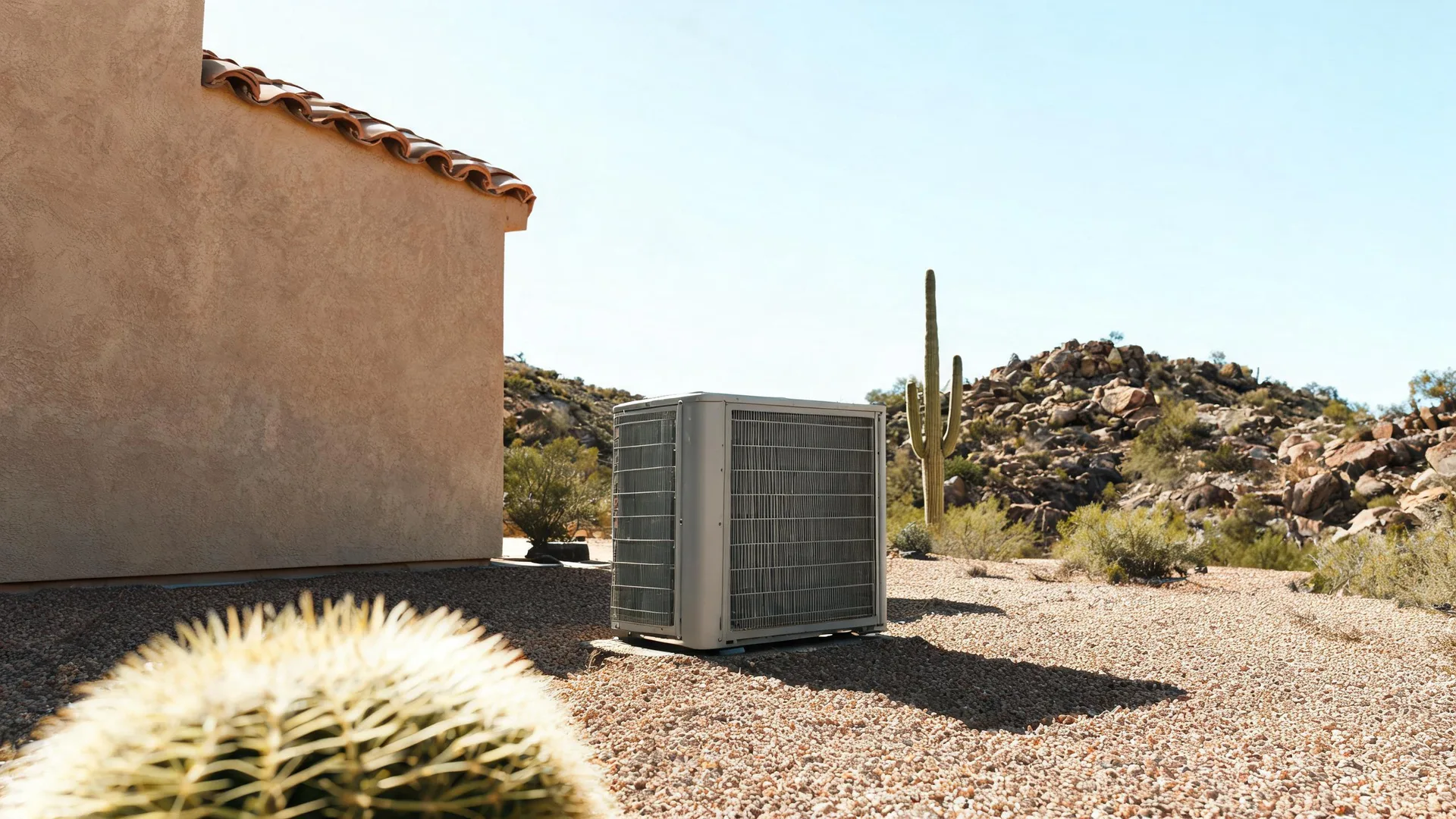
The duct and line set get a second look

If the new system is sized differently than the old one, the existing ducts and line set still have to suit it. A smaller or larger coil can call for adjustments at the connections even when the ductwork itself stays in place. That inspection happens before the new unit goes in, not after.

Aerial view of a gray central air conditioning condenser unit on a concrete pad next to a house with vinyl siding.

Going above the federal minimum saves little here, about $20 a year.

  • A higher-efficiency unit$130 a year
  • A new unit at the federal minimum, 13.4 SEER2$150 a year

Estimates for a typical Tompkins County home, from EIA household energy data, New York fuel prices and NOAA climate normals. Your home will differ.

Once the new equipment is set, a tech runs the line set down to vacuum before anything gets charged with refrigerant. That pulls out moisture and air, both of which cause problems if they stay trapped in the coil. The system holds that vacuum for a while so the tech can confirm there's no leak at a fitting before charging it. Only then does refrigerant go in, weighed in to match the new equipment's specs rather than just topped off by feel. The indoor and outdoor units get wired in and the thermostat gets set up last. Before anyone leaves, the system runs through a full cycle so the tech can check the temperature split at the vents and listen for anything that shouldn't be there.