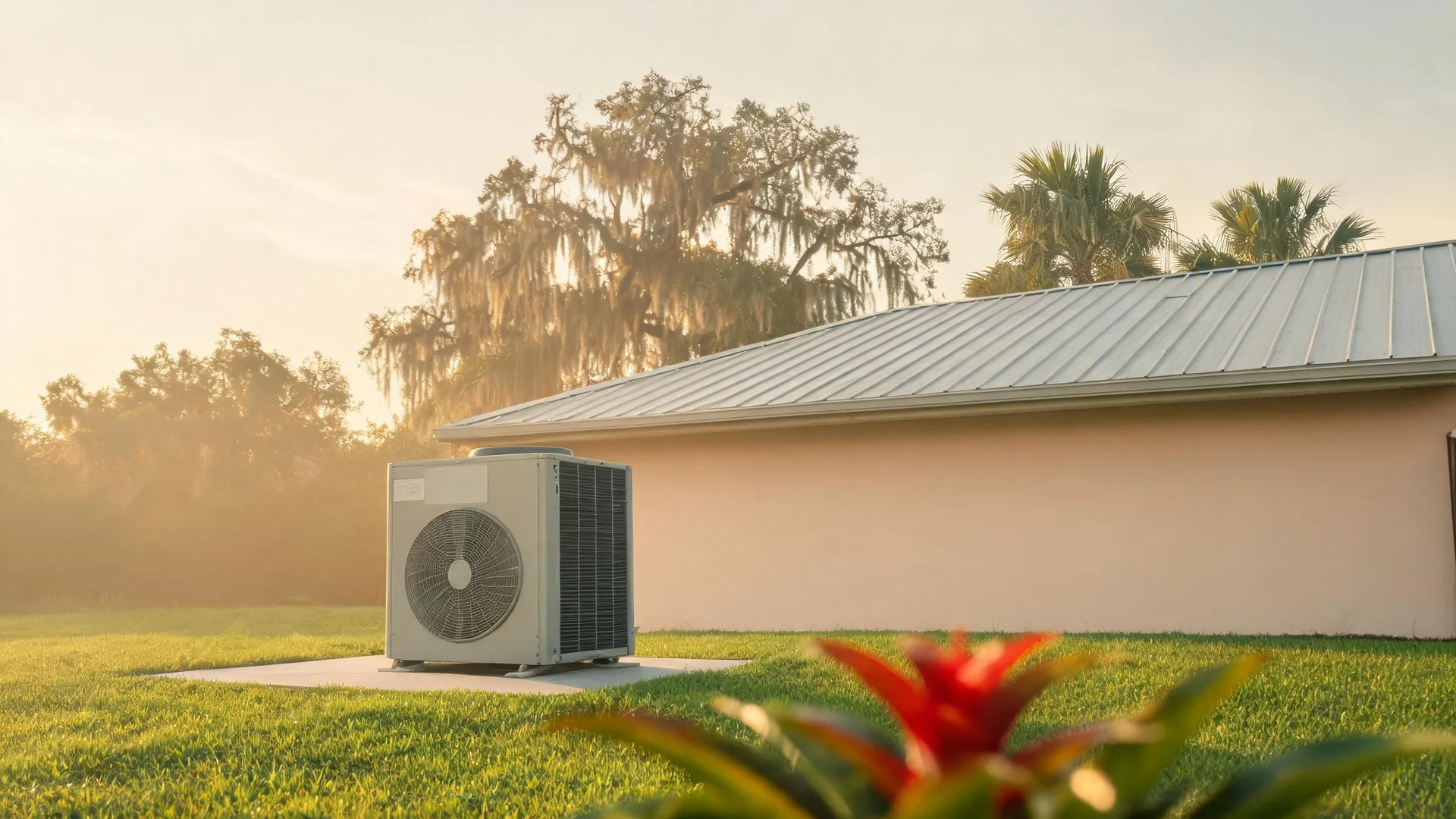
An outdoor air conditioning condenser unit positioned on a concrete pad next to a blue-sided house, surrounded by green shrubs and flowering hydrangeas at sunset.

AC Installation in Ilion, NY

Tell us about the job

Takes about a minute. No obligation.

New system or replacementCentral ACHerkimer County, NY
Step 1 of 2

What ZIP code is the job in?

Most furnaces here run on gas

Utility gas heats 44.9% of homes in Herkimer County, more than any other fuel. Fuel oil comes next at 22.1%, with electricity and propane behind that. A gas furnace usually means a central air system can share its ductwork.


Your ducts decide the install

If your home already has ducts from a gas furnace, adding central air means connecting to a system that's there. If you heat with electric baseboard or oil without ducts, the AC install has to account for that from the start, and that's worth asking about before you compare quotes.

76°F
the average summer afternoon it cools against
19 hail events
in ten years, and hail bends the fins on outdoor coils
13.4 SEER2
the federal minimum any new unit must meet
Isometric line illustration of a cutaway house showing interior rooms with furniture and ceiling ductwork, connected to an outdoor condenser unit with a fan beside the building.
Your air conditioner works hardest from July through August.

NOAA nClimDiv, 1991–2020 normals

Herkimer County saw 304 damaging wind events and 62 winter storms in the past decade.

None of that changes what size or efficiency AC a standard install here calls for.

76°F afternoons don't need special equipment

Power costs 24.43 cents a kWh statewide
Summer afternoons average 76°F
304 damaging wind events from 2015 to 2024
Ilion summers don't push an AC system hardJune, July and August average a 76°F afternoon high here

If your house falls on the older half, ask whoever quotes the job to look at the ductwork before they settle on equipment. A load calculation tells them how much cooling the house needs. It doesn't tell them whether the return is big enough to move that air, or whether the ducts were sized for a furnace half this system's age. Fitting a new system to old ductwork sometimes means more than swapping the outdoor unit. That's worth asking about before anything gets installed, not after.

The right size starts with the house you have

Half the homes in Herkimer County were built in 1954 or earlier. An install here often means fitting new equipment to old ductwork, old returns, or none at all, not building a system from scratch. Whoever installs it should look at what the house already has before sizing anything.

Find a contractor
A man in a cap, gray work shirt and brown pants, seen from behind, steps up porch stairs toward a dark green front door while carrying a canvas tool bag, with a potted shrub beside the entry.
An outdoor residential air conditioning condenser unit mounted on a concrete pad, surrounded by gravel with a blue sky in the background.

Fewer hours of real work means the starting parts matter more than the rating

A unit that only has to cycle on for a few hours a day wears differently than one running flat out most of the afternoon. Short, frequent cycles put more demand on the parts that start the compressor than one long steady run does. So when you're comparing systems, ask about the start components and the warranty on the compressor itself, since that's what takes the repeated starting over the years. Ask how the contractor sizes equipment, too. A system sized too big for the house will short cycle no matter how good the equipment is, turning on, cooling the air near the thermostat, and shutting off before it's pulled moisture out of the rest of the house. That's harder on the compressor than a properly sized system that runs longer and steadier. Ask what maintenance the manufacturer expects, coil cleaning, filter changes, and whether skipping it voids the warranty. The system that lasts isn't the one with the highest rating on the shelf. It's the one sized right and started right, so the parts that wear are only doing the work they need to.

The old unit doesn't get left behind

Whoever installs the new system disconnects the old condenser, recovers the refrigerant from the lines, and hauls the unit away. Refrigerant can't legally be vented into the air, so a tech has to pull it into a tank before the old equipment moves anywhere. If your old system ran on R-22, that recovery step matters even more, since that refrigerant is no longer produced.

The line set and pad usually stay

The copper lines running between indoor and outdoor units get swapped only if they're damaged or sized wrong for the new equipment, otherwise they're reused. The concrete pad outside often stays put too, unless the new condenser is a different size. Ask what's being reused and what's being replaced, since that's part of what you're paying for either way.

Aerial view of a square outdoor air conditioning condenser unit on a concrete pad beside a house wall with a sliding glass door.

Going above the federal minimum saves little here, about $10 a year.

  • A higher-efficiency unit$70 a year
  • A new unit at the federal minimum, 13.4 SEER2$80 a year

Estimates for a typical Herkimer County home, from EIA household energy data, New York fuel prices and NOAA climate normals. Your home will differ.

Installation starts with a load calculation, not a guess based on the old unit's size. A tech measures the house, checks insulation and window area, and figures out how much cooling it actually needs. From there, the indoor and outdoor units go in, the line set gets connected, and the whole system gets pressure tested before any refrigerant goes in. That test matters because a leak found after the fact means opening the system back up. Once it holds pressure, the lines get charged, and the tech checks airflow at the vents and the temperature split between the return air and the supply air. A system can look finished and still be set up wrong if that last check gets skipped.