White colonial-style houses with lit windows photographed at dusk along a tree-lined street.

AC Installation in Glens Falls, NY

Tell us about the job

Takes about a minute. No obligation.

New system or replacementCentral ACWarren County, NY
Step 1 of 2

What ZIP code is the job in?

Gas heat is the norm here

Utility gas heats 44.3% of homes in Warren County, more than any other fuel. Fuel oil and electricity split most of what's left. A gas furnace paired with a new AC coil is the setup most homes around Glens Falls already have.


What that means for an AC install

If your furnace runs on gas, the AC install is mostly about matching a new outdoor unit and coil to that furnace's blower. There's no need to touch the heating side. That keeps the job simpler and the ductwork question is the main thing left to check.

1 months
July through July, your air conditioner is on duty
77°F
the average summer afternoon it cools against
7 hail events
in ten years, and hail bends the fins on outdoor coils
13.4 SEER2
the federal minimum any new unit must meet
Isometric line illustration of a cutaway single-story house showing interior rooms, ceiling ductwork and an air handler, connected to an outdoor condenser unit on a pad beside the building.
Your air conditioner works hardest from July through July.

NOAA nClimDiv, 1991–2020 normals

Warren County sees its share of damaging wind and winter storms, 192 wind events and 59 winter storms over the past decade.

None of that changes what an AC install here needs. A standard size and efficiency unit, matched to the furnace blower, is the right call.

Cooling here only runs in July, so get it installed before July

Cooling runs July through July
Climate zone 6A
Power costs 24.43 cents a kWh statewide

Afternoon highs here average 77°F across June, July and August, and cooling only really runs in July. That's one month of work for a system built to run all summer long in other parts of the country. A standard unit, sized right for the home, handles that without trouble. There's no case for chasing the top efficiency model when the system sits idle most of the year. What matters more is a correct size and a clean install, matched to the furnace blower already in place.

Any new AC here has to meet 13.4 SEER2

Warren County falls under zone 6A, and federal rule sets 13.4 SEER2 as the minimum for split-system units under 45,000 Btu/h built from 2023 on. That floor applies no matter who installs it. A federal tax credit is available on qualifying equipment, worth asking about when you're comparing units.

Find a contractor
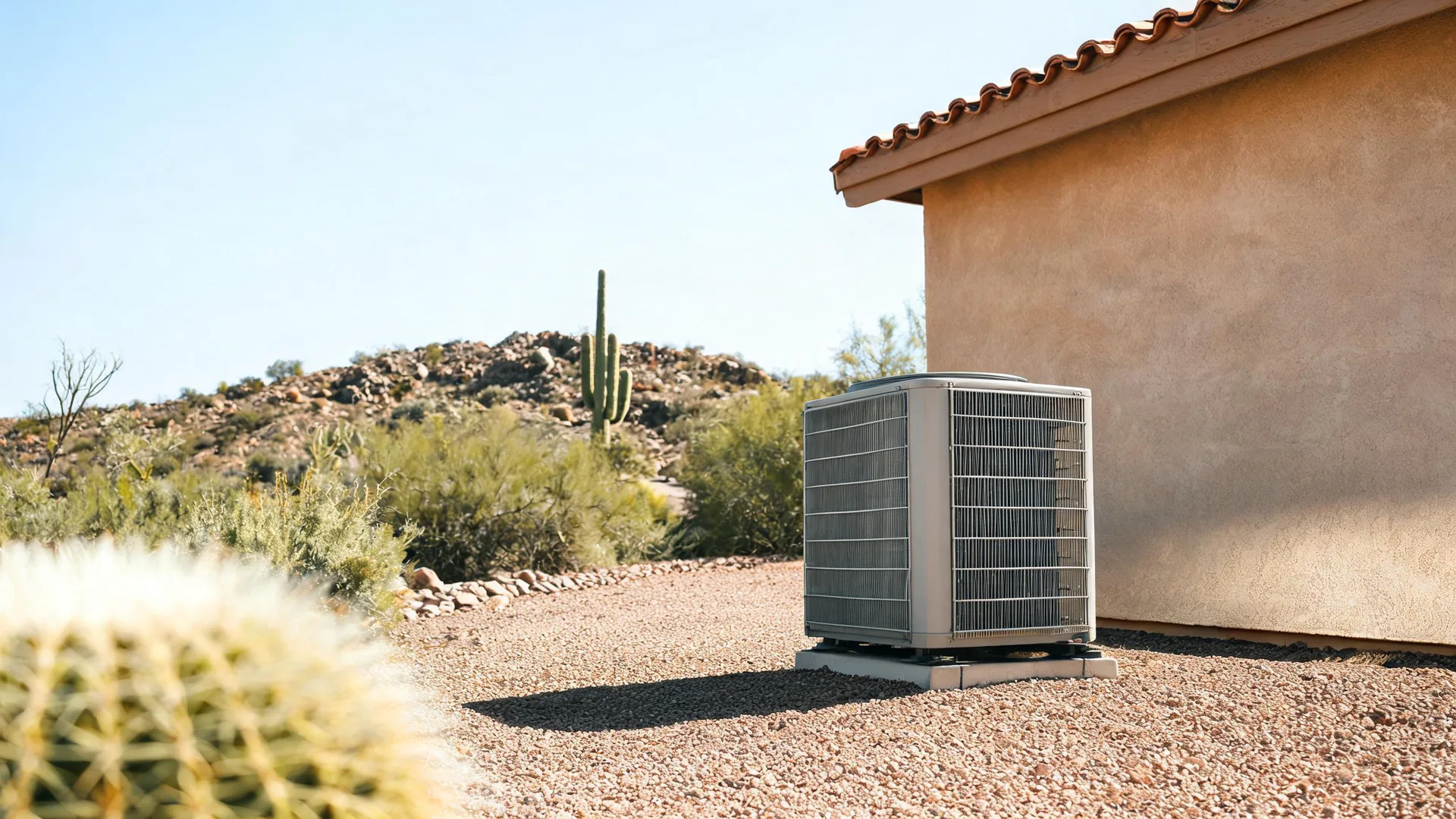
An outdoor air conditioning condenser unit mounted on a concrete pad surrounded by gravel, photographed against a partly cloudy blue sky.

Half these homes were built before central air was standard

Half the homes in Warren County were built in 1973 or earlier. A house that age was rarely built with central air in mind. If ductwork is already there, check whether it was sized for cooling or just for the furnace blower. That doesn't rule anything out. It just means the install has to work with the layout the house already has.

The old condenser gets hauled away

Whoever installs the new system disconnects the old outdoor unit, recovers the refrigerant from the lines, and takes the condenser with them. Refrigerant can't legally be vented into the air, so it has to be pulled out with a recovery machine before the unit is disconnected. That's part of a normal install, not an extra step.

The indoor coil comes out too

The evaporator coil sitting above or beside the furnace gets swapped along with the outdoor unit, even if it still looks fine. A new condenser matched to an old, worn coil won't cool right and can trip problems down the line. Pulling both at once is the standard approach, not a sign something was wrong with the old one.

Overhead view of an air conditioning condenser unit on a concrete pad next to a house with asphalt shingle roofing and vinyl siding.

Going above the federal minimum saves little here, about $10 a year.

  • A higher-efficiency unit$80 a year
  • A new unit at the federal minimum, 13.4 SEER2$90 a year

Estimates for a typical Warren County home, from EIA household energy data, New York fuel prices and NOAA climate normals. Your home will differ.

Install day starts with the old system coming apart before the new one goes in. The crew disconnects the outdoor unit, recovers the refrigerant, and pulls the indoor coil out from beside the furnace. Once that's clear, the new coil goes in and the line set gets run out to where the new condenser sits outside. Those lines get brazed, pressure tested, and pulled down into a vacuum to clear out any air and moisture before refrigerant goes in. Then it's wiring the thermostat, setting the refrigerant charge, and running the system to check the airflow off the furnace blower matches what the new coil needs. A tech walks the ductwork for leaks or weak spots before calling it done, since a new coil can't fix air that isn't getting where it needs to go.