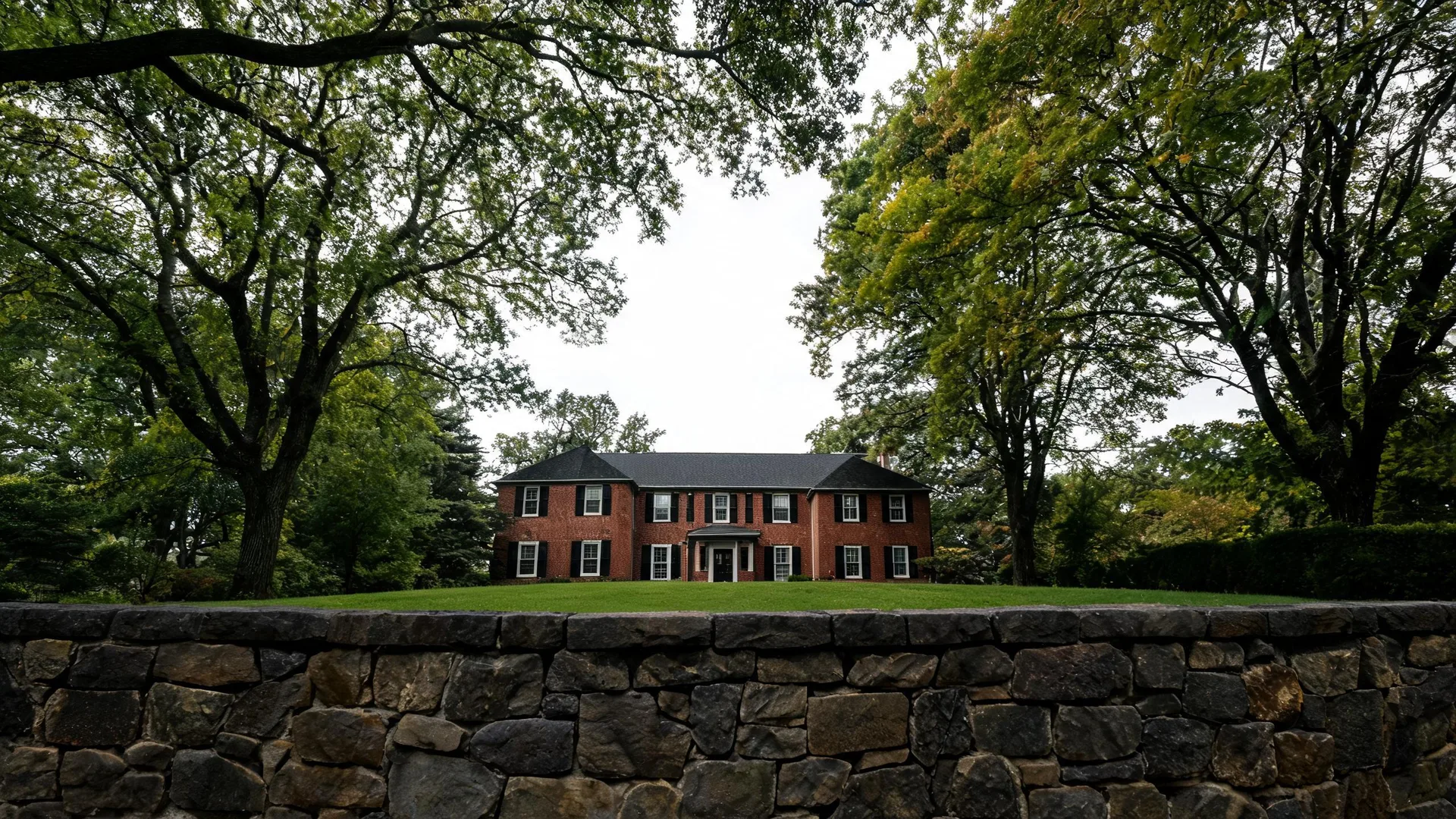





A two-story red brick house with a dark roof and white-trimmed windows sits on a lawn behind a stone retaining wall, framed by large leafy trees under an overcast sky.

AC Installation in Geneva, NY

Tell us about the job

Takes about a minute. No obligation.

New system or replacementCentral ACOntario County, NY
Step 1 of 2

What ZIP code is the job in?

Most homes in Ontario County heat with utility gas, at 58.6%. If that's your setup, central air pairs with the furnace you already have, since the same ductwork moves cooled air in summer and warm air in winter. The blower and the vents don't care which direction the air is going. Electricity heats another 16.5% of homes here, and those houses usually already have the ductwork too, just paired with an air handler instead of a gas furnace. Either way, adding AC to a home that already has ducts is a more straightforward job than putting ducts in where none exist.

2 months
July through August, your air conditioner is on duty
79°F
the average summer afternoon it cools against
13 hail events
in ten years, and hail bends the fins on outdoor coils
13.4 SEER2
the federal minimum any new unit must meet
Isometric line illustration of a cutaway house showing an indoor air handler with branching ducts in the attic space, connected by a line set to an outdoor condenser unit beside the building, with simple furniture in two rooms.
Your air conditioner works hardest from July through August.

NOAA nClimDiv, 1991–2020 normals

Two months of real heat a year is what your AC answers for here.

A mid-tier system will keep up fine, so skip paying for top efficiency you won't use.

Geneva sees its share of storms, but none of it changes what size or spec your AC should be

225 severe weather events from 2015 to 2024
11% of homes statewide lost power a day or more in 2024
195 damaging wind events from 2015 to 2024

A standard-sized, mid-efficiency system is the right call here. Nothing about Geneva pushes you toward a bigger unit or a pricier one. Electricity runs 24.43 cents per kilowatt-hour in New York homes, which is worth knowing when you're comparing SEER2 ratings. A higher-rated system costs more upfront, and it takes a certain number of run hours to make that back in lower bills. With two months of real cooling demand a year, those hours add up slowly. Size the system to the house, pick a solid mid-tier unit, and let the contractor's load calculation settle the rest.

Get it in before July, not during it

July and August are when this system has to work. June is what you've got before that starts. Get it installed then, and the contractor can take the time to size it right and set it up properly, instead of everyone rushing because the house is already hot.

Find a contractor
A gray residential air conditioning condenser unit mounted on a concrete pad outdoors, surrounded by green grass under a partly cloudy blue sky.

Built for two months of work, then a long rest

Half the homes in Ontario County were built in 1976 or earlier, half in 1976 or later. That split doesn't tell you what's behind your walls or what size your ducts are. That's a question for the contractor running the load calculation, not something to guess at here. What the time-lapse above does show is the real workload. This system runs hard for about two months and sits idle the rest of the year. On, off, season after season, for years. Equipment sized correctly for this house will handle that cycle without needing to be oversized or high-end.

Ask for the load calculation, not a guess off the old unit

A contractor should measure the house, the windows, the insulation, and size the system from that. Matching whatever is already out there just carries over someone else's mistake, if it was ever sized right to begin with. If a contractor quotes a number before walking the house, that's a guess, not a calculation.

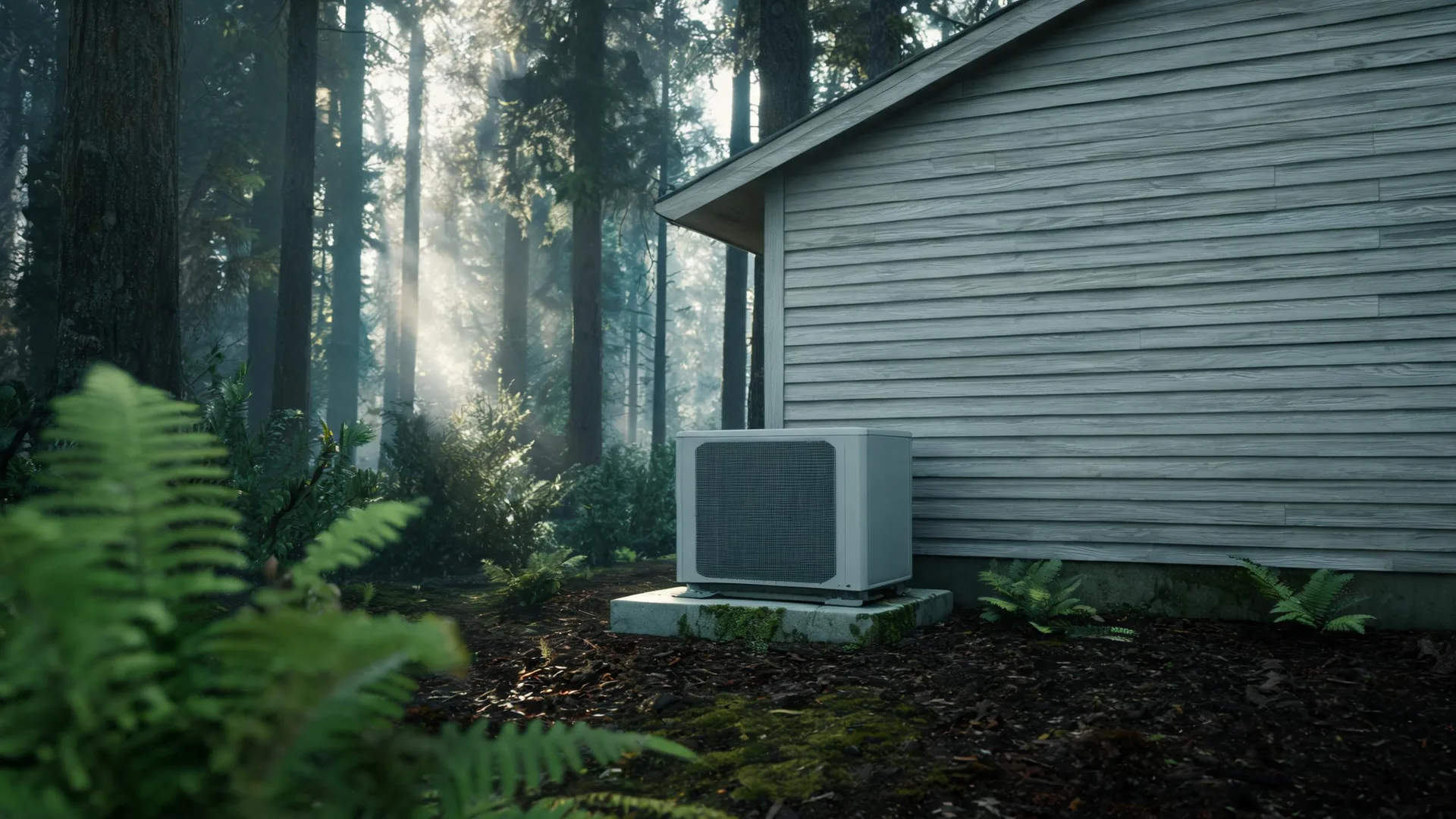
Ask what happens to the ductwork, not just the unit outside

The new system has to move the right amount of air through the ducts already in place. Undersized ducts choke a properly sized unit and it won't cool the house evenly no matter how good the equipment is. Have the contractor check static pressure and duct sizing before you sign off, not after it's installed and running short.

Overhead view of a gray residential air conditioning condenser unit mounted on a concrete pad beside a house with asphalt shingle roofing.

Going above the federal minimum saves little here, about $20 a year.

  • A higher-efficiency unit$150 a year
  • A new unit at the federal minimum, 13.4 SEER2$170 a year

Estimates for a typical Ontario County home, from EIA household energy data, New York fuel prices and NOAA climate normals. Your home will differ.

Install day starts outside with the old condenser coming out, then the new pad or bracket gets set and leveled before the new one goes on it. Indoors, the coil above the furnace or air handler usually gets swapped too, since matching an old coil to a new condenser is a common source of problems down the line. The refrigerant lines get connected, pressure tested, then pulled into a vacuum to clear out any air and moisture before the system is charged. Once it's running, the contractor checks the charge against the manufacturer's spec, confirms airflow at the vents, and checks static pressure in the ducts. A startup that skips the vacuum step or eyeballs the charge instead of measuring it is the kind of shortcut that shows up as a breakdown down the line, not on day one.