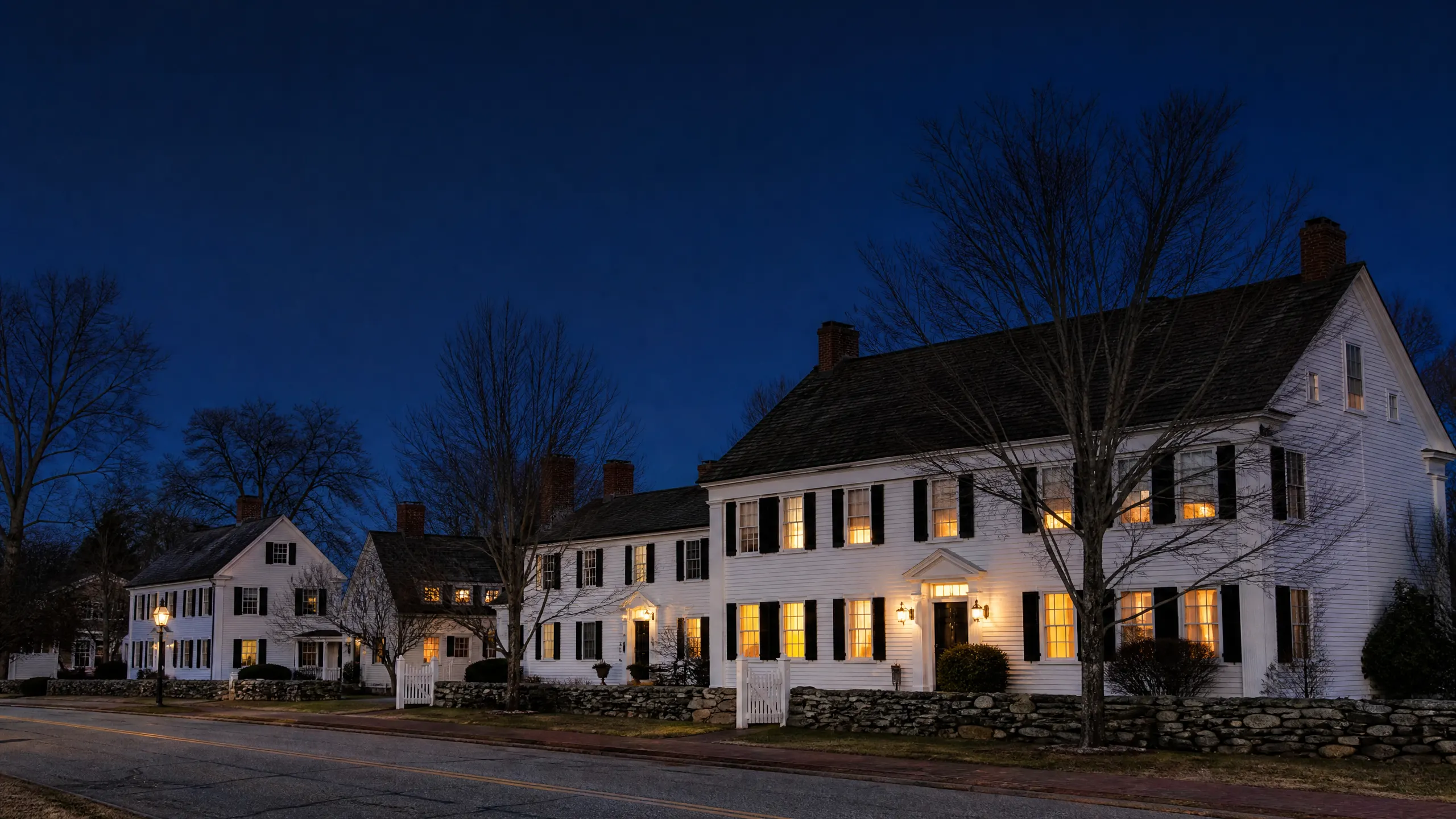







White colonial-style houses with lit windows photographed at dusk along a tree-lined street.

AC Installation in Brooklyn, NY

Tell us about the job

Takes about a minute. No obligation.

New system or replacementCentral ACKings County, NY
Step 1 of 2

What ZIP code is the job in?

Electricity in Kings County runs 36.97 cents per kilowatt-hour on average, among the highest rates in the country. Summer dew points here average 65°F across June, July and August, the kind of thick air that makes a room feel hotter than the thermostat says. That means the unit works to pull more moisture out, not just drop the temperature. Every degree of cooling it does costs more here than it would almost anywhere else. An inefficient system doing that same work shows up harder on the bill than it would somewhere with cheaper power.

4 months
June through September, your air conditioner is on duty
83°F
the average summer afternoon it cools against
2 hail events
in ten years, and hail bends the fins on outdoor coils
13.4 SEER2
the federal minimum any new unit must meet
Isometric cutaway illustration of a small house showing interior rooms with furniture, ceiling ductwork and an air handler, plus an outdoor condenser unit connected by refrigerant lines beside the building.
Your air conditioner works hardest from June through August.

NOAA nClimDiv, 1991–2020 normals

Half the homes in Kings County were built in 1944 or earlier.

A new system has to match ductwork and a layout built for that era, not the open floor plan of a new build.

Gas heats most homes here, which decides what the AC pairs with

72.2% of homes heat with gas
Climate zone 4A
Power here costs 36.97 cents per kilowatt-hour
Time It Before JuneCooling runs June through September here, so May is when this gets done on your schedule.

Kings County falls under zone 4A in the 2021 energy code, a mixed, humid climate that asks real work of both the furnace and the AC. Any split system under 45,000 Btu an hour installed here has to clear 13.4 SEER2, the federal floor for equipment built from 2023 on. That number is a measure of efficiency, not size, so it narrows which models can legally go in without saying which tonnage fits the house. A system that just clears 13.4 SEER2 is still a legal install, but it leaves less room to absorb the cost of all that moisture removal than a higher-rated one would. A federal tax credit is available on qualifying high-efficiency equipment, worth checking against whatever unit ends up on the table.

The Rating On The Unit Decides What Every Summer After This One Costs

Power here costs what it costs, and that is not going to change. The one thing that does change is the rating on the unit going in. A model that clears the federal floor by a wide margin keeps less of that rate on your bill, all summer, every summer after this one. Worth asking a contractor what rating a model actually clears, not just whether it passes.

Find a contractor
A man in a dark long-sleeve shirt and tan pants, seen from behind, carries a canvas tool bag up wooden porch steps toward a dark green front door of a shingled house.
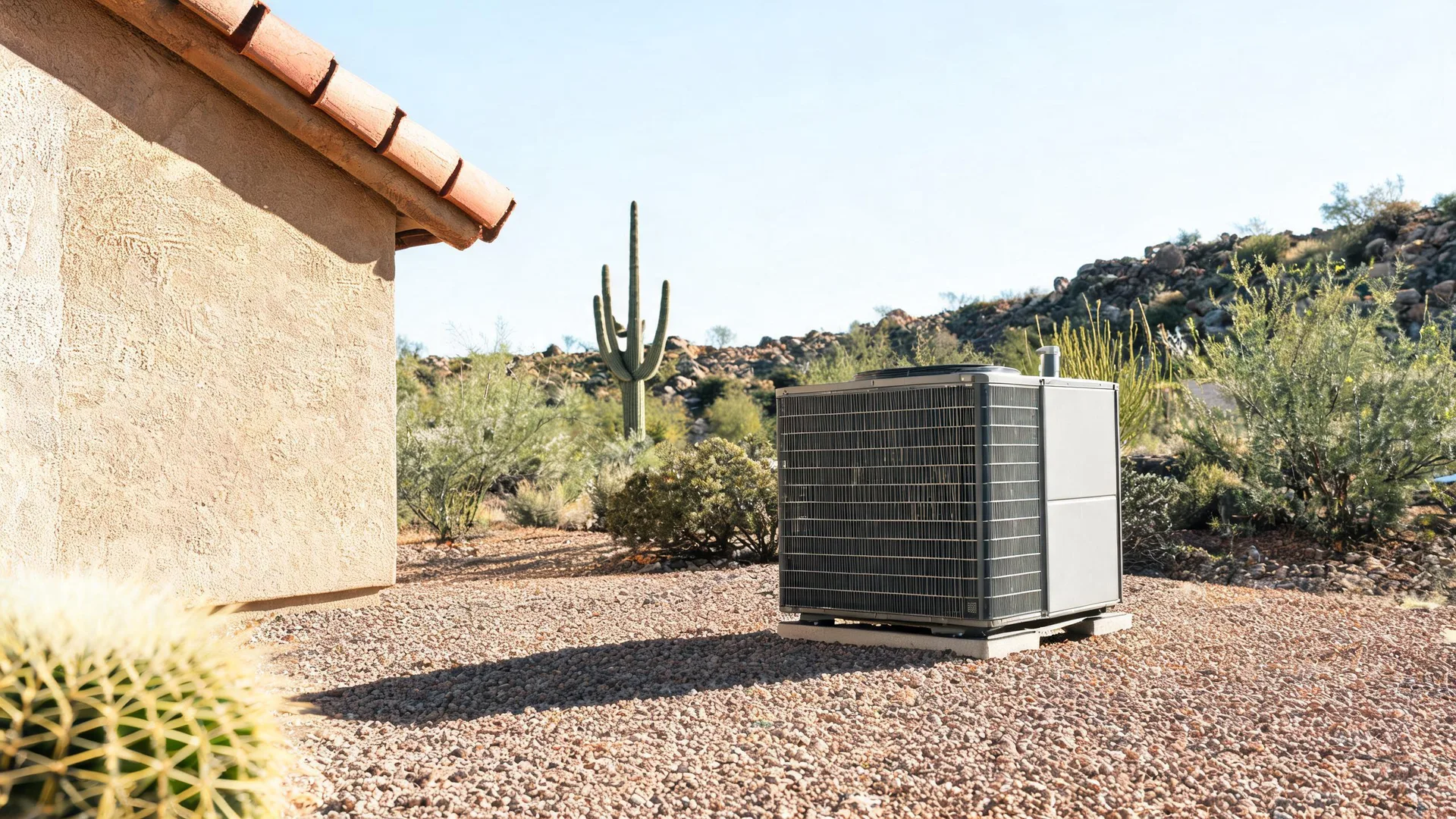
An outdoor air conditioning condenser unit mounted on a concrete pad surrounded by gravel, photographed against a partly cloudy blue sky.

Decades Running Through the Same Ducts

If a system is going into a house built in 1944 or earlier, the ductwork already on site was sized for that house, not for whatever's going in now. A contractor sizing the new unit needs to check what's actually there before settling on equipment, not just swap in a replacement and assume the ducts can carry what it moves. A system that doesn't match ends up running longer to do the same job, and here, longer runtime is the expensive kind of mismatch.

Sizing Is Math, Not a Guess

A contractor works out the size by adding up how much heat the house gains: the square footage, the window area and facing, the ceiling height, how much insulation is in the walls and attic. That calculation has a name, a Manual J, and it spits out a number in Btu per hour that the equipment has to match. Guessing off square footage alone skips most of what actually drives the number.

Bigger Isn't Safer

An oversized unit cools the air fast and shuts off before it's run long enough to pull the moisture out of the room. The thermostat reads satisfied while the air still feels damp, so it short cycles, shutting on and off more than it should, and that extra cycling wears the compressor down faster than steady runtime would.

An outdoor air conditioning condenser unit installed beside the exterior wall of a blue vinyl-sided house at sunset.

A higher-efficiency unit would save about $40 a year to run in Kings County compared with a new unit at the federal minimum.

  • A higher-efficiency unit$370 a year
  • A new unit at the federal minimum, 13.4 SEER2$410 a year

Estimates for a typical Kings County home, from EIA household energy data, New York fuel prices and NOAA climate normals. Your home will differ.

Installation day starts before anyone touches the old unit, with a walkthrough to confirm the equipment on the truck matches what was sized for the house. The old system comes out first: the indoor coil, the outdoor condenser, and the line set running between them. If the line set isn't being reused, new copper gets run and then pressure tested to make sure there are no leaks before anything is charged with refrigerant. Setting the new condenser outside and the coil inside is the fast part. What takes the time is connecting it all to the existing ductwork, sealing the joints, and wiring in the thermostat and disconnect. Once it's buttoned up, a contractor runs the system, checks the refrigerant charge against the manufacturer's spec, and measures airflow at the vents before calling the job done. A system that gets flipped on without that final check can run for a while before a low charge or weak airflow shows up as a problem.