






A row of illuminated white colonial houses along a road photographed at dusk.

AC Installation in Binghamton, NY

Tell us about the job

Takes about a minute. No obligation.

New system or replacementCentral ACBroome County, NY
Step 1 of 2

What ZIP code is the job in?

Gas furnaces heat close to 6 in 10 homes in Broome County, and most of those homes pair that furnace with central AC on the same ductwork. If that's your setup, installation means matching a new condenser and coil to the system you already have, not building something from scratch. Electric heat comes in second here, and those homes usually run central air off the same ducts as the air handler. Oil and propane heat smaller shares of homes in the county, and AC still fits alongside either one as long as the ductwork is already there. What matters for your install is less about the furnace itself and more about whether the ducts sizing and the electrical can handle the new unit.

2 months
July through August, your air conditioner is on duty
79°F
the average summer afternoon it cools against
39 hail events
in ten years, and hail bends the fins on outdoor coils
13.4 SEER2
the federal minimum any new unit must meet
Isometric line illustration of a cutaway single-story house showing interior rooms, attic ductwork and an air handler, connected by a line to an outdoor condenser unit on a pad.
Your air conditioner works hardest from July through August.

NOAA nClimDiv, 1991–2020 normals

Broome County logged 248 damaging wind events between 2015 and 2024.

None of that changes what your AC install needs. Size the system for your home, not for the weather.

Two months of real work a year, so fit matters more than horsepower

Cooling runs July through August
Summer afternoons average 79°F
248 damaging wind events from 2015 to 2024

Half the homes in Broome County were built in 1958 or earlier. A house that age was almost never built with central air in mind, so the ducts you have now were likely added later or sized for a furnace blower, not a cooling coil. That matters when a contractor sizes your new system. A condenser that's right for the square footage can still perform badly if the ductwork can't move that much air. Before anything gets installed, the ducts and the electrical panel are worth checking against what the new unit actually needs, not just the age of the system you're replacing.

The right size, nothing more, is what this job needs

A standard-size system sized to your home will run fine here. Electricity in New York runs 24.43 cents per kilowatt-hour, so getting the size and efficiency right matters for the bill, but nothing about Binghamton calls for going bigger or paying for more than that.

Find a contractor
A man in a dark long-sleeve shirt and tan work pants, seen from behind, steps onto a porch toward a dark green paneled door while carrying a canvas tool bag with tools in its outer pockets, with a potted shrub to the right.
A gray residential air conditioner condenser unit mounted on a concrete pad in an open grass field.

Get the install done in June, ahead of the two months it has to work

Cooling runs July through August here, two months a year. June is the month before that starts. Installing before the season means a contractor can size the condenser to your ductwork and get it running before the first hot week, rather than sizing it under pressure once the old system has already failed in July.

Ask for the load calculation, not just a quote

A contractor should size your system by doing a room by room load calculation, checking your square footage, windows, insulation and duct layout. If someone quotes a condenser size based on the unit you're replacing or a quick walk through, ask why they skipped the calculation. The number that comes out of it is what the rest of the job depends on.

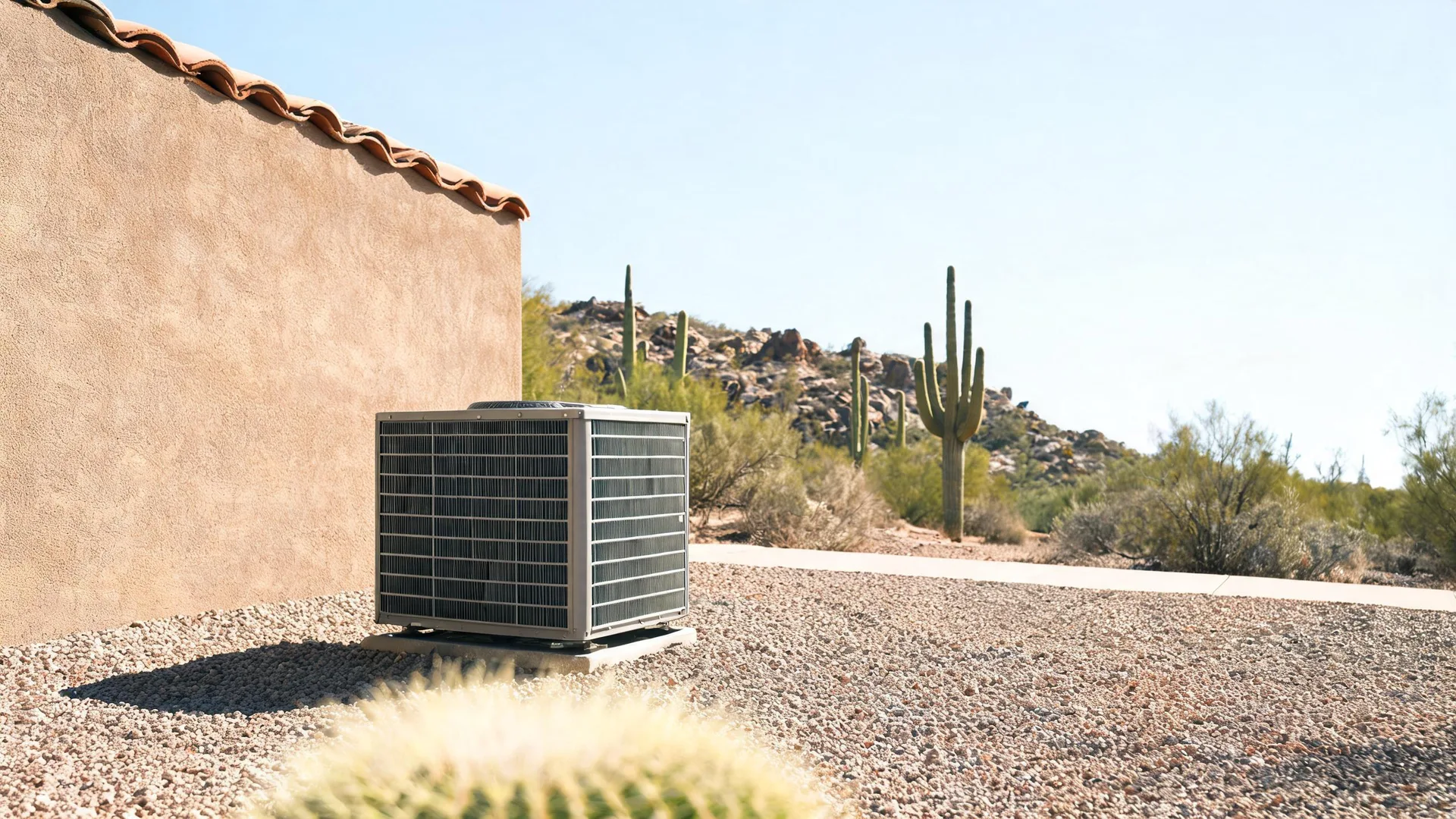
Ask how the new coil matches the furnace or air handler

The condenser outside and the coil inside have to be a matched set for the system to run at its rated efficiency. If only the outdoor unit is getting replaced, ask whether the existing coil and air handler can actually pair with it, or whether mismatched parts will leave the system running worse than the specs suggest.

An outdoor air conditioning condenser unit positioned on a concrete pad next to a blue-sided house, surrounded by green shrubs and flowering hydrangeas at sunset.

Going above the federal minimum saves little here, about $10 a year.

  • A higher-efficiency unit$130 a year
  • A new unit at the federal minimum, 13.4 SEER2$140 a year

Estimates for a typical Broome County home, from EIA household energy data, New York fuel prices and NOAA climate normals. Your home will differ.

Install day starts with the equipment already sized and ordered, so the crew isn't making decisions on the fly. The old condenser comes out first, then the coil if that's being swapped too. The line set gets checked rather than reused blind, since old refrigerant lines can carry debris or the wrong oil for a new system. Setting the new condenser means leveling the pad, running new electrical if the disconnect or breaker doesn't match the unit's draw, and connecting the line set with fresh flares or brazed joints. Once the coil and condenser are both in, the system gets evacuated with a vacuum pump to pull out moisture and air before refrigerant goes in. Either one left in the lines will hurt how the system runs. The last part is startup, checking refrigerant charge, airflow across the coil, and whether the thermostat is talking to the new equipment correctly. None of that depends on the brand or the size of the system. It's the same sequence whether the job takes most of a day or runs into a second one.