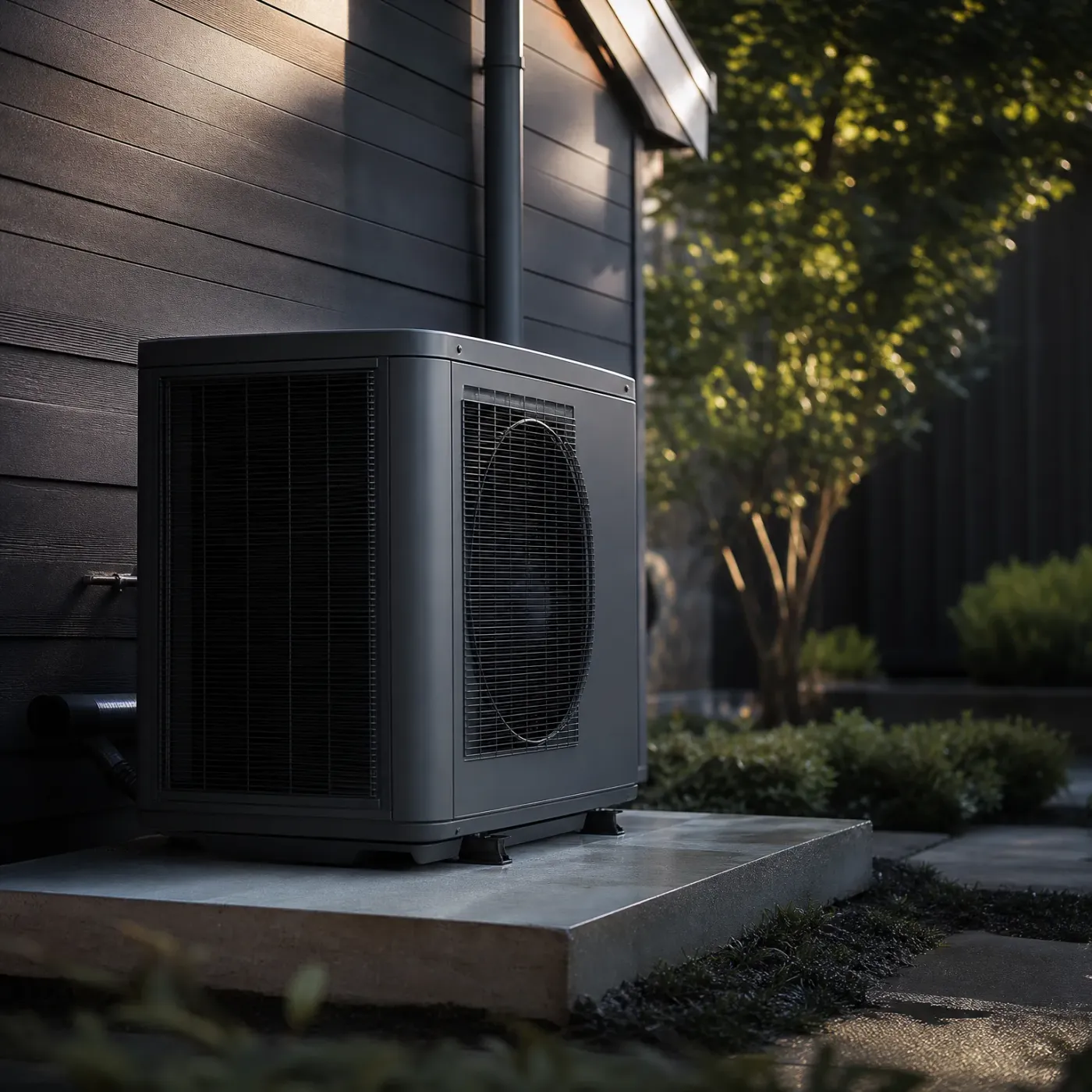









A gray outdoor condenser/heat pump unit with a side fan grille sits on a concrete pad beside a dark horizontal wood-sided house, with shrubs and a small tree nearby.

A heat pump pro near you

Is a cold-climate heat pump worth it in New York

A cold-climate heat pump has to handle New York winters and still keep up when summer turns sticky, all while electric rates here run high. Whether it earns its keep against gas heat depends on your house and how it's set up. Answer those questions with a contractor who can look at your situation directly.

Find my pro

Yes, a cold-climate heat pump works in New York, down to well below freezing, as long as it was sized and installed for the cold. These units use a different compressor and refrigerant cycle than standard heat pumps, so they keep pulling heat from outside air even on the coldest nights instead of giving up and relying only on backup heat. Whether it's worth it next to gas depends on your house. Most homes here already heat with gas, and gas is often cheaper to run than electric resistance backup, so the savings come from how little that backup gets used. A well-matched system leans on the heat pump almost all winter and only calls on backup during the hardest cold snaps. The same unit also covers summer, handling the humidity without a separate air conditioner. Get the sizing and setup wrong and you're paying for two systems while leaning on the expensive one.

An older man with gray hair and a beard stands in a dimly lit entryway wearing a dark hooded coat dusted with snow, with a lit table lamp, framed picture, and front door with glass panels behind him.
An older man with gray hair and a beard, wearing a dark snow-dusted jacket and scarf, stands smiling in a dimly lit entry hall with a lamp, wooden front door and staircase behind him.
A gray-haired bearded man in a dark coat with snow flecks on the shoulders stands just inside a dimly lit home entryway, with a lamp, framed pictures, sofa and candle-style lights in the background.
An older man with gray hair and a beard, wearing a dark coat and scarf dusted with snow, stands in a warmly lit home entryway with an arched doorway, lamps, and a living room visible behind him.

The compressor is what makes this different from an older heat pump. Instead of switching on at one speed, it ramps up as the temperature drops outside, pulling harder when the house needs more heat. When it gets really cold, vapor injection adds a second shot of refrigerant partway through the compression cycle, which keeps the heat coming instead of letting output fall off. The outdoor coil will frost up in cold, wet weather. When that happens, the system briefly reverses itself, melts the frost, then switches back to heating. None of that needs you to do anything. Most installs in New York keep the gas furnace in place and let it back up the heat pump on the coldest days, or whenever running it is cheaper than running the heat pump. Where that switchover happens is a setting, and a contractor sets it based on your house and your rates, not something built into the equipment. Come summer, the same unit works in reverse, acting as your air conditioner and pulling the moisture out of the air along with the heat.

How a cold-climate heat pump runs

  • A cold-climate heat pump uses a variable-speed compressor that ramps up output as the temperature drops, instead of running at one fixed speed.
  • Vapor injection sends an extra shot of refrigerant into the compressor mid-cycle, which keeps heat capacity up when it's well below freezing outside.
  • The outdoor coil frosts over in cold, damp weather, so the unit runs a defrost cycle that briefly reverses to melt the ice before switching back to heating.
  • Most installs here pair the heat pump with the existing gas furnace as a dual-fuel setup, so the furnace only fires when it's cheaper or the heat pump can't keep up.
  • The switchover point between heat pump and furnace is a setting a contractor configures, not something fixed by the equipment itself.
  • In summer the same unit runs in reverse as the air conditioner, pulling heat out of the house and handling the humidity instead of just the temperature.
A gray outdoor heat pump unit on a concrete pad beside a house with horizontal lap siding, connected by conduit and a flexible line to a wall-mounted disconnect box, with low shrubs and mulch nearby.
Running fine, it keeps pulling heat from the air and the disconnect box and lines stay doing their job with no fuss.
An outdoor air conditioner condenser unit on a concrete pad beside a house with beige horizontal siding, with conduit running from an electrical box on the wall.
Struggling, it can mean a bad install, wrong sizing, or a system never meant for New York cold in the first place.

What This Means for Your House

  • Your gas furnace still kicks in automatically on the coldest nights if the heat pump alone can't keep up with the load.
  • A heat pump paired with gas heat shifts most of your winter bill off gas and onto electric rates that run high here.
  • In summer, the same system handles your AC, so sticky stretches don't need a separate window unit or a second repair call.
  • If the outdoor unit was sized for a smaller house, you'll notice rooms upstairs lagging behind on the coldest days.
  • A poorly placed outdoor unit can ice up in freezing rain or heavy snow if it wasn't set with enough clearance.
  • Your electric panel needs enough spare capacity for the compressor, which an installer should check before swapping anything out.

A heat pump doesn't replace your gas furnace here, it shares the load with it. On most days it carries the heating by itself. On the coldest nights, the furnace picks up what the heat pump can't, and the switch happens on its own. That split matters for your bill, since the hours the heat pump covers move off gas and onto electric rates, and New York's rates aren't cheap. Summer works the other direction. The same outdoor unit that heats the house in January cools it in July and August, so you're not running a window unit or hauling one out of storage when it gets sticky.

Where it falls short usually traces back to the install, not the equipment. If the outdoor unit was sized for a smaller house than yours, the rooms farthest from it, often upstairs, will lag on the coldest days while the rest of the house is fine. If the unit was set too close to the house or without clearance for snow and runoff, ice can build up around it during freezing rain, which cuts into how well it pulls heat from the air. And before any of this gets installed, your electric panel has to have room for what the compressor draws. A panel that's already near its limit needs to be checked first, not after the unit is in.

An outdoor air conditioner condenser unit on a concrete pad beside a house with horizontal vinyl siding, with refrigerant lines and an electrical disconnect box on the wall and dry leaves on the ground.
Before you get your heat pump installation
A gray outdoor heat pump unit on a concrete pad beside a house with horizontal lap siding, with a conduit running to a wall-mounted disconnect box and a green shrub to the left.
After you get your heat pump installation

A local pro for your heat pump installation

You already have the heat pump. What you don't have is certainty that it was sized and installed to actually carry your house through a New York winter, or that it's wired into your gas furnace the way it should be so the two switch off without you thinking about it. A unit that was never set up right for this climate will run constantly and still lose ground in January, and the only way to know which one you've got is to have someone look at the install itself, the sizing, the controls, the refrigerant charge. That's a job for a contractor who works on cold-climate systems regularly, not a guess you make from the thermostat. Getting that checked now, before the coldest months test it, is worth more than waiting to find out the hard way when your electric bill shows it or the furnace is doing all the work.

A gray outdoor condenser unit on a concrete pad beside a house with horizontal lap siding, with a wall-mounted disconnect box, conduit and insulated refrigerant lines, a shrub at left and gravel at right.

Working the way it should

A heat pump set up right keeps pulling heat from the outside air even on a cold night, and the disconnect box and lines just sit there doing their job. You won't notice it running. That's the sign it was sized for your house.

An outdoor condenser unit on a concrete pad beside a horizontal-sided house, with insulated refrigerant lines running to a wall-mounted box, surrounded by bare dirt.

Struggling to keep up

A unit that can't hold its own shows it fast: it runs constantly, the house never quite gets warm, and your electric bill climbs past what a heat pump should cost you here. That usually means it was never matched to a New York winter to begin with.

How does a heat pump still make heat when it's freezing outside?

It sounds backward. Pull heat out of air that's already cold and put it inside your house. On a January day in New York when it's 20 degrees out, it's hard to picture there being any heat left in that air to grab. But that's what's happening every time the outdoor unit is running, and it's worth knowing how, especially since you're trusting this system to carry real weight on the coldest nights.

Refrigerant pulls heat from outdoor air even when it's cold, then the compressor concentrates it

Air at 20 degrees still holds heat, just not much of it. Refrigerant flowing through the outdoor coil is colder than that air, so heat moves into it the same way heat always moves toward cold. The compressor then squeezes that refrigerant, which raises its temperature well above anything in your house, and that heat gets released into your ducts or indoor unit. A cold-climate model keeps this cycle going at lower outdoor temperatures than a standard heat pump because its compressor can ramp up and pull in more refrigerant to make up for how little heat the outside air is giving up. Once it gets cold enough, there just isn't enough heat left in the air to pull, which is where the gas furnace takes over.

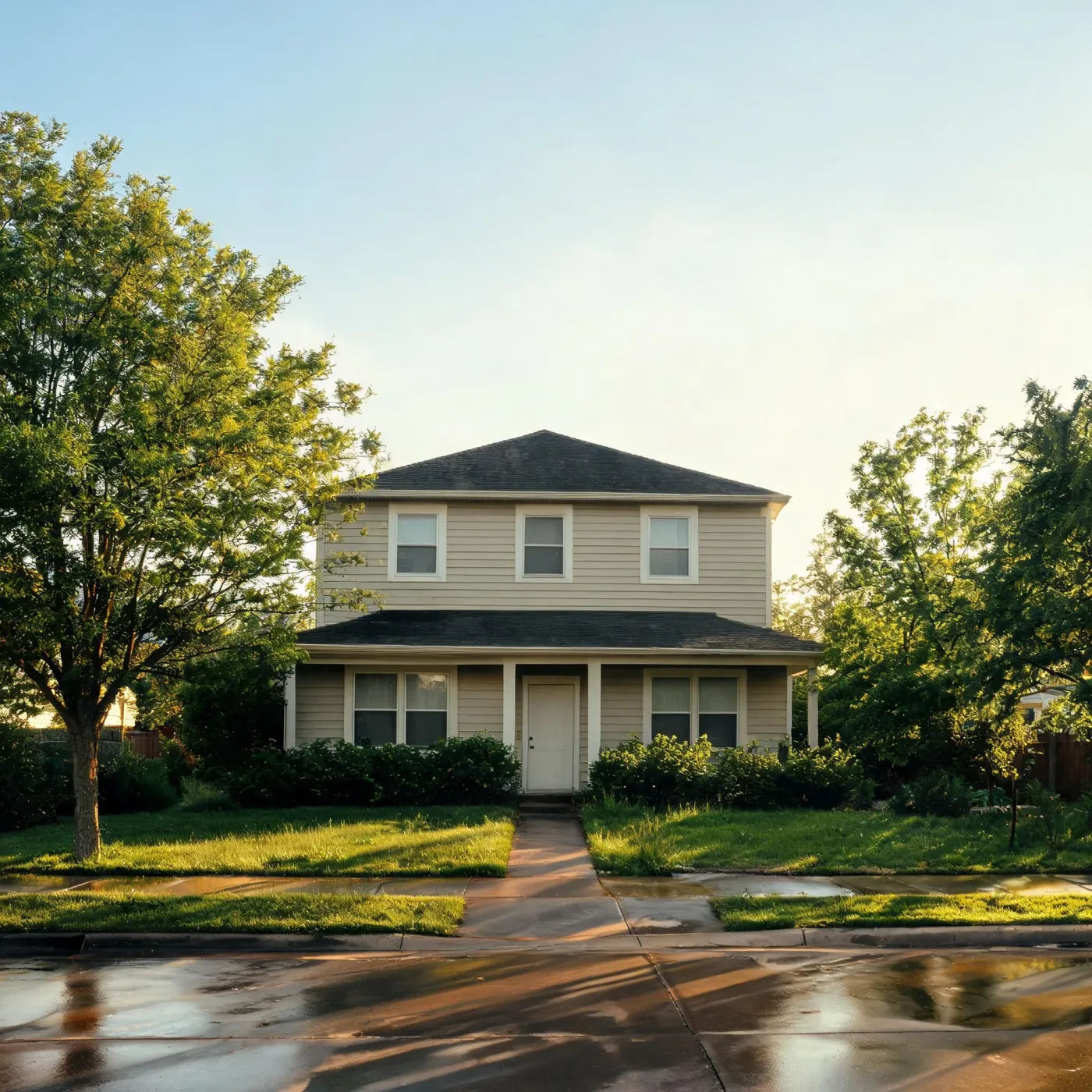
A two-story house with beige horizontal siding, a covered front porch, and a dark shingled roof, set behind a lawn with shrubs, leafy trees on both sides, and a wet street in the foreground.

That 62°F dew point in summer is what makes your living room feel sticky even when the thermostat says it's doing its job. Your heat pump isn't just cooling the air, it's also pulling moisture out of it, and that's a separate workload from dropping the temperature a few degrees. On the muggiest days you'll notice the system running longer, cycling less, and the air coming out of the vents feeling cooler and drier than it did in April. If a unit is sized right, that long runtime is normal and the house stays comfortable. If it's undersized or the ductwork's choking the airflow, you'll feel it as a house that's cool but still clammy. Source: 30-year climate averages, NOAA.

NASA POWER T2MDEW county cells weighted by homes

What are you noticing with your heat pump right now?

Maybe the gas furnace is kicking in more than you expected, even on nights that aren't that cold. Maybe the outdoor unit runs constantly and the house still feels a few degrees off. Maybe the air coming out of the vents feels cool to the hand in winter, which is normal for a heat pump but still makes you wonder if it's actually keeping up. In summer, maybe the thermostat hits the set point but the air still feels damp. None of that means something is broken. It can mean the system was sized for a milder climate than this one, or the handoff to your furnace isn't set the way it should be. Left alone, that shows up as a higher bill and a furnace doing more of the work than it needs to.

  1. Outdoor coil pulls heat from the air even at low temperatures.

  2. Refrigerant carries that heat into the compressor.

  3. Vapor injection boosts heat capacity as the outdoor temperature drops.

  4. Indoor coil releases that heat into your ductwork.

Power costs 26.39 cents per kilowatt-hour statewide

At 26.39 cents per kilowatt-hour, every degree your heat pump has to work for shows up on the bill fast. That's what makes correct sizing matter here more than in cheaper states: an oversized or undersized unit burns through expensive power to make up for it.

EIA-861 2025 statewide residential average

A woman in a cream sweater stands in an open doorway of a single-story house with horizontal siding and a stone-veneer base, facing a man in a blue shirt with a bag strap seen from behind in the foreground.

A cold-climate heat pump is worth it here, if it was set up right

A cold-climate heat pump can carry a New York winter and handle a sticky New York summer without running up your electric bill more than it should. Whether yours is actually doing that comes down to how it was sized and installed, and whether it's talking to your gas furnace the way it needs to. You've seen what that looks like now, and what it looks like when it's off.

If something you read here matches what you're seeing, the next step isn't figuring out who to call or whether they know cold-climate systems. Send in what's going on with your house and a contractor who works on these systems in New York reaches out to you. You stop carrying the job of finding the right person for it, and that's one less thing on a list that already has your furnace, your bill, and a house you want kept up right.

A gray upholstered sofa with a matching cushion sits beside a potted plant and a wooden table holding a small green plant in a stone pot, near a curtained window.
A woman wrapped in a thick wool blanket sits in an armchair with an open book on her lap, beside a lit lamp and a frost-patterned window.
A bearded man in a plaid flannel shirt stands indoors looking out a condensation-covered window at a snowy landscape, with a speckled mug on the sill and kitchen shelves behind him.

Heat Pump Installation

Get the right pro for your heat pump

Send the form and stop researching installers for the new heat pump.

A black smartphone standing upright against a plain light gray background, its screen filled with solid green.
New system or replacementHeat PumpNew York
Step 1 of 2

What ZIP code is the job in?