






A weathered white picket fence runs along a grassy lawn in front of a row of two-story wood-sided houses with porches and gabled roofs, beneath large leafy trees.

AC Repair in Lindenhurst, NY

Tell us about the job

Takes about a minute. No obligation.

RepairCentral ACSuffolk County, NY
Step 1 of 2

What ZIP code is the job in?

A capacitor weakens over time and the compressor or fan struggles to start, sometimes with a hum or a click and nothing more. A dirty condenser coil outside makes the whole system work harder to dump heat, and that strain shortens the life of other parts. Low refrigerant almost always means a leak somewhere in the coil or line set, not normal use, since the system is sealed and shouldn't need recharging on its own. A clogged filter chokes airflow across the indoor coil, and if that coil ices up, you can lose cooling entirely until it thaws. Drain lines clog with algae and debris, and once that happens the system may shut itself off to avoid water damage.

3 months
June through August, your air conditioner is on duty
80°F
the average summer afternoon it cools against
17 hail events
in ten years, and hail bends the fins on outdoor coils
434 wind events
in ten years, and wind drives debris into outdoor units
Isometric cutaway illustration of a single-story house showing interior rooms, ductwork and an air handler in the attic space, and an outdoor condenser unit connected by lines at the exterior wall.
Your air conditioner works hardest from July through August.

NOAA nClimDiv, 1991–2020 normals

Check the filter before you check anything else.

A filter packed with dust can choke the airflow and mimic a failing system entirely.

Lindenhurst sees its share of wind and winter storms, but that's not why your AC quit

566 severe weather events from 2015 to 2024
11% of homes statewide lost power a day or more in 2024
434 damaging wind events from 2015 to 2024
This house may be old enough to retire its ACHalf the homes in Suffolk County were built in 1970 or earlier.

Electricity in New York runs 24.43 cents per kilowatthour, well above what most of the country pays. A system that's low on refrigerant or straining through a dirty coil draws more power to do the same job, and that difference shows up on your bill every cycle until it's fixed. A unit short cycling or running nonstop because of a bad capacitor costs you the same way, quietly, day after day. The repair costs what it costs whether you call now or later. What changes is how much you burn on a struggling system while you wait.

Ask how much life is left before you pay for a big repair

If your AC came with the house, ask the contractor how much life is left in it before paying for a major repair. A compressor or coil replacement isn't worth it on a unit that's already near the end. A new capacitor or a cleaned coil might be.

Find a contractor
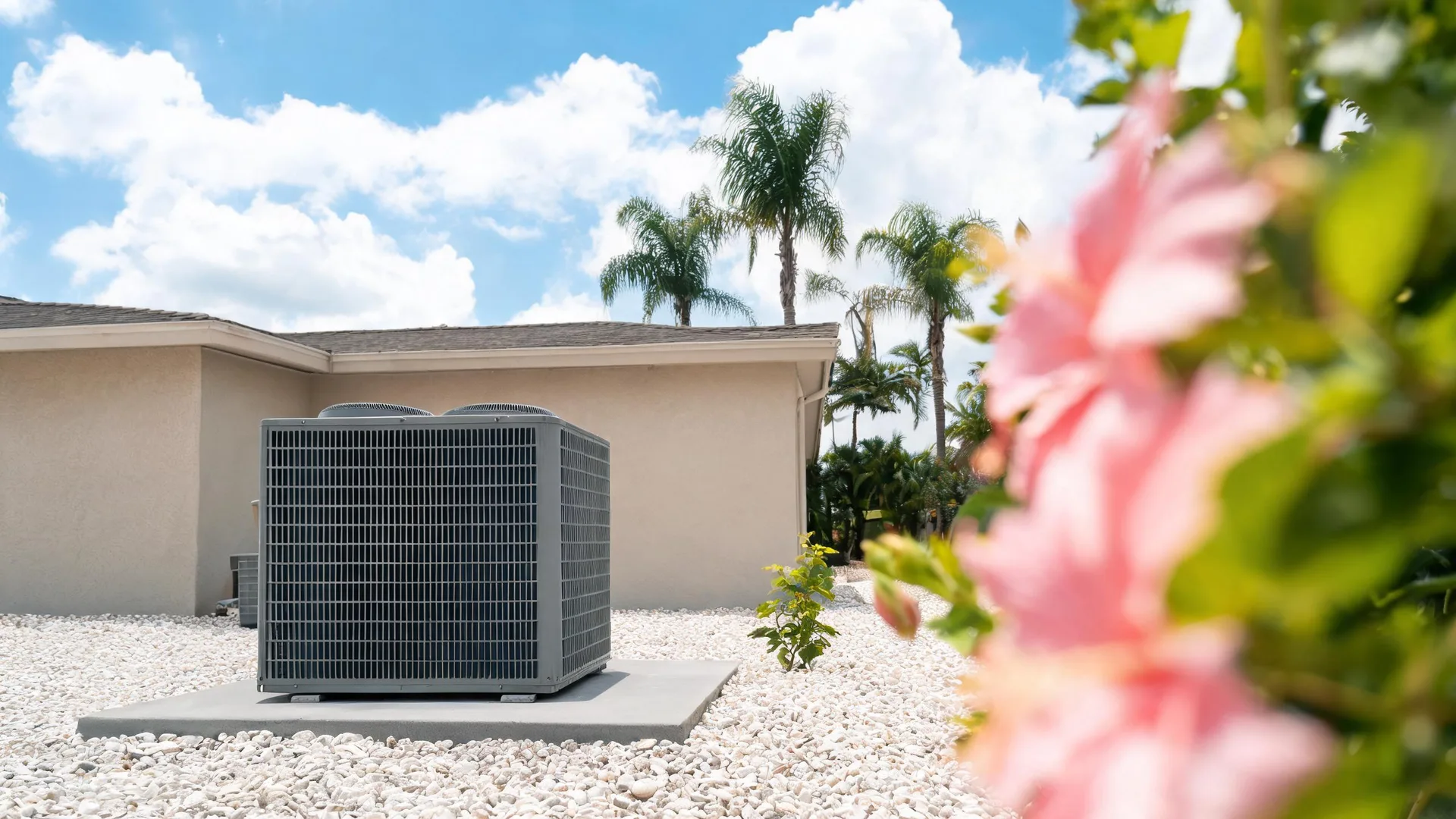
An outdoor air conditioning condenser unit mounted on a concrete pad surrounded by gravel, photographed against a partly cloudy blue sky.

Keep it running and the small problem finds the big one

A struggling AC rarely fails cleanly. It fails by making the other parts work harder, and running it in that state is what turns a small repair into a big one. A weak capacitor forces the compressor to pull hard on every start, and that heat damages the windings a little more each cycle. A dirty coil makes the compressor run hotter and longer to move the same heat, and compressors don't recover from that kind of strain, they just wear toward failure. Ice on the indoor coil blocks airflow completely, and running the system while it's frozen can push liquid refrigerant back into the compressor, which is one of the few things that kills it outright. None of this happens on the first hour of bad operation. It happens because the system kept cycling, day after day, with a problem that only gets worse under load.

What you'll actually notice first

Warm air out of the vents when the thermostat is set low. A unit that runs without the house ever cooling down. Short cycling, where it kicks on, shuts off, then starts again soon after. A hiss or bubbling sound near the indoor coil, which points to a refrigerant leak. Any of these means something is wrong, not that the system is simply working hard.

What the sound and smell tell you

A grinding or screeching noise from the outdoor unit usually means a motor bearing is failing. A burning smell from the vents means a wire or motor winding is overheating, and that's worth shutting the system off for until someone looks at it. A musty smell points to the drain line or the coil, not the air itself. Noise and smell are the system telling you where to look before it tells you by quitting.

An outdoor air conditioning condenser unit on a concrete pad next to the gray vinyl siding of a residential home.

A new air conditioner would save little on running costs in Suffolk County, so the repair decision comes down to the unit's condition.

  • A new one at the federal minimum, 13.4 SEER2$270 a year
  • An older air conditioner$290 a year

Estimates for a typical Suffolk County home, compared with an older unit built to the previous federal minimum, from EIA household energy data, New York fuel prices and NOAA climate normals. Your home will differ.

Repair makes sense when a part like a capacitor or contactor has failed.

Replacement makes sense when the compressor has failed or the system uses R-22 refrigerant, which is no longer made.

A diagnostic starts outside, with gauges on the lines to check refrigerant pressure, and inside, with a look at the coil and the airflow coming off it. The tech will run the system and watch how it behaves under a full cycle, not just at startup, since some problems like a weak capacitor or a slow leak only show themselves once the compressor has been working for a few minutes. Electrical readings on the capacitor and the motor windings rule out or confirm what the sound at the outdoor unit already hinted at. If the coil is iced over, that gets shut down and thawed before anything else can be tested, because airflow has to be normal before readings mean anything. The visit ends with the tech telling you what's actually wrong, not just what's possible, and what it'll take to fix it.