Aerial view of a gray central air conditioning condenser unit on a concrete pad next to a house with vinyl siding.

AC Maintenance in Yonkers, NY

Tell us about the job

Takes about a minute. No obligation.

Tune-up, service, or cleaningCentral ACWestchester County, NY
Step 1 of 2

What ZIP code is the job in?

Electricity here runs 24.45 cents a kilowatt-hour

That is higher than what most US counties pay. An air conditioner that has to work harder than it should, because a coil is dirty or the charge is low, turns that rate into a bigger number on the bill every month it runs.


Dirt and low charge make the compressor work harder

A dirty coil or a low refrigerant charge forces the compressor to run longer to cool the same house. Longer runtime at this area's electric rate is where a tune-up earns it back.

3 months
June through August, your air conditioner is on duty
82°F
the average summer afternoon it cools against
16 hail events
in ten years, and hail bends the fins on outdoor coils
167 wind events
in ten years, and wind drives debris into outdoor units
Isometric cutaway illustration of a house interior showing ducted air handling equipment, ceiling ducts, furniture in two rooms, and an outdoor condenser unit connected by lines outside the wall.
Your air conditioner works hardest from July through August.

NOAA nClimDiv, 1991–2020 normals

A refrigerant charge that's a few ounces low won't stop the system from blowing cold air.

The compressor will still run long after it should have shut off, and nothing on the thermostat shows you that.

Half these homes were built by 1959, and the AC in them has had a lot of years to drift out of tune

Half the homes here were built by 1959
Climate zone 4A
Power here costs 24.45 cents per kilowatt-hour
June Is When It Gets TestedCooling runs June through August here. May is when a tune-up still has time to matter.

A system that old has usually been serviced by more than one contractor, patched here and there, maybe recharged once without anyone checking why it was low in the first place. A yearly check is what catches that pattern before it turns into a summer breakdown. The tech can tell you whether the charge matches what the unit calls for, whether the coil is clean, whether the capacitor is weak before it fails outright. None of that shows up on the thermostat. If your system came with the house, this is the visit that tells you where it actually stands.

A tune-up pays for itself at this rate

A coil cleaning and a charge check take a compressor that's working harder than it needs to and bring it back to running the way it was built to. Power here costs more than in most places, which is what makes the visit worth scheduling.

Find a contractor
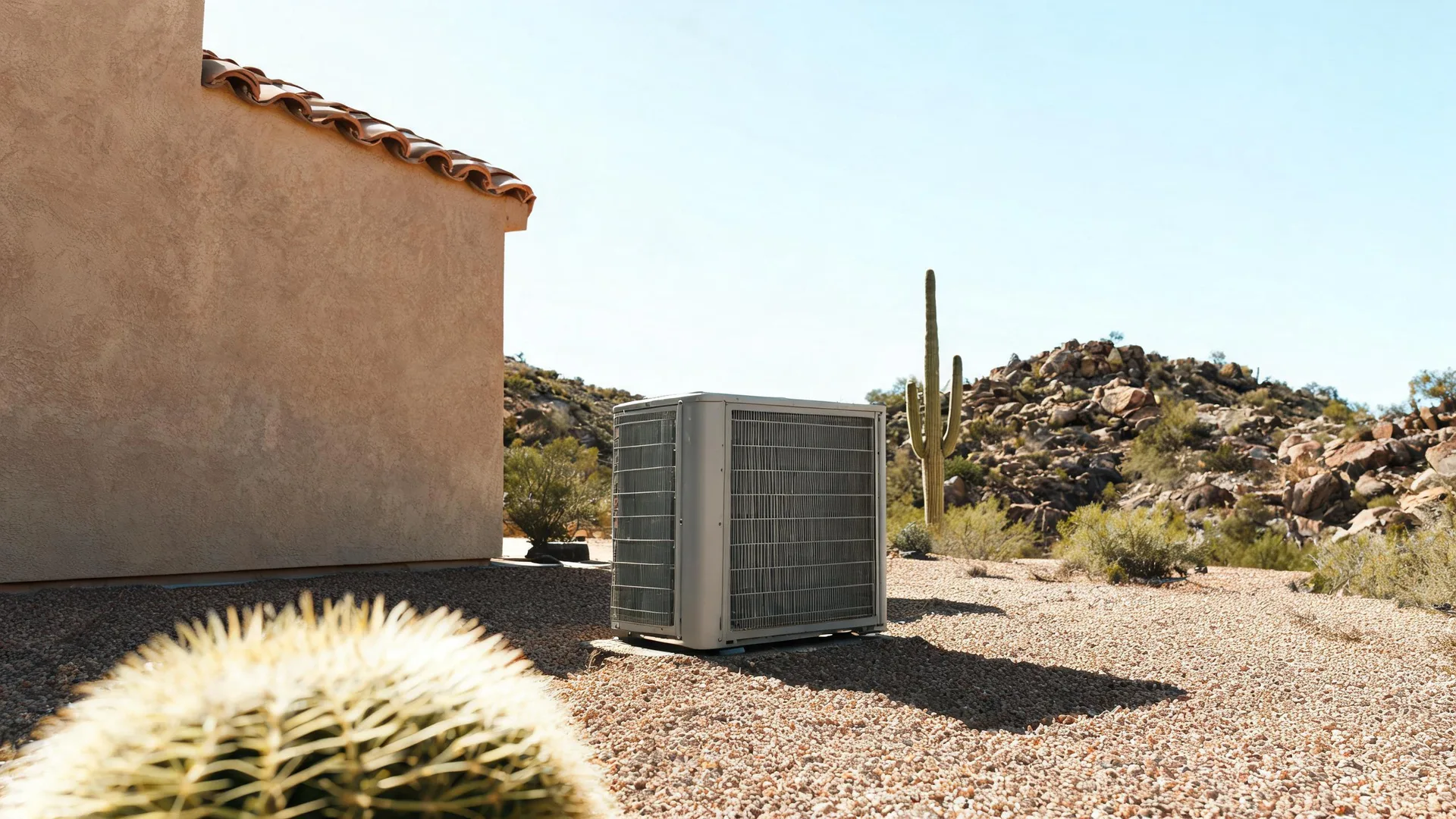
A gray residential air conditioner condenser unit mounted on a concrete pad in an open grass field.

Between Visits, the Filter Is Yours

The filter is the one part that's on the homeowner, not the tech. A dirty filter chokes the airflow across the coil, and the system has to run longer to move the same amount of cold air through the house. Check it once a month during the summer. Hold it up to a light. If you can't see light through it, it needs to be changed. Outside, keep the area around the condenser clear. Leaves, grass clippings, a fallen branch, anything piled against the unit blocks the airflow it needs to dump heat. A hose can rinse the outside of the coil if it looks caked with debris, but that's as far as to go without a tech. Inside, listen for anything new: a rattle, a hum that wasn't there before, a system that short cycles on and off instead of running a steady stretch. Those are things to mention at the next visit, not reasons to open the cabinet. The refrigerant lines, the capacitor, the charge itself, those aren't maintenance a homeowner does between visits. That's what the yearly check is for.

Three Places Airflow Gets Lost

Cold air has to move through a filter, across a coil, and the moisture it pulls out has to drain away. A clogged filter starves the coil of airflow. A coil caked with dust can't pull heat out of the air the way it should. A clogged drain backs up and can shut the system down or send water where it doesn't belong. Each one on its own makes the system work harder. Together they compound.

Why a Tune-Up Checks All Three

A filter is easy to check between visits, but a coil and a drain line are not. Dust builds up on the inside of the coil where nobody can see it, and the drain line can grow a clog slow enough that nothing seems wrong until it backs up. A tune-up gets the coil cleaned and the drain cleared before either one costs the system runtime it shouldn't need.

An overhead view of a residential air conditioning condenser unit mounted on a concrete pad next to a house with vinyl siding.

Book your AC tune-up in May, before homes here start needing cooling in June.

  1. Jan
  2. Feb
  3. Mar
  4. Apr
  5. May
  6. Jun
  7. Jul
  8. Aug
  9. Sep
  10. Oct
  11. Nov
  12. Dec

A tune-up checks the refrigerant charge, cleans the coils, tests the capacitor and tightens the electrical connections.

A tune-up starts with the electrical side, because that's what fails first and fails worst. The capacitor gets tested under load, not just looked at, since a weak one can still start the compressor and still be on its way out. Contacts inside the contactor get checked for pitting, which makes them stick or fail to close. The tech checks the refrigerant charge against what the system was built to run, using temperature and pressure together, not a gauge reading alone. The condenser coil gets cleaned if it's caked with debris, since a dirty coil can't reject heat the way it should. The blower and its motor get checked for wear, and the drain line gets cleared so condensation has somewhere to go. None of this is guesswork. Each part has a spec or a reading it should fall within, and the visit is what tells you whether it does.