





Two white colonial houses with lit windows and black shutters photographed at dusk along a tree-lined residential street.

AC Maintenance in Hempstead, NY

Tell us about the job

Takes about a minute. No obligation.

Tune-up, service, or cleaningCentral ACNassau County, NY
Step 1 of 2

What ZIP code is the job in?

Electricity here averaged 25.49 cents per kilowatt-hour in 2025, among the highest rates in the country. A dirty coil or a low charge makes the compressor run longer to cool the same house, and every extra minute shows up on the meter at that rate. The dew point averages 65 degrees across June, July and August here, so the system spends the summer pulling moisture out of the air on top of cooling it. That's more work than the same unit would do somewhere dry. A unit that's been serviced doesn't fight itself to get through that. Here, what that fight costs shows up faster than almost anywhere else.

4 months
June through September, your air conditioner is on duty
82°F
the average summer afternoon it cools against
10 hail events
in ten years, and hail bends the fins on outdoor coils
143 wind events
in ten years, and wind drives debris into outdoor units
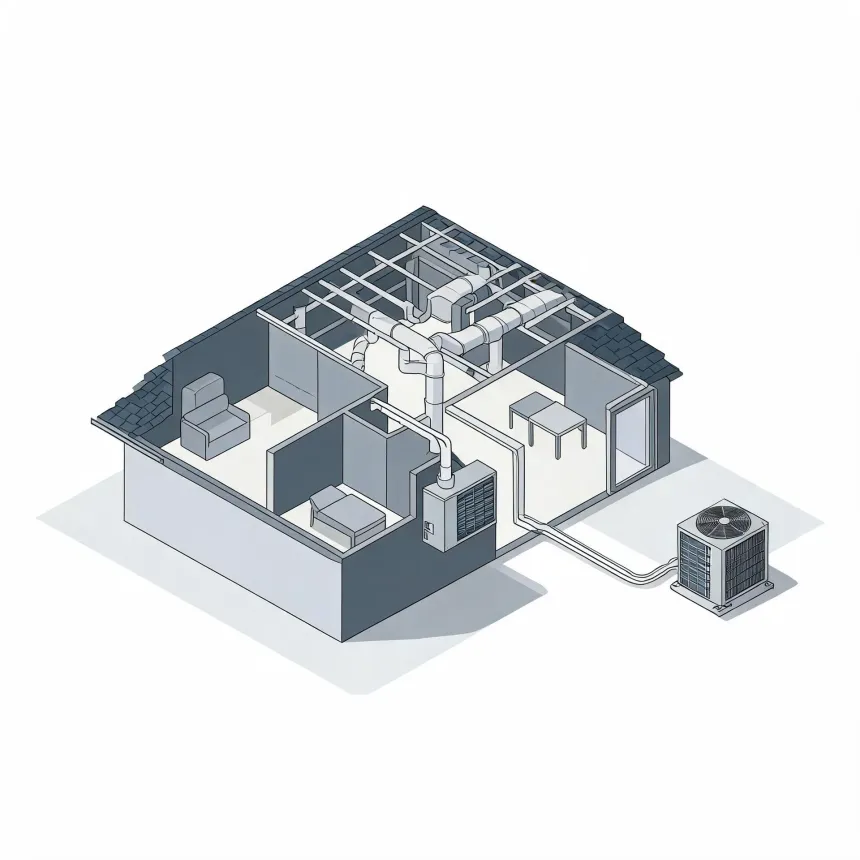
Isometric cutaway illustration of a house showing attic ductwork, an indoor air handler, and an outdoor condenser unit connected by lines.
Your air conditioner works hardest from July through August.

NOAA nClimDiv, 1991–2020 normals

Half the homes in Nassau County were built in 1955 or earlier.

An air conditioner in a house that old has usually been replaced at least once, and a yearly check catches a failing part before it takes the system down in the middle of summer.

June is day one. Get it checked in May.

Cooling runs June through September
Climate zone 4A
Power here costs 25.49 cents per kilowatt-hour

Nobody but the last owner knows exactly when the system in an older Hempstead home got swapped out. A yearly check doesn't need that history to be useful. A technician can tell you how the capacitor and contactor are holding up, whether the coil is clean, and whether the charge is right, no matter when the unit went in. Catching a weak part on a routine visit is a quick fix. Catching it after it fails means the system is down until someone can get out to replace it, right when you need it most.

A serviced system costs less to run here than a neglected one

A tune-up gets the coil clean and the charge right before the meter starts running up. That's the one cost here you have some control over.

Find a contractor
A man in a cap, dark long-sleeve shirt and brown work pants, seen from behind, steps up onto a porch toward a dark green door while carrying a canvas tool bag.
A gray metal air conditioning condenser unit mounted on a concrete pad in a flat grassy field under a partly cloudy sky.

What's wrong doesn't always feel wrong

A refrigerant charge that's a little low won't make the air blow warm. It'll still feel cold at the vent, so nothing seems wrong. But the compressor has to run longer to pull the same heat out of the house, and running longer wears it faster. A gauge set on the lines shows this in minutes. Nothing else will. Same with a capacitor that's weakening. It can still start the compressor and the fan every time, right up until the day it can't, and there's no sound or smell that warns you first. A technician tests it under load and reads the actual number off it. The coil tells its own story too. Dust and grime on the outdoor coil don't stop it from working, they just make it work harder to shed the same heat, and that shows up as longer run times long before it shows up as a breakdown. None of this is visible from the thermostat. The system can be struggling for a full season before it finally quits, and by then it quits at the worst possible time.

Keep the airflow clear

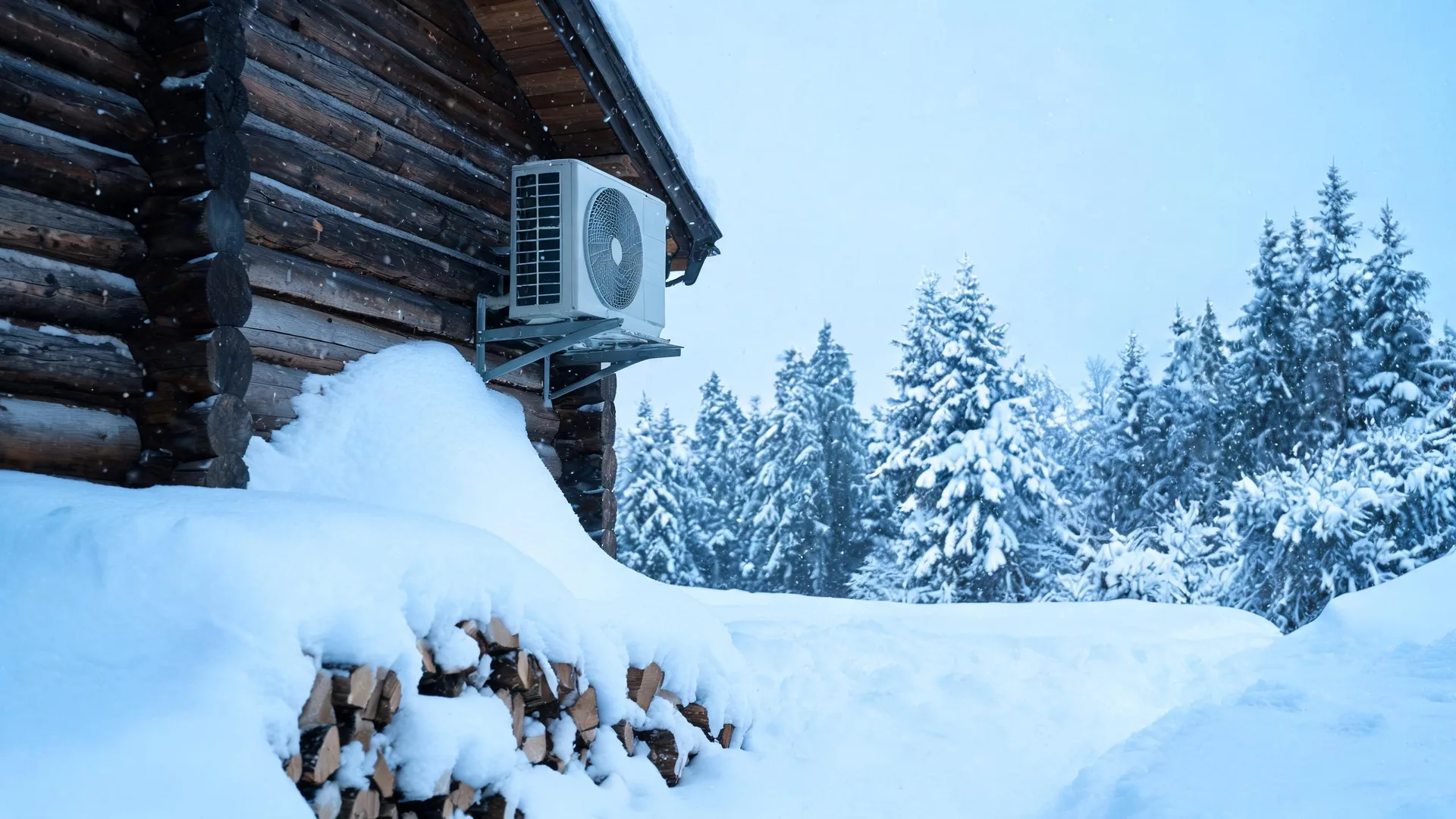
The filter is the one part of this job that's on you. A clogged filter starves the system of airflow, and the coil behind it can ice over even in the middle of summer. Check it every month and swap it when it's gray. Outside, keep the area around the condenser clear of grass clippings, leaves and anything else that blocks air from moving through the fins. The unit needs open space on all sides to breathe.

Leave the rest to a gauge set

Refrigerant charge, capacitor strength and electrical connections aren't something to check by eye or by feel. Opening the cabinet without the right tools risks a shock or a bent fin, and a low charge only shows up on a gauge, not at the vent. Between visits, just watch for ice on the lines, water pooling at the indoor unit, or a sound that wasn't there before. Any of those is worth a call. Everything else waits for the next tune-up.

An outdoor air conditioning condenser unit positioned beside a blue-sided house at sunset.

Book your AC tune-up in May, before homes here start needing cooling in June.

  1. Jan
  2. Feb
  3. Mar
  4. Apr
  5. May
  6. Jun
  7. Jul
  8. Aug
  9. Sep
  10. Oct
  11. Nov
  12. Dec

A tune-up checks the refrigerant charge, cleans the coils, tests the capacitor and tightens the electrical connections.

A tune-up starts with the condenser coil, the one outside. A technician washes it clean of dust and grime so it can shed heat the way it's supposed to. Next comes the electrical side: the capacitor gets tested under load, not just looked at, because a weak one can still start the compressor right up until it doesn't. The contactor gets checked too, since worn contacts make poor connections and poor connections make heat. The refrigerant charge gets measured with a gauge set, not guessed at, since too little or too much both make the compressor work harder than it should. The blower wheel gets a look for dust buildup, and the drain line gets cleared so condensation has somewhere to go besides your floor. Last, the whole system runs through a cycle so the technician can check that the temperature drop across the coil is where it belongs. Every one of these is a part that fails quietly, so checking it quietly is the point.