






A row of illuminated white colonial houses with black shutters and a stone wall along a road at dusk.

AC Repair in Watertown, NY

Tell us about the job

Takes about a minute. No obligation.

RepairCentral ACJefferson County, NY
Step 1 of 2

What ZIP code is the job in?

Your air conditioner only earns its keep from July through August here, with afternoon highs around 78°F. That is a short, mild season compared to most of the country. A compressor that runs two months a year and coasts the rest of the time just does not wear the way one does in a hot climate. So when something goes wrong, the cause is usually age, a part that failed, or something that got missed on a tune-up, not a system worn out from overwork. That makes most repairs worth doing. You are not fighting years of heavy use, just fixing what actually broke.

2 months
July through August, your air conditioner is on duty
78°F
the average summer afternoon it cools against
5 hail events
in ten years, and hail bends the fins on outdoor coils
123 wind events
in ten years, and wind drives debris into outdoor units
Isometric grayscale illustration of a cutaway house with the roof lifted, showing interior rooms, ductwork, an indoor air handler, and an outdoor condenser unit beside the building.
Your air conditioner works hardest from July through August.

NOAA nClimDiv, 1991–2020 normals

Cooling here starts in July, right after June warms up.

The first hot stretch is when a weak capacitor or low charge finally gives out.

Short summers here don't wear a system out. A broken part does.

Power costs 24.43 cents a kWh statewide
Climate zone 6A
Cooling runs July through August
Older homes, older systemsHalf the homes in Jefferson County were built by 1972. If yours is one of them, the AC may be near the end of its life, not just in need of a quick fix.

A system that has not been worked hard is usually worth putting money into. Get the part replaced and it should run fine for years, not limp along until the next thing fails. The only wrinkle here is wind. Jefferson County has had damaging wind come through 123 times between 2015 and 2024, and that kind of wind knocks branches into a condenser or rocks the unit on its pad. Worth mentioning when you call, since it points a tech toward the outdoor unit before they even look at anything else.

Find out how much life is left before you pay

Ask the tech for an age estimate along with the diagnosis, especially if your AC came with the house. That tells you whether you're paying to fix a system with years left or putting money into one near the end.

Find a contractor
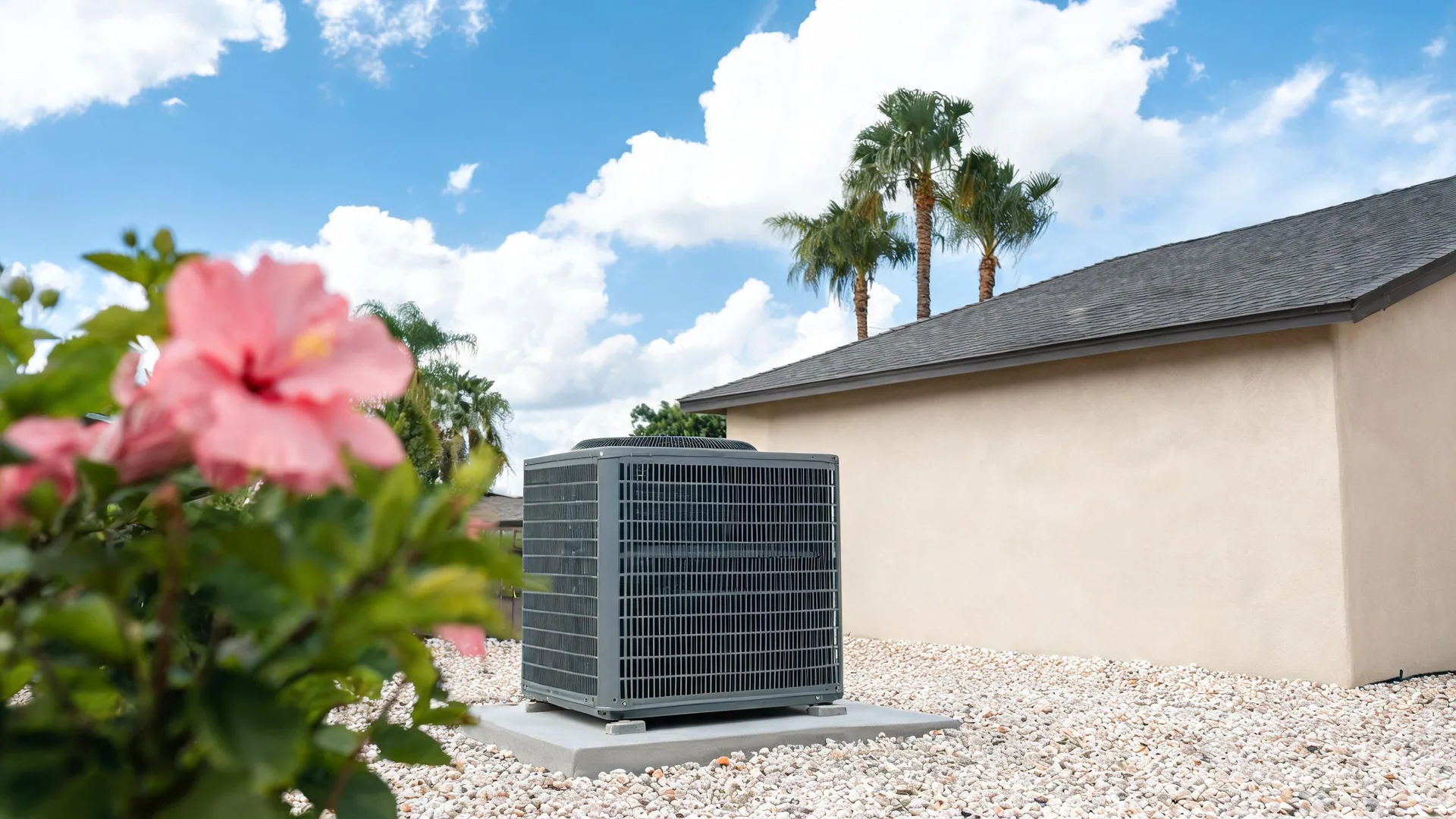
A gray cylindrical air conditioning condenser unit mounted on a concrete pad next to a light-colored vinyl-sided house exterior.

What actually wears out, and why

Most AC failures start with the capacitor or the contactor, the parts that take the hit every time the compressor cycles on. The capacitor gives the compressor the jolt it needs to start, and that jolt wears it down a little each time until it can't deliver enough charge. The contactor is the switch that sends power to the outdoor unit, and its contacts pit and burn with every cycle until they stick or stop making contact at all. Neither part cares how hot it is outside. They wear from cycling, not from heat, so a unit that runs a short season still goes through the same starts and stops per cooling day as one that runs all year. Low refrigerant charge is the other common culprit, almost always from a slow leak at a fitting or coil rather than the system just running low over time. A dirty condenser coil or a failing fan motor will also bring a system down, but those tend to give some warning first, weaker airflow, a louder motor, ice on the lines, before they quit outright.

What you'll notice first

Warm air out of the vents while the thermostat is set low, usually. Sometimes it's the unit outside, short-cycling off and on every couple minutes instead of running a steady stretch. Sometimes it's just weaker airflow than you remember from last summer, or a smell when it kicks on. The symptom you notice tells you which part to check, not how bad the problem is. A tripped breaker can look just as alarming as a failed compressor.

How soon it actually matters

A system that is blowing warm air or not turning on at all needs a call now. It is either shut down already or about to strain a part that is still working. A system that is running but weaker than it should, or icing up on the line, or clicking on a delay, has some time, but not much. Those are the warning signs that come before a harder failure, and waiting usually means a smaller problem turns into a bigger one.

Aerial view of a gray central air conditioning condenser unit on a concrete pad next to a house with vinyl siding.

A new air conditioner would save little on running costs in Jefferson County, so the repair decision comes down to the unit's condition.

  • A new one at the federal minimum, 13.4 SEER2$140 a year
  • An older air conditioner$150 a year

Estimates for a typical Jefferson County home, compared with an older unit built to the previous federal minimum, from EIA household energy data, New York fuel prices and NOAA climate normals. Your home will differ.

Repair makes sense when a part like a capacitor or contactor has failed.

Replacement makes sense when the compressor has failed or the system uses R-22 refrigerant, which is no longer made.

Not every repair is worth doing, and age is usually what decides it. A capacitor or contactor replacement is a small, contained fix on a system that is otherwise sound, and there is no reason to hesitate on those. It gets harder when the compressor itself is failing, or when the coil is leaking instead of just low on charge. Those parts cost more to replace on their own than the unit is worth once you add up what is left of its life. A tech can tell you which kind of repair you are looking at before any work starts, and that matters more than the price of the part alone. A unit that keeps needing separate repairs within the same season is usually telling you something the last repair didn't fix.