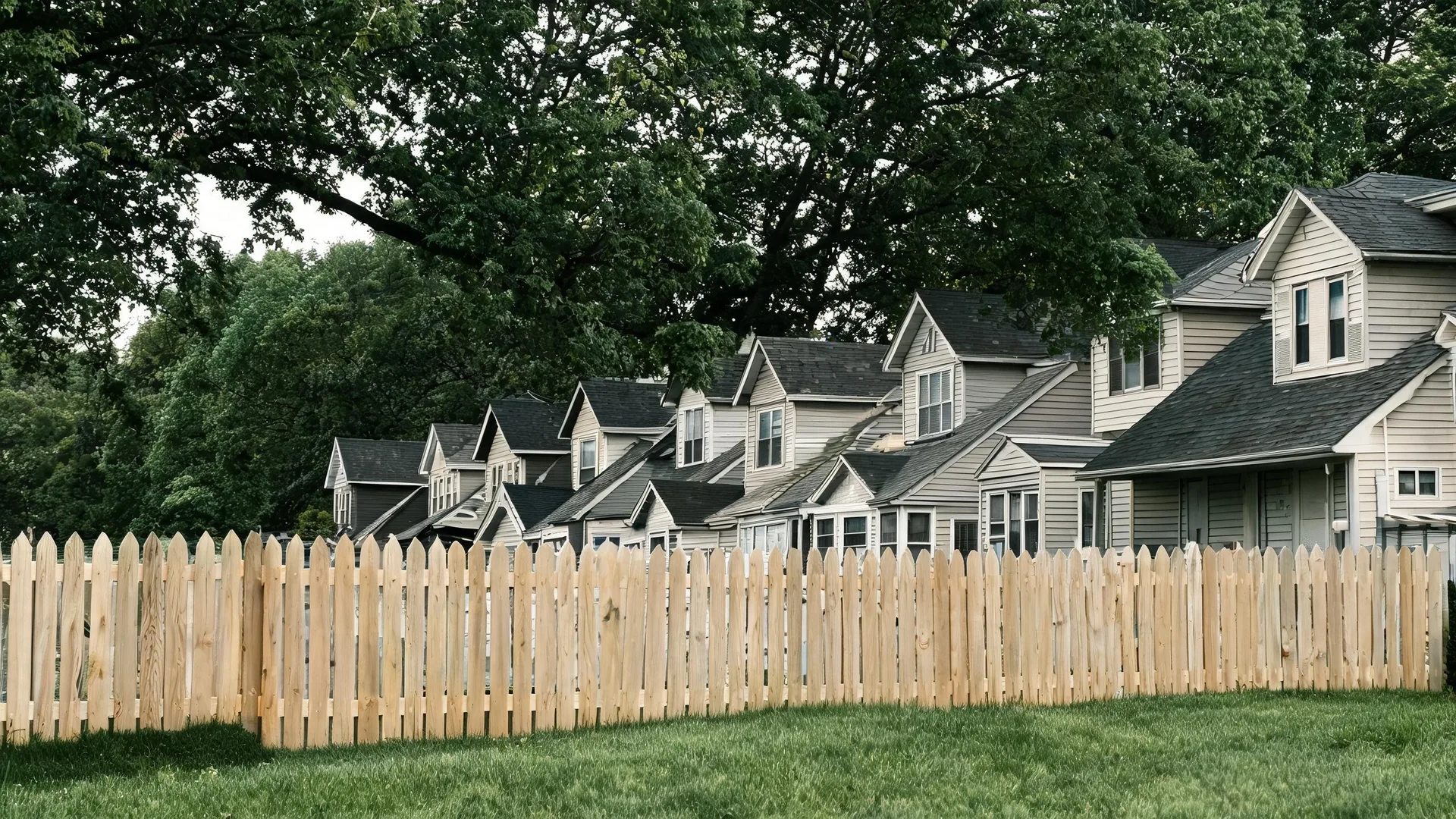
A new wooden picket fence runs along a grass lawn in front of a row of similar two-story houses with gabled roofs and light siding, under large leafy trees.

AC Repair in Utica, NY

Tell us about the job

Takes about a minute. No obligation.

RepairCentral ACOneida County, NY
Step 1 of 2

What ZIP code is the job in?

July is when weak systems show it

Cooling in Oneida County runs July through August. June is when your AC has sat idle, and July is when it has to work full days right away. A capacitor or a contactor that was already marginal tends to fail in those first weeks, not in the middle of summer.


Catching it early matters more here

With only two months of real cooling, a system down for a week is a system down for a big share of the season. Getting the actual cause found and fixed the first time matters here.

2 months
July through August, your air conditioner is on duty
78°F
the average summer afternoon it cools against
23 hail events
in ten years, and hail bends the fins on outdoor coils
195 wind events
in ten years, and wind drives debris into outdoor units
Isometric line illustration of a cutaway house showing interior rooms with ductwork, an air handler and furnace, connected by lines to an outdoor condenser unit on the ground outside.
Your air conditioner works hardest from July through August.

NOAA nClimDiv, 1991–2020 normals

Summers here run about two months, with afternoons averaging around 78°F.

An AC in Oneida County isn't straining against heat most of the year, so when it breaks, age or a worn part is usually the reason, not overwork.

Half the homes here are old enough that the AC is the question, not the house

Half the homes here were built by 1958
Cooling runs July through August
Summer afternoons average 78°F
New York power costs 24 cents a kilowatt-hourThat's what's running when a weak capacitor makes the compressor work harder than it should.

Oneida County has had its share of rough weather, 284 severe weather events over the past decade, including wind, hail, a tornado touching down here and there, and winter storms burying a condenser under snow. None of that is likely why your AC quit. A capacitor gives out, a contactor sticks, a part that was already wearing down finally fails. That's the usual story. Power is worth a mention too. About 1 in 10 New York households lost power for a full day or more last year, and an AC cut off mid cycle can trip something that just needs a reset. Worth telling whoever comes out, but it's not the main suspect.

Your AC has had it easy here. That's worth fixing, not replacing.

A system that's only worked hard two months out of the year usually has a lot of life left in it. Worth getting the actual problem found and fixed, not replaced.

Find a contractor
A man in a cap, dark long-sleeve shirt and brown work pants, seen from behind, steps up onto a porch toward a dark green door while carrying a canvas tool bag.
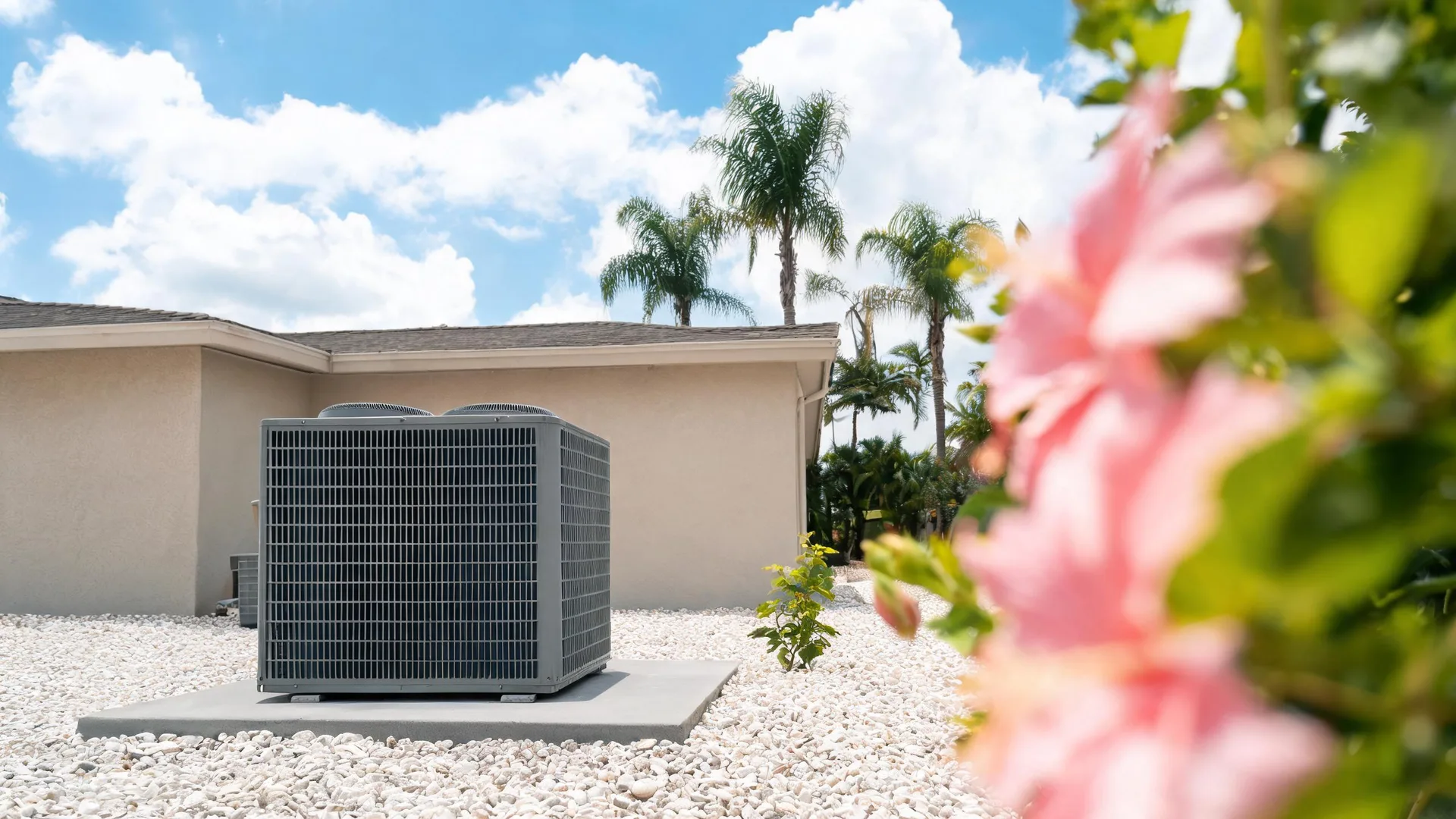
An outdoor air conditioning condenser unit mounted on a concrete pad surrounded by gravel, photographed against a partly cloudy blue sky.

Ask its age before you fix it

If your AC came with the house, ask the contractor how old it actually is before any repair gets done. On a unit that's already near the end, that changes whether a bigger fix is worth paying for. Half the homes in Oneida County were built in 1958 or earlier, so a system that came with the house could be carrying a lot of years. It's a five minute question with the serial number, and it's worth asking before the repair, not after.

A struggling compressor pulls more the longer it runs

When a capacitor is going or the charge is low, the compressor has to work harder to do the same job. Run it like that for days instead of shutting it down and the motor windings take the damage instead of the small part that actually failed. A quick fix turns into a compressor replacement.

A warm system freezes instead of cooling

Low refrigerant or weak airflow drops the coil temperature below where it should sit, and ice starts building on it. Keep the system running and that ice just grows, blocking airflow further and starving the compressor of the cool gas it needs to stay safe. Shutting it off the moment you see ice is what keeps that part of the system alive.

Aerial view of a gray outdoor air conditioning condenser unit mounted on a concrete pad next to a house with vinyl siding.

A new air conditioner would save little on running costs in Oneida County, so the repair decision comes down to the unit's condition.

  • A new one at the federal minimum, 13.4 SEER2$130 a year
  • An older air conditioner$140 a year

Estimates for a typical Oneida County home, compared with an older unit built to the previous federal minimum, from EIA household energy data, New York fuel prices and NOAA climate normals. Your home will differ.

Repair makes sense when a part like a capacitor or contactor has failed.

Replacement makes sense when the compressor has failed or the system uses R-22 refrigerant, which is no longer made.

A diagnostic visit starts before any panel comes off. A tech runs the system and watches how it starts, how long it takes to cool, and what sound the compressor makes on startup. Gauges go on next to check the refrigerant charge, since too little or too much both point to different problems. The capacitor gets tested under load, not just looked at, because a weak one can still look fine sitting still. Electrical connections get checked for heat damage, since a loose wire running hot will cook the part it's attached to. By the time the panel goes back on, the cause should be named, not guessed at.