





White colonial houses with lit windows and dark shutters line a tree-lined street at dusk, bordered by dry-stacked stone walls.

AC Repair in Troy, NY

Tell us about the job

Takes about a minute. No obligation.

RepairCentral ACRensselaer County, NY
Step 1 of 2

What ZIP code is the job in?

Your air conditioner only earns its keep from July through August here, with afternoon highs around 79°F. That is a short season and a mild one. A system that runs that lightly most years usually has plenty of life left in it when something goes wrong. So if yours is acting up, the cause is more likely a worn part or something that got neglected over the winter than a unit that's simply worn out. That's worth knowing before anyone tells you to replace it.

2 months
July through August, your air conditioner is on duty
79°F
the average summer afternoon it cools against
14 hail events
in ten years, and hail bends the fins on outdoor coils
301 wind events
in ten years, and wind drives debris into outdoor units
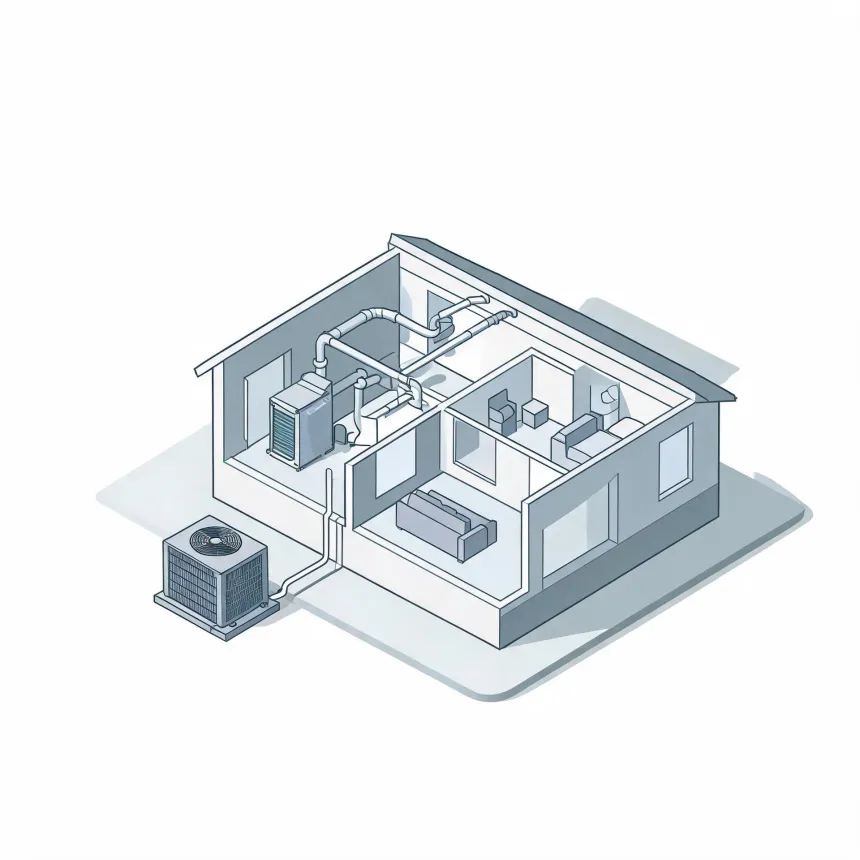
Isometric line illustration of a cutaway house showing interior rooms, a furnace or air handler with ductwork, and an outdoor condenser unit beside the building.
Your air conditioner works hardest from July through August.

NOAA nClimDiv, 1991–2020 normals

A compressor that keeps cycling with a low refrigerant charge is wearing against metal it was never built to touch.

Shut it off and the damage stops where it is. Leave it running and a repair can turn into a compressor replacement.

Half the homes here date to 1962 or earlier, so check how old your AC really is

Half the homes here were built by 1962
Cooling runs July through August
Summer afternoons average 79°F

June sits idle here, then July asks everything of your system at once. That first real stretch of heat finds whatever was already marginal, a capacitor that was weak all winter, a contactor with some pitting, a low charge that's been low since last August. It's not that July is hard on equipment. It's that July is the first time all year the equipment gets tested. Homes here only ask for two months of cooling, so a part can sit on the edge of failing for a long time before anyone notices. Get it looked at now rather than waiting out August on a system that's already telling you something.

A system running wrong costs more every hour it runs

Electricity here runs 24.43 cents a kilowatt-hour, well above the national average. A system working against a low charge or a weak part draws more than it should every time it runs. Getting the actual cause fixed costs less than paying that rate for a system that's struggling.

Find a contractor
A man in a cap, dark jacket and olive pants climbs porch steps toward a green front door, carrying a canvas tool bag filled with hand tools, with a potted shrub to the right.
A gray metal air conditioning condenser unit mounted on a concrete pad in a flat grassy field under a partly cloudy sky.

Two months of load, then it sits again

Two months of real work a year is not much to ask of a compressor. Get the actual fault fixed now and there's no reason it shouldn't finish out the season and go back to sitting idle once the heat breaks.

What you'll actually notice

Warm air coming out of the vents instead of cold, ice on the refrigerant line, a smell when it kicks on, or a sound that wasn't there before, a rattle, a squeal, a hard clunk when it starts. Water pooling near the indoor unit means the drain line or the pan underneath has a problem. Any of these is your system telling you something specific is wrong, not just that it's old.

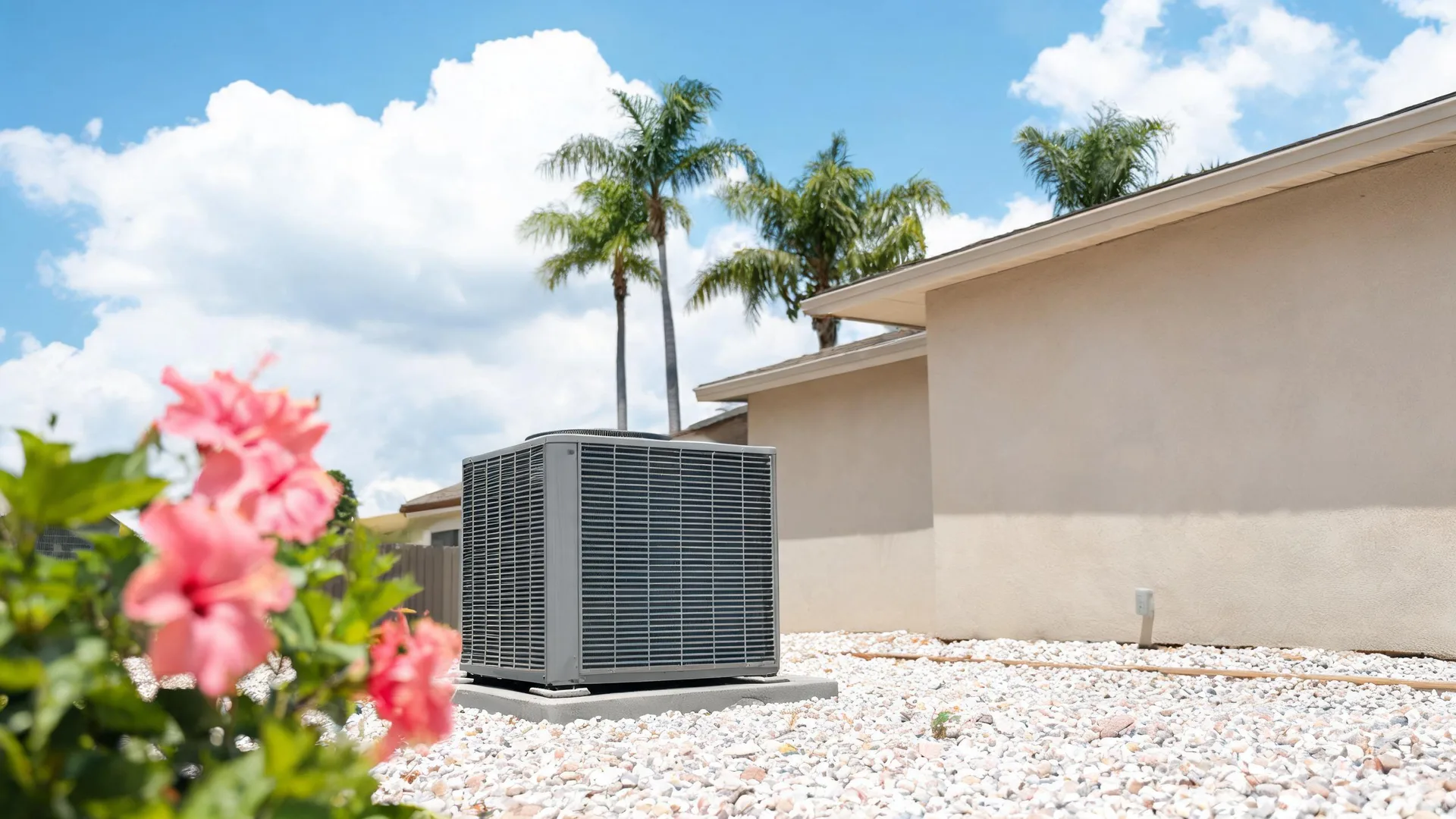
Why the sign matters more than the guess

Ice on the line usually means airflow is restricted or the charge is low, and running it iced up stresses the compressor. A burning smell can mean a motor or electrical issue and is worth shutting off for. Short cycling, turning on and off in quick bursts, points to an electrical component rather than the compressor itself. Matching the sign to the likely cause is how a tech decides what to check first.

An outdoor air conditioning condenser unit positioned on a concrete pad next to a blue-sided house, surrounded by green shrubs and flowering hydrangeas at sunset.

A new air conditioner would save little on running costs in Rensselaer County, so the repair decision comes down to the unit's condition.

  • A new one at the federal minimum, 13.4 SEER2$160 a year
  • An older air conditioner$170 a year

Estimates for a typical Rensselaer County home, compared with an older unit built to the previous federal minimum, from EIA household energy data, New York fuel prices and NOAA climate normals. Your home will differ.

Repair makes sense when a part like a capacitor or contactor has failed.

Replacement makes sense when the compressor has failed or the system uses R-22 refrigerant, which is no longer made.

A good rule. If the compressor itself has failed, replacement is usually the right call. That part costs the most and carries most of the system's remaining life. If the problem is almost anything else, the capacitor, the contactor, the fan motor, a low charge from a slow leak, repair is the sane first step. None of those parts tell you anything about the compressor's condition. A unit can need a new capacitor every few years and still have a compressor good for another decade. What matters more than the part's age is how it failed. A capacitor that wears out on its own is normal wear. A compressor that failed because it was run low on charge for a long stretch failed because of that neglect, not because its time was up.